7 minutes ago
Catherine Ashton tells of difficulties in dialogue, Russian influence in the Balkans
Periskopi(3 years ago)
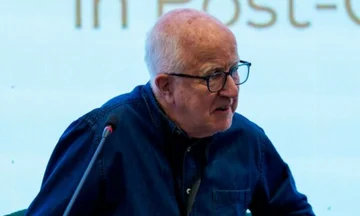
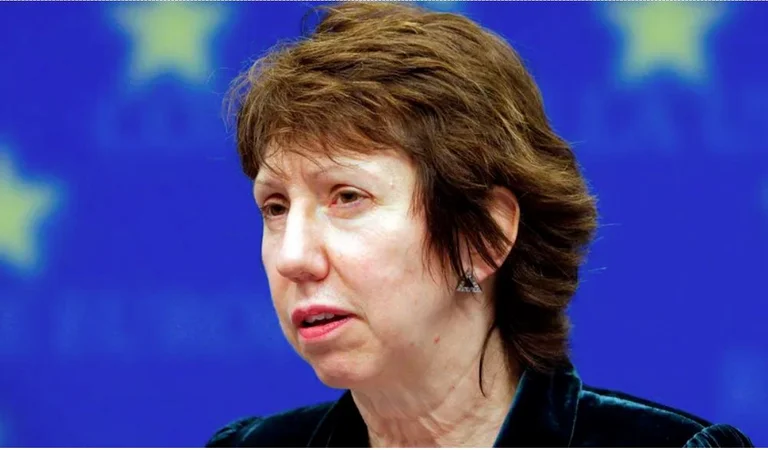
(3 years ago)Former European Union for Foreign Affairs High Representative Catherine Ashton has called on Kosovo and Serbia to sit at the negotiating table and find answers to their differences. She has said that their future depends on the relationship they create with the European Union and relations between the countries [...]
She has said that their future depends on the relationship they create with the European Union and relations between the countries of the region.
In a written interview for Radio Free Europe, Ashton has reflected on the timing of mediating dialogue between the two countries and how she values her contribution to the process.
She has discussed her experience as a diplomat in her newest book. “and then what: The internal accounts of XIX” diplomacy, which has served as reason for the interview.
Ashton, among other things, has talked about the role of the United States in dialogue, whether the European Union is doing enough to keep it close to the Western Balkans, and the Russian and Chinese influence in the region.
Radio Free Europe: In your new book, “and then what: Inner accounts of XIX” diplomacy (And Then What? Inside Stories of 21st-Century Diplomacy”, you have said that you have not enjoyed the position of the European Union's High Representative, but you have also had good moments. What has been harder for you? The characteristics of negotiators you've been mediating, or situations, when everyone loses a little bit, so that compromise can be made?
Catherine Ashton: It has been difficult to see the challenges that many people face because of conflict, chaos, or disaster. For anyone who tries to help, there is always a feeling that never makes enough, and I certainly felt that way. Pleasure and fulfillment have come at times when I believed I was able to distinguish.
It's not just about losing a little bit of compromise that we don't want. In negotiations you seek solutions to problems, especially for those who have problems. Compromise comes from keeping the focus on the future, trying to find out what is best for a community or a state, and making the decision on what is most important. Good negotiators work calmly and constantly try to find solutions.
Radio Free Europe: You have played a key role in reaching the agreement in Brussels in 2013. Until now, however, Kosovo and Serbia have not achieved great progress in normalising relations. Who is to blame?
Catherine Ashton: Each side knows that their future depends, in part, on the relations they build with the European Union, and in part, on the relations they create within their region. And that means finding a way to create a future that offers economic peace, security, and success for both sides. It has never been easy. The Brussels Agreement has only been the beginning but I call on both sides to sit at the table and find answers.
Radio Free Europe: What has been the most difficult part to approach parties to the signing of the Brussels Agreement? What has been the biggest challenge?
Catherine Ashton: Picture this scene: The two prime ministers, at the same age, from the same region, who have never met, and who bear the hopes and aspirations of their peoples, mixed with the history and trauma of the past. It's been a brave thing only attending the same room. The challenge has been to recognise the past, the losses and pains of many, as well as the creation of a vision, to ensure that young people in Kosovo and Serbia can look forward to the future in the EU. The biggest challenge for leaders is preparing to move forward. It's easier to do nothing. Fortunately, both sides have been prepared in that direction.
Radio Free Europe: The EU has important leverage and incentives for Kosovo and Serbia to implement the agreement. Among the most important, European integrations. However, considering the EU enlargement dynamic, this seems not to have served as a powerful tool. At what level has the EU failed to press both sides to overcome differences and find common language?
Catherine Ashton: I understand there is concern in the region that the EU is not enthusiastic about how much it once was for expansion. However, there is no dilemma that the countries of the Western Balkans belong to the EU. The bloc's dedication is clear in the work that Miroslav Lajcak does to continue working with Kosovo and Serbia. But, there is a lot of work to be done by the countries that want to be part of the EU. One reason for lack of enthusiasm lies in the lack of progress made by countries that want to be members. It's not an easy trip, but it's worth it.
Radio Free Europe: In your book, you explain that not everything works best through international organizations such as the EU, NATO and the United Nations. You have said: “As regards mediation between Kosovo and Serbia, the role of the United States has been silent, for most part of the time, but still vital. Do you believe that the US now has more power than the EU, especially in Kosovo?
Catherine Ashton: I believe in working with friends and allies and finding solutions. The United States has a special connection with Kosovo, meaning they have managed to reconfirm their support, while Kosovo has taken steps towards what is known as the Brussels Agreement. It's not about who has the most power to work together.
Radio Free Europe: How do you assess, in general, the situation in the Balkans? As the former warring parties now promote co-operation, especially in the area of the economy, almost all other issues -- example, ethnic differences -- remain unresolved (in Kosovo and Bosnia and Herzegovina). At the same time, democracy in the Balkans is threatened by rampant corruption, disrespect of the rule and law, and oppression of media freedom. Although the EU has criticised these trends in general, it sometimes seems to close one eye, believing that it will lead the authoritarian leaders of the Balkans to reach geopolitical agreements. The example is Serbian President Aleksandar Vuciq on the Kosovo issue.
Catherine Ashton: The EU is based on principles of democracy, human rights, rule of law. These are essential. Working with other states, they remain part of continued dialogue.
Radio Free Europe: In a 2021 opinion on Politico, called, don't close the door to the Western Balkans, you and other authors say that the alternative is a reaction to a divided Europe surrounded by power, which basically have neither interest nor value. The West Balkans' “Law in a permanent twilight zone would constitute strategic loss ) and inevitable”. Can the EU do more?
Catherine Ashton: It is not just the EU's role to push the Western Balkan countries forward. It is also the duty of each state to carry out all necessary changes, and to deal with all necessary issues to become an EU member. So I hope that there will be more, of all, to address these challenges.
Radio Free Europe: In the last year of his term, in 2014, Russia annexed the Crime Peninsula. Do you think that a timely reaction could prevent the war in Ukraine, initiated in February 2022? What could have become different?
Catherine Ashton: We have reacted then, imposing sanctions on Russia, and trying to negotiate. Reflection is always difficult. Then we didn't know what we knew today. In my opinion, however, in the following years, what happened in Ukraine has not been in the agenda as high as it should be.
Radio Free Europe: To what extent is Russia affecting dialogue, and the situation in the Western Balkans, compared to the period when you were involved?
Catherine Ashton: We have always been aware of Russia's influence and engagement in the Western Balkans. Events in Ukraine have highlighted this fact more.
Radio Free Europe: By the time you left Brussels, it hasn't been spoken at all about the Chinese influence. Now we have examples of how China is spreading its influence in the Western Balkans, through debts, donations and infrastructure projects. Even in some EU countries. People don't see Chinese influence as a threat compared to Russian influence. Do you agree?
Catherine Ashton: China's challenge is different from the situation with Russia. I hope we will see more effort in establishing a strategic approach to China, including current ties and concerns. I remember that China has played a role in negotiations with Iran, and my hope is that China will aim for a positive role in the multilatreal system that we have to take care of.