5 minutes ago
Britons on Kurt's side, concerned that the US and EU are punishing him
Periskopi(3 years ago)
(3 years ago)Kosovo Prime Minister Albin Kurti has said he is prepared to consider early elections in northern Kosovo, as several British sources expressed concern that the US and the EU are making a mistake by threatening their ally with punishment over dealing with recent violent clashes in the region by Kurti. [...]
A former U.K. ambassador told “The Guardian” that the EU's envoy to Kosovo should stand by, while the chairman of the United Kingdom's Foreign Affairs Commission, Alicia Kearns, warned the US against unproportional punishment of Kurti.
Emmanuel Macron, French president, said Kurti had made mistakes and that he would meet with German Chancellor Olaf Scholz.
The crisis escalated Monday after the Kosovo government sent mayors, supported by Kosovo police, to the offices of Serb-dominated northern municipalities following elections that ethnic Serbs had boycotted.
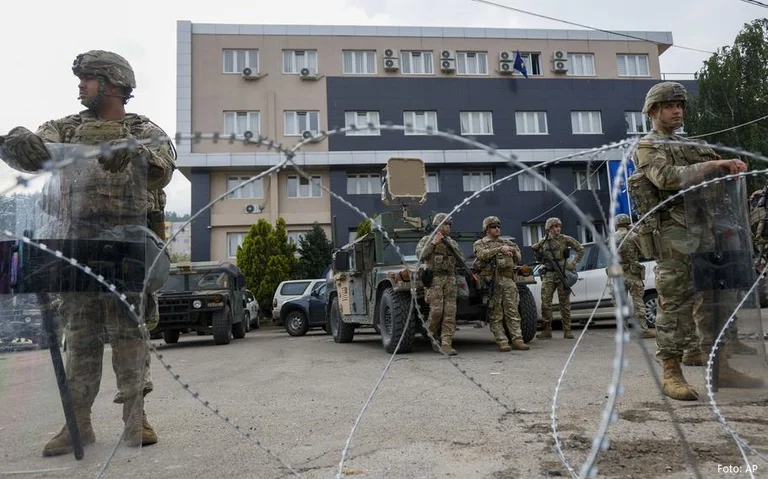
Following street clashes Monday that left 30 KFOR members injured, NATO said it was sending out 700 additional troops to support the 4,000-strong mission.
Troops have protected municipal buildings from Serb nationalist crowds abroad.
Serbian President Aleksandar Vuciq has put his army in full combat readiness and has ordered units to draw closer to the border with Kosovo.
Speaking at a current security conference in Bratislava, Kurti said: “if there were peaceful protests for early elections, it would have my understanding, but not crowds with the letter Z [a pro-rus] shooting at soldiers and police officers, throwing grenades, shouting cavitre, killing. This fascist crowd, we don't hand over our democratic republic. If they want peaceful protests that require early elections, they have a prime minister who is more than willing to listen to and perhaps agree with them”.
The US and the EU have rebuked Kosovo, under normal conditions their ally, for escalating tensions with Serbia, saying that using the force to deploy mayors in Kosovo's ethnic Serb areas undermined efforts to improve troubled bilateral relations. US Ambassador to Kosovo Jeff Hovenier said: “would be surprised if any Kosovo government official could visit the US at this time”.
But Kearns showed the difference between US positions and the official positions of the United Kingdom, writing: “The stance being taken against Kosovo is unproportional. Failure to refrain from Belgrade shows a lack of balance and strategic instability. Failure to prevent armed militia and funders and their buyers risks encouraging further escalation”. She said Kosovo should be allowed to join the Council of Europe.
Mark Dickinson, a former British envoy to the Western Balkans, said: “what is the shortest time to save face before [EU envoy Miroslav] Lajcak have a great incentive to spend more time with his family? I don't mind Kurti (and unfortunately Kosovo) being blamed and punished. I can take it to get Vuchy out of this. But if the EU fails to acknowledge that it has also contributed greatly to this disaster, we can only expect repetition”.
In the most recent round of talks, Vuciqi, the Serbian president, refused to sign an agreement offering mutual recognition of Serbia and Kosovo, as well as a degree of autonomy for Serbs in northern Kosovo who have never accepted Albanian-led rule by Pristina.
The Serbian local election Boyot in the north allowed ethnic Albanians to take control of municipalities with a turnout of less than 3.5%.
Kurti's proposal is that if the violence ends, the new elections could be held well before the end of the remaining two-year term of mayors.
British diplomats fear that US efforts to blame Kurti do not consider the root cause of the stalemate, including an EU demand that Kurti accept an agreement reached in 2013, giving sweeping autonomy to an association of Serb municipalities. The EU tried to impose this as part of an 11-point agreement on talks in Ohrid in northern Macedonia in March, but neither side signed the agreement. The EU argued that the agreement, including the 2013 clauses ensuring Kosovo's implicit de facto recognition by Serbia, met Kosovo's main requirement.
Kurti emphasises that minorities in Kosovo already enjoy independence under the constitution, including Serbian as an official language, guaranteed seats in parliament regardless of the election results, municipal-level representation, the right to appoint key police officials in Serb majority areas, and at least one minister from the Serb minority to the government. /Klankosova. tv