11 minutes ago
What effect do acts of absence have on war crimes?
Periskopi(3 years ago)
(3 years ago)Establishing charges in the absence of war crimes in Kosovo is important both for the record of crimes and for the rehabilitation of victims' families, say connoisseurs of justice cases. Last week, the Kosovo Special Prosecution filed two counts in absentia against indictees C.A. and D.R. Kosovo war crimes suspects, [...]
Last week, the Kosovo Special Prosecution filed two counts in absentia against indictees C.A. and D.R. In 1999, war crimes suspects in Kosovo warned that they would raise others.
The prosecution said it has asked the judges for the trial of the two suspected Serbs to develop in absentia, as “possibilities have been exhausted” for finding them.
Drita Hajdari, prosecutor and head of the Kosovo Special Prosecutor's War Crimes Department, tells Radio Free Europe that the decision has been made based on the new Criminal Procedure Code, which the Assembly of Kosovo adopted in July last year.
The lack of trial, although absent indictees, presents an important satistrophy for crime victims, for their families. It also matters to record crime. Through indiscretion, proven, it proves that crime occurred”, Hajdari says.
She recalls that these are the first two counts in Kosovo's absence of war crimes, as the Criminal Procedure Code has not allowed such.
Until now, we have filed charges only in those cases where we have managed to find him and arrest the chief criminal offense”, Hajdari says.
What does the Criminal Procedure Code say?
According to the Criminal Procedure Code, Article 303, the judge, or the chairman of the court, holds hearings to determine why the accused is absent and to assess any clarification or evidence, if the accused has voluntarily decided to be absent in court.
It also states that in making this decision, the judge, or court judge, considers whether reasonable efforts have been made to find the accused.
Ehat Miftaraj, executive director of the Kosovo Institute for Justice (IKD), which deals with monitoring the justice system, says he has supported the idea of judgment in the absence primarily of war crimes cases because, according to him, there are hundreds of suspects in these crimes that today find refuge and protection in Serbia.
He does not expect Serbia to allow the extradition of suspects to Kosovo and says the execution of sentences in practice will be difficult.
However, Mifttaraj adds, insufficient judgments are important for victims' families, “to whitewash crime and truth”.
“They could then use the Fund's right to compensate for the crime victims, according to the previous law and procedure”, he says.
According to International Criminal Law Professor Ismet Salihu, such judgments will be useful in several ways.
It's a good thing it's done, and now it's got to work in this direction. The effects will be great, because investigations can be made, all data and evidence can be collected, judgment and condemnation are made, as well as the release of international arrest page”, Salihu says.
“is a kind of rehabilitation even for victims when convicted by a Serb criminal... After the sentence, that person will either be caught to serve his sentence, or hide in Serbia”, Salihu tells Radio Free Europe.
The Kosovo prosecution has pressed several counts of war crimes in Kosovo against Serb national suspects, but also Albanian. Some have received epilogues, others are under way.
Only since September 2021 have war crimes charges been filed against five Serbs and an Albanian.
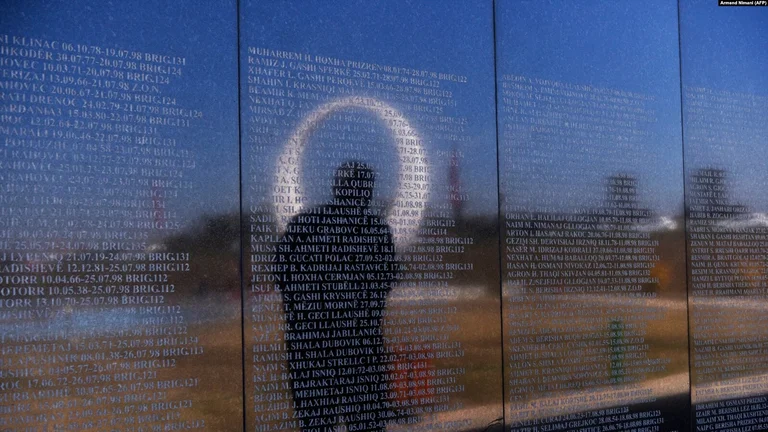
Kosovo has emerged from the 1998/99 war following NATO bombing campaign against the Serbian Army.
Over 13,000 civilians are believed to have been killed in the war, while thousands have disappeared. Undiscovered, to this day, more than 1,600 people remain from among them Albanians. / REL