a few seconds ago
Wounding in the north deepens citizens' distance with police
Periskopi(3 years ago)
(3 years ago)When they shoot, they arrest people... How can I trust them? That was the response of Jovan Aleksic, a Serb citizen from Northern Mitrovica when he was asked by Radio Free Europe if he trusted the Kosovo Police following the April 11th incident when a [...]
When they shoot, they arrest people... How can I trust them?
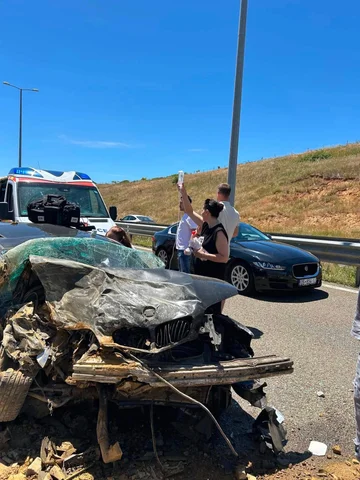
That was the response of Jovan Aleksic, a Serb citizen from Northern Mitrovica when he was asked by Radio Free Europe if he believed Kosovo Police after the April 11th incident, when a Kosovo police official injured Milan Jovanovic, until he was told, he allegedly did not stop at a checkpoint.
Jovanovic was wounded on Mitrovica's magic road Leposaviq.
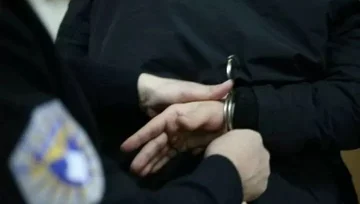
Four police officials, K.P., suspected of criminal activity “attempted murder” and “manipulation with evidence” Others F. M, S.U. and M.M. were arrested for criminal work “munding of criminal acts or their perpetrators”.
Mitrovica foundation prosecutor confirmed for The REL has been seeking the pronunciation of detention for a month for all.
Like Jovan, Teodora Zivkovic says she does not feel secure because she doubts that what happened to Milan could happen to anyone else.
Serbian police in the north have long disappeared. Recently, only incidents occurred. In essence, we do not feel secure. We don't have faith in the Kosovo Police, considering everything that is happening”, she says.
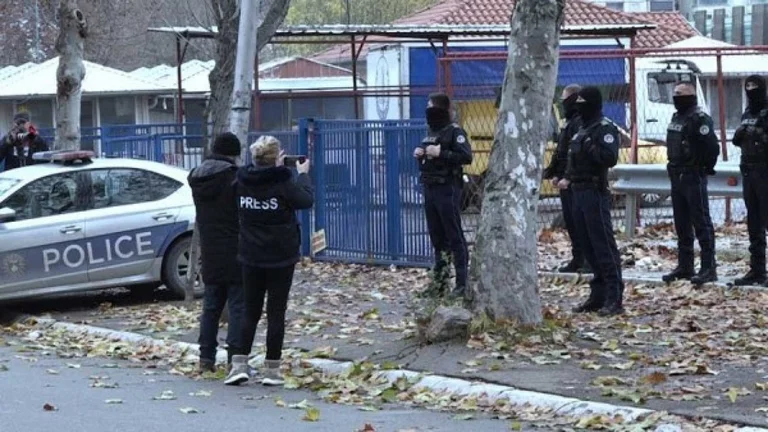
Following last year's tensions and the withdrawal of Serb municipalities in the north from Kosovo institutions, police have placed several roadblocks on key roads leading to the border crossing with Serbia in Jarinje.
Weeks earlier a similar incident had occurred when Kosovo police officials fired gunfire towards a car, which after hitting the police vehicle, had not stopped at the checkpoint.
At these checkpoints are usually members of specialised police units.
Ethical Code violation, Police Law...
In public statements by the Kosovo Police Inspectorate (IPK), the Ministry of Internal Affairs and the Kosovo Police, all the circumstances of Milan Jovanovic's injuries have not been made public.
Neither has Mitrovica Foundation Prosecutor, who is investigating the case, indicated about The REL if it has been able to interview the victim.
But, Mentor Vrajolli, the security field connoisseur, at the same time head of the Kosovar Centre for Security Studies (QKSS), says police officials involved in this case have exceeded legal authorisations.
The use of such force occurs when the police official is directly endangered by other parties. So the overcoming that was done by the police official constitutes a criminal offence”, Vrajolli says.
Vrajolli stresses that such incidents may be inevitable, as he says, at the checkpoints in the north, there are currently specialised units that are not constantly trained for maintaining order and public calm.
“Risk is the fact that special units are prepared for a little more complicated and not necessarily have a continuous preparation for managing public security situations as has happened in this case”, Vrajolli explains.
The Kosovo Police Ethical Code says police official uses force only as the last option, which, according to the Kosovo Police Inspectorate, was not the case
on Milan Jovanovic's wound.
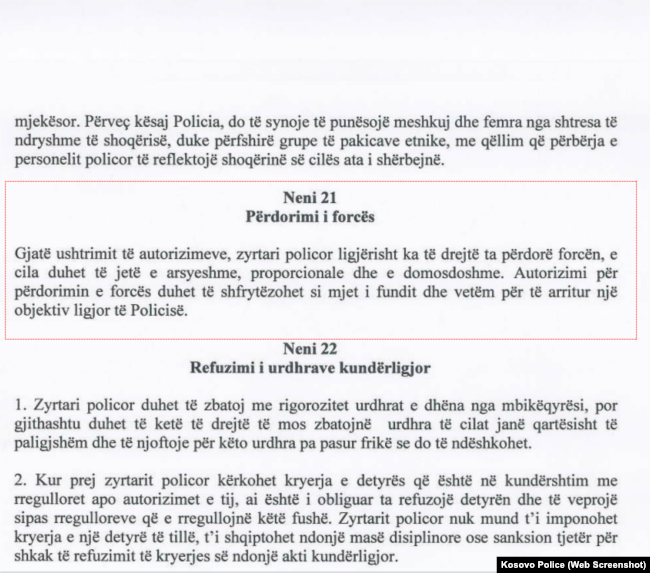
Article 21 of the Ethical Code of Police says that “during the exercise of authorizations, the police official legally has the right to use force, which should be reasonable, proportional and necessary.
The authorisation of force exploitation should be used as a last resort and only to achieve a legal objective of Police”.
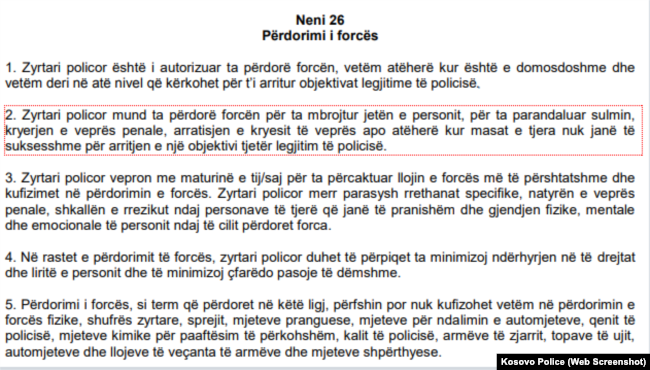
The same, but more specifically, says the Law on Police.
The police officer may use the force to protect the person's life, prevent the attack, commit criminal acts, escape the chief of the work, or when other measures are not successful in achieving another legitimate police objective”, says Article 26 of this law.
What acts are police officers suspected of, and how condemned are they?
K.P. police allegedly injured Milan Jovanovic, charged with two criminal acts “attempted suicide” and “manipulation with evidence”.
Both works are punishable with the Kosovo Criminal Code.
For criminal work “attempted genocide”, the KP, if convicted, could be sentenced to at least five years in prison. According to the Kosovo Criminal Code, the person trying to commit criminal acts is punished as if he had committed the work, but the sentence could be eased.
While for criminal work “manipulation with evidence”, the sentence is brought from six months to five years.
Three other policemen, F. M, S.U. and M.M., suspected of criminal activity “not warning of criminal acts or their perpetrators”, according to the Criminal Code, could be punished with fines or imprisonment of up to three years.
You know, it's hard that someone loves the police in the north”
In northern Mitrovica, Caleb Waugh, the head of the office for politics in the non-governmental organisation “Target”, says overcoming authorisation in the case of the wound has exacerbated the Serb community in the north.
Waugh says this case took place in completely unexplained circumstances, only to boost feelings against the Kosovo Police.
The presence of special units is frightening to many citizens. There have been many reported cases of abuse, and here I am talking about other cases involving, not gun shots, but abuses of various forms of civilians. So we can't even talk about a relationship between the Kosovo Police and the citizens in the north, because that relationship is non-existence”, says Waugh.
He believes that citizens in municipalities in the north agree with the presence of a police force, but not in these conditions, not with such great presence of special units.
The return of Serbian officials resigned could be a solution, Waugh says.
A good start would be to withdraw special units from the north and withdraw from the construction of police bases in the north”, he said.
But all of this, according to him, requires broader commitment.
As the north remains involved in tensions, Irfan Krivosic, citizen of North Mitrovica, says everything remains in “staus quazo”.
“Do I trust the Kosovo Police? No. No, because whenever a difficult situation had to be resolved, mostly foreigners or KFOR” have solved it, he says.
Various embassies in Kosovo, as well as the European Union Office in Pristina, condemned the incident.
Reactions also took place in Serbia. Serbian President Aleksandar Vuciq said on Thursday that Jovanovic was transporting pots and teas from Serbia to sell in northern Mitrovica.
These claims did not comment on the Kosovo Ministry of Internal Affairs.
Note: All who are spoken of in this scripture are considered innocent unless the court proves guilty by decision.