25 minutes ago
Voice of America: Why is the judicial process important to former KLA leaders?
Periskopi(3 years ago)
(3 years ago)“The trial against Hashim Thaci and others is important for at least two reasons: because it is a kind of legacy of the court's failed processes for the former Yugoslavia before its closure; second, the charges refer to crimes committed against persons considered opponents of the Kosovo Liberation Army, regardless of the [...] affiliation.
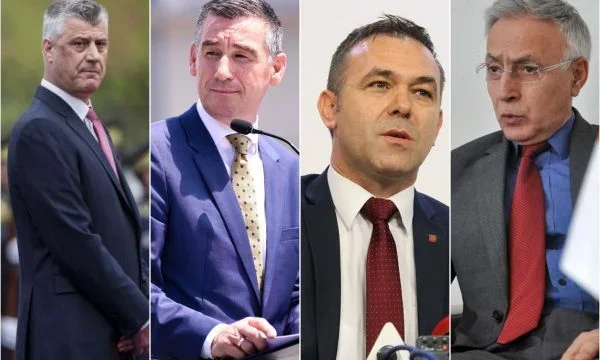
The trial against the former Kosovo president, as well as Kadri Veselini, Jakup Krasniqi and Rexhep Selimi, began on April 3rd. Former KLA leaders are charged with crimes against humanity and war crimes before an international tribunal in The Hague.
At least 440 people -- Albanians, Serbs, Roma, Bosniak and Montenegrin -- who did not participate in the conflict -- were reportedly banned illegally. At least 102 of them reportedly did not survive crimes committed against them.
After the end of the conflict in Kosovo, Thaci, Veselin and Krasniqi left significant political traces. Thaci has held the highest government positions in Kosovo on several occasions, while Veselin and Krasniqi held the post of parliament speaker.
The announcement of the indictment against Mr Thaci was published in June 2020, shortly before the Washington meeting, where he was to represent Kosovo in the dialogue with Serbia. The US-led round of dialogue was postponed, and Avdullah Hoti (Prime Minister at the time) replaced it in the September negotiations.
The process against Mr Thaci and others is not the first case of the trial of top Kosovo political representatives and former KLA commanders. Ramush Haradinaj was acquitted in two processes (at the International Court for War Crimes in the spaces of the former Yugoslavia) for lack of evidence. Those processes coincided with the withdrawal of statements by some witnesses who accused Mr Haradinaj.
Some judgments have been held in the past and investigations conducted, but the quality of evidence was not satisfactory. Moreover, the processes were hampered by witness intimidation, so in the agreement with Pristina, specialised Chambers were created to achieve progress in resolving the issue of war heritage”, said Professor Goa, expert on the field of international peace and security.
Specialised rooms are part of Kosovo's judicial system, but their headquarters, due to the need to protect witnesses, is located in The Hague. They address events from January 1st 1998 to December 31st 2000, a period involving a year and a half from the end of the war in Kosovo.
The trial is the time to illuminate the full truth for victims of serious crimes. It's about people who have been mistreated or killed, not only Serbs and Roma, but also ethnic Albanians. The process shows that those who commit abuse can take responsibility. This should be considered by former Serbian wartime leaders and the authorities who protect them. While this has to do with the trial against Mr. Thaci, it is also necessary to consider the impunity that exists in Belgrade”, Elizabeth Evenson, director of the International Justice Programme of the Nongovernmental Human Rights Watch, told the Voice of America.
Tensions in Kosovo, which date back to the 1980s, culminated in the late 1990s with an armed conflict between the armed forces of the Federal Republic of Yugoslavia and the armed formations of the Kosovo Liberation Army.
We believe that this process, if carried out correctly and with a proper approach, can help lasting peace. Justice and registration are lacking in the region, which creates a basis for myths and misunderstandings that can be used by manipulative politicians. This and other judgments can help establish the foundations for stability and co-existence with respect”, Human Rights Watch representative said in a written answer.
However, Sarah Ochs, from the Lurid Faculty in Louisville in the American state of Kentucky, sees the establishment and character of the Posacme Court as one of the problems of reaching such an outcome.
The “is founded according to the laws of Kosovo. But in reality, to some extent it was the international community's pressure on Kosovo. Located in The Hague, it is far from the area where alleged crimes have occurred. The court is fully managed by international judges and prosecutors, without any contribution from Kosovo citizens”, explains Professor Ochs, who adds that the most effective job requires a more equal distribution between domestic and international actors, as such that no one would have the advantage and completely exclude the other side.
“However, it is now too late for that. The court was created, processes are under way, although it is not known whether the institution founded on existing principles was the most adaptable”, Ms. Oceans said.
Prior to the start of the trial process against Mr. Thaci, who was also one of the key negotiators in the dialogue between Kosovo and Serbia and the signatories of Brussels' first agreement, the West launched a diplomatic initiative, whose expected result is an agreement for normalising relations between Kosovo and Serbia and lowering tensions.
But can judgment on former KLA leaders help, regardless of the outcome of the process?
“undoubtedly, one of the reasons the accused Thaci, who was president of Kosovo, surrendered and collaborated, is to side with Washington and Brussels. Pristina authorities want the processes to continue and end. They realize that if they do not cooperate, they will find themselves in an even more difficult position. In this sense, the trial can be useful for dialogue between the two sides, which need time for apparent progress”, estimates Professor Gow.
Sarah Ochs does not fully agree with this stance, citing as a argument the critical attitude the majority of the public in Kosovo still has regarding the tribunal and its possible extent.
“In an effort not to be too pessimistic, I think there are other ways to make progress in the reconciliation process between the two countries. I don't know if fulfilling justice in criminal processes is the right way. Especially because of the lack of legitimacy of that court in Kosovo, which its citizens see as a third kind of international party”, she stressed.
The painful consequence of the war for many families in Kosovo is that at least 1600 members are still missing. Among them are more than a thousand and 100 Albanians, about 450 Serbs, as well as victims of Bosniak and Roma nationality.
According to Mrs. Elizabeth Evenson of Human Rights Watch, the judgment of former KLA leaders also recalls the importance of lighting up the fate of missing persons.
“We are seeing progress on this issue in the dialogue mediated by the European Union. Addressing the fate of the missing should be an essential element of future discussions and agreements, as it is essential to dignity, respect and justice. When it comes to Serbia, we should be clear about the mass, systematic and organised coverage of the transfer of troops of hundreds of Albanians. It was a co-ordinated move, so Serbia's authorities have been able to shed light so far on what has happened, who has ordered it, and where are other troops”, she underlined.
The war between the KLA and the military police forces of the former Federal Republic of Yugoslavia ended with NATO intervention in 1999.
Intervention followed the killing of 45 Albanian civilians in Kosovo village of Recak and unsuccessful negotiations between the Albanian and Serbian sides in Ramboullett, France