3 minutes ago
Spain, Romania do not change stance over Kosovo recognition
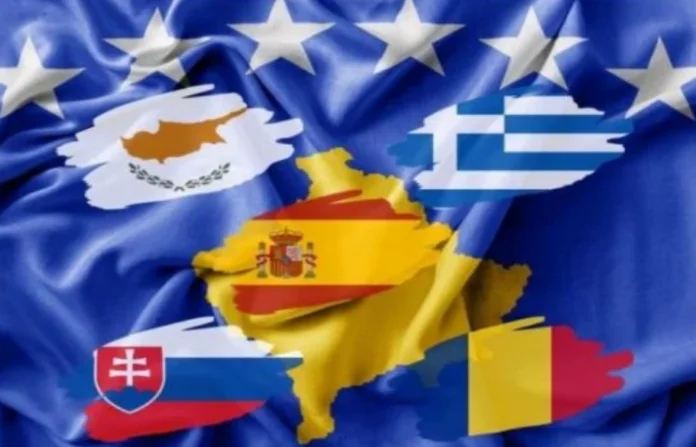
Periskopi(3 years ago)
(3 years ago)The last time Kosovo was recognised as a state, it has been Israel's recognition under the Washington Agreement. And another agreement, the Ohrid one said it would pave the way for recognition by the five EU states. But it seems these states have not changed their stance against Kosovo independence. RTK [...]
It has been more than two years since Kosovo has not accepted new recognitions.
The Ohrid Agreement and its implementation, it said, paves the way for states that have recognised Kosovo to do so. The emphasis was specifically placed on the five European Union states that have not yet moved forward in relation to Kosovo's recognition.
RTK has asked Spain and Romania for their positions of recognition, following the agreement of Kosovo and Serbia in Ohrid.
Both the Spanish and Romanian states say they support dialogue and agreement reached, but do not provide positive signals for recognition.
“Spain maintains its position as non-recognition of the unilateral declaration of independence, adopted by Pristina in 2008, and strongly supports a mutually acceptable solution through dialogue facilitated by the EU”, writes in the official response of the Spanish Ministry of Foreign Affairs.
Much like that, Romania gives similar answers.
Romania's “Ministry of Foreign Affairs estimates the results achieved in Ohrid on March 18th between Belgrade and Pristina, in the context of the dialogue facilitated by the EU, which strongly supports”, writes in the official response, Romania's Ministry of Foreign Affairs.
Greece continues to maintain similar attitudes. The president of this state said in Belgrade that they do not think to recognise Kosovo.
Kosovo's top diplomat, the five non-recognising countries, sees them as obstacles to our country's integration aspirations.
We are working hard, with our partners, for the five European states which are a serious obstacle, to move into the process of recognition. It's not that there's no progress, it's the subject.
What progress will be seen in the future”, says Donika Grovalla- Minister of Foreign Affairs and Kosovo Diaspora.
The recogniser of international relations, lighto Arifi, thinks the EU as the bail of the agreement between Kosovo and Serbia should exercise influence on non-recognitional countries.
“Barra falls to the European Union because in this form, the EU would show its authority and power in the Western Balkans region, because otherwise it is that the 5 EU countries are dealing with the many Russian political leaders in the Balkans than Serbia” itself, says Drilro Arifi- connoisseur of international relations.
Help in bringing new recognitions has also promised Kosovo's main ally in the diplomatic field, the US. US Secretary of State Antony Blinken himself has said during a report to the US Senate Foreign Affairs Committee that after the Ohrid Agreement, they expect Slovakia, Romania, Cyprus, Greece and Spain to change their stance in relation to Kosovo independence