23 minutes ago
Rubin: KLA, centre of Kosovo peace process
Periskopi(3 years ago)
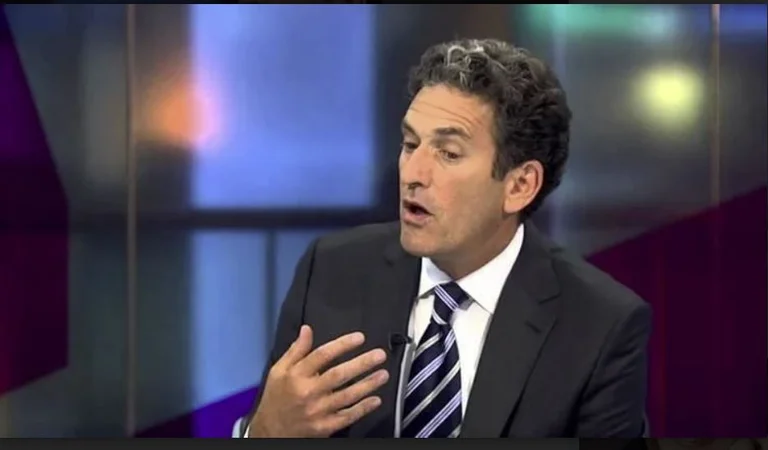
(3 years ago)The entire Western Balkan region is vulnerable to Russian and Chinese deninforms, but “a large section of them” comes from Serbia, and this is a “big problem that should be addressed”, says in an interview for Radio Free Europe James Rubin, responsible for the Global Action Centre. The center is one [...]
The entire Western Balkan region is vulnerable to Russian and Chinese deninforms, but “a large section of them” comes from Serbia, and this is a “big problem that should be addressed”, says in an interview for Radio Free Europe James Rubin, responsible for the Global Action Centre.
The centre is an American State Department organ designed to exhibit and counter propaganda and dezinformation.
Asked how Russia Today's opening comments are international news organisation controlled by the Russian state in Serbia, Rubin says:
We would not like to see Russia Today or the [other] Russian media anywhere in the world. We want them to close”.
In the interview given to Radio Free Europe during a short stay in Pristina, Rubin also talks about the Kosovo Liberation Army, whose founders are currently facing charges of war crimes and crimes against humanity.
Rubin says the US stance on the KLA has evolved over the years.
In the first few days, he recalls, the US has condemned the terrorist <x0 operations committed by Albanian groups”, but with the evolution of the peace process, says the KLA has become the focus of that process.
“U n The CK played a crucial role in the agreements that were signed by its leaders and in implementing promised demilitarisation”, Rubin says.
I have fond memories of working with their leaders. This does not mean that everything that happened at that time of war is something that I would support”, he adds.
During the Kosovo war in the late 1990s, Rubin has been assistant secretary of the US State.
Kosovo divided them in 2013 The Presidential Medal of Merit for his commitment to the liberation of Kosovo.
Radio Free Europe: Mr. Ruby, thank you for talking about Radio Free Europe in Pristina. You are actually only transit in Kosovo. Yesterday [April 10th] you were in Montenegro, now you are going to northern Macedonia. What has brought you back to the Western Balkans?
James Rubin: [American State Secretary Antony] Blinken has asked me to take on a new challenge the world faces. Dezinformation and manipulation of information are a new discipline, a new threat to the world. I'm responsible for the Global Action Centre and my name is Special Envoy. What we're trying to do here is follow the dezinform providers themselves, deal with this problem radically, and solve it, rather than expect lies about the United States, which have spread from portals to this part of the world.
I don't think it's a secret that in northern Macedonia and Montenegro, there are media that repeat Russian lies, Russian dezinforms, saying things like Ukraine have biological weapons when it's not true and it's been dismissed as an idea by the Geneva Biological Arms Convention or by saying that the United States has wanted this war [in Ukraine] or they see it as an operation to make money. All these disinformive lies, unfortunately, are very prominent and widespread in the Western Balkans. \
So, I'm here to talk to governments, to do something in this direction. I understand this is a difficult problem and it's not an easy problem. And we are not perfect in the United States either. But we have to develop an operational code of conduct if you want a way to do business, which they all divide, legally, institutionally [and] create structures in each of the governments.
I've talked to the Montenegrin government about this, not with the current government, because, in fact, there is no one, but with future leaders. And I've been so encouraged that everyone knows this problem. We'll work with them as partners to try to understand, at least, how to stop this dezinformation from growing and start controlling it.
Radio Free Europe: What do you expect them to do? How can such discipline be stopped?
James Rubin: First of all, it's not easy. We have to admit that there is freedom of the press and we want freedom of the press. But if you have Chinese Government accounts in social media, they should be labeled as accounts of the Chinese government. People shouldn't think this is just an ordinary Chinese guy who says something, they should know it's a government account. This is an example.
We should try to ensure that foreign media ownership is transparent. This is [and] an example of something to be done. And make rules... If a medium simply copied a Russian lie, they cannot claim to be journalists. This is something else called dezinformation. And we should try to stop this.
The largest disinformation stake comes from Serbia”
Radio Free Europe: Is any of the Western Balkan countries more vulnerable to Russian and Chinese densification?
James Rubin: I think that the whole region is generally vulnerable to the problem, because the media spread widely across the region from many different countries. Of course, much of it comes from Serbia. And that's a big problem to address.
But other governments in Montenegro, in northern Macedonia, must prevent or try to prevent such lies from spreading, using any means they can. We would like to see that they create government units, that can start to examine and analyze this problem so that we can try to stop it.
Radio Free Europe: This time you will not travel to Serbia?
James Rubin: I will not travel to Serbia on this occasion. Look, I'm realistic. You know, considering my past, I'm probably not the best diplomat to meet with Serbian Government officials. I'm aware of the realities of the region. On the other hand, we have an opportunity now and we can talk about it in a minute where Serbia and Kosovo can start normalising their relations and we leave behind some of these injustices of the past.
Radio Free Europe: How did you comment on the opening of [Russian media] Russia Today in Serbia last year, and the spread of disinformations from it?
James Rubin: We would not like to see Russia Today or the [other] Russian media anywhere in the world. We want them closed. They are closed to most of the European community.
I think governments that want to be part of Europe must understand that Europe has taken a bold and powerful stand against the Russian invasion of Ukraine.
This is the number one rule of the international system, that you should not invade your neighbor.
Russia has broken this rule. Governments that want to be part of Europe must understand that if they join Russia, they endanger their relations with Europe.
Radio Free Europe: Mr. Rubin, as we speak, international media report a leak of sensitive intelligence. How dangerous is this for the national security of the United States? Do you know what happened?
James Rubin: This is one of those cases where, as spokesman for the U.S. government, I must say, I speak very carefully. All I can tell you about this is that this is an issue the Department of Defense should discuss. But most importantly, I think it's now a matter of the Justice Department investigating this information.
“The United States and the West have slowly understood the risks of deinformation”
Radio Free Europe: One more question about dezinformation. Who has the advantage at this point of lying dezinforms by the West or Russian propaganda? You have once said that the West has slowly responded to China's showing in the information space.
James Rubin: If we want to be realistic, and I'm realistic, the United States and the West have slowly understood the dangers of deinformation and manipulation of information from Russia and China. They have spent billions and billions of dollars on this information project for many years.
I think we should intensify our game. Secretary Blinken has asked me to take this job because he wants the United States to intensify their game. Secretary Blinken believes that this is a real and significant threat to the world. And, as I've stressed, it happens every day around the world. That's why he has been so supportive of the efforts I'm making here in the Balkans, to solve the problem of Russian dezination, not only to react, but also to try to end it.
Radio Free Europe: How much are false news and disinformations affecting certain processes in the Western Balkans, like dialogue between Kosovo and Serbia?
James Rubin: I'm sure the information problem has been the root problem in this part of the world for a very long time. For the first time, I became aware of this idea of deinformation in the 1990s, when I heard and watched government-sponsored news about different ethnic groups, which were designed to anger each other, designed to develop hatred among each other and we saw the consequences of this and the terrible wars of this part of the world.
So there are those who do not want to see normalised relations among the different countries of the Western Balkans. There are those who do not want to see Western Balkan countries become part of the European Union and become regular participants in European institutions. Of course, this [EU membership] is not something that the Kremlin's foreign policy is designed to achieve, [it] is designed to achieve otherwise.
So I'm going to call on everyone in this part of the world who wants to see a future for their children and see a brighter future for their country, work together as a society, end the lies that produce only hatred between communities.
Radio Free Europe: We'll stay on the subject of dialogue a little longer. Kosovo and Serbia have recently agreed to an agreement on the road to normalisation, which does not foresee mutual recognition. Can there be normalisation of relations between Kosovo and Serbia without formal recognition?
James Rubin: Let me just say how an American talking about the United States of America, we want to see mutual recognition, we believe this is the right way of action. As realistic, however, as a diplomat, I want to say that I am encouraged that the process that the European Union has developed has the opportunity to normalise relations between Serbia and Kosovo, to allow Kosovo to be part of the European Union, to allow Kosovo to be part of NATO, to be part of the Council of Europe. These would be big steps ahead for this place that I have a special feeling and a special love for.
And it may not reach all the goals that the United States may want or may want the Kosovo people, but if we can get to know the symbols of Kosovo's sovereignty in that sense; if we can achieve normal relations and embassy exchanges, and all the steps necessary to make the countries deal with each other normally; and if Serbia no longer block or block Kosovo from being part of NATO, the European Union and to be part of European institutions, then I think that the people of Kosovo will have achieved something more than I hope for a long time.
So, I'd encourage people who look, stress the positive. It's not perfect. In this business, we cannot allow the perfect to be the enemy of good and I think it will be good news for the people of Kosovo if their country is part of Europe in the institutional sense, part of NATO, part of Western institutions, even if the perfect result of recognition is not achieved.
Serbia's “Liders need to get used to the idea that they will get all they want”
Radio Free Europe: In fact, Kosovo's membership in international organisations is something Aleksandar Vuciq, president of Serbia, said he would not implement, will not support. So he said, after the deal was reached. Also, he somehow supported the Serbian List in northern Kosovo not to participate in Kosovo's elections for four municipalities in the north. He warned that Kosovo Prime Minister Albin Kurti wants to rule the north, and people there will be under occupation. How is this contributing to normalization?
James Rubin: I'll avoid getting into some of these details because, unlike the old days when I studied this region very carefully and worked on some of the very near problems, I'm not familiar with all the statements you made.
However, I believe it is extremely important that, if Serbia's leaders want to see their country as part of Europe, parts of the European Union, parts of NATO, have the opportunity to be a better future for their people, they need to get a little used to the idea that they will not get all the things they want and perhaps have to do more to build support for an agreement that is not really between Kosovo and Serbia.
The technical provisions of this are somewhat complicated, but these are agreements that would be between Kosovo and the European Union and Serbia and the European Union. And, Serbia would not be in a position to block Kosovo's membership in the European Union.
That would be in the hands of European Union countries. The United States of America will work with the European Union leadership to achieve a result that if Kosovo does, respects pledges in this document, the European Union will decide to bring Kosovo [to the EU], whether Serbia prefers it or not.
“KLA, Kosovo peace process centre”
Radio Free Europe: Mr. Ruby, we'll go to another topic. People in Kosovo recognise you from your commitment during the Kosovo war. How did you then see the role of the Kosovo Liberation Army(UÇK)?
James Rubin: U.S. position for The KLA evolved. In the first few days, before I knew much about it, we had condemned terrorist activities that were performed by Albanian groups. But with the evolution of the peace process, The KLA became the centre of that peace process and was Hashim Thaci, in the Rambouillet talks, the one who made the bold decision to agree with the Rambouillet Agreement. And that was the decision he allowed. NATO supported the Kosovo Albanians. If that decision had not been made, I don't think we would have been so happy and free in a modern European city here in Pristina.
Many Albanians would have died.
So the KLA played a crucial role in the agreements that were signed by its leaders and in implementing their promised demilitarisation. And, as I was told at that time, if we kept our promises to use military power in their behalf, they would keep their promises. They applied their promises to demilitarized and have been working closely with KFOR and the official representatives of the United States of America here for many years.
I think it's fair to say that that relationship was what enabled Albanians to avoid what would be a great massacre in this part of the world. So, I have fond memories of working with their leaders. It doesn't mean that everything that happened at that time of war is something I would support. Of course, there are things that have been done.
But let us be clear, the threat came from Serbian military forces, the threat of mass slaughter came from Serb military forces.
And, yes, the KLA probably had problems that were tested and they were seen as not perfect. But I don't think we should rewrite the story on this subject.
Radio Free Europe: Now, Hashim Thaci and other KLA founders are accused of being members of a joint criminal enterprise with the common aim of gaining and exercising control throughout Kosovo through various ways. How do you comment?
James Rubin: I just don't have any comment on that.