4 minutes ago
Process against former KLA leaders begins 3 April
Periskopi(3 years ago)
(3 years ago)Former Kosovo Liberation Army commanders Hashim Thaci, Kadri Veselini, Jakup Krasniqi and Rexhep Selimi are charged in The Hague with war crimes, against humanity and crimes against political rivals and ethnic minorities. On April 3rd 2023 at the Kosovo Special War Crimes Court, the trial of four top commanders of the former Army begins at The Hague. [...]
On April 3rd 2023 at the Kosovo Special War Crimes Court, the trial of four senior commanders of the former Kosovo Liberation Army (UÇK) begins in The Hague: Hashim Thaci, Kadri Veselini, Jakup Krasniqi and Rexhep Selimi. They are charged with war crimes and crimes against humanity in Kosovo between 1998 and 2000. The prosecution has announced that in this process it will produce 312 witnesses.
Hashim Thaci was political leader of The KLA before and during the 1998/99 Kosovo war, until its breakup. Kadri Veselin was KLA intelligence chief Jakup Krasniqi's spokesman The KLA, while Rexhep Selimi, has been a member of the KLA's General Staff.
The act includes claims of illegal deprivation of freedom, mistreatment, torture and murder, crimes against humanity and forced extinction and persecution. These crimes reportedly occurred between March 1998 and September 1999. The Kosovo war has virtually ended with the signing of the Kumanovo Agreement and the decision to withdraw Serb troops from Kosovo unconditionally. “The military-technical Agreement in Kumanovo” was signed on June 9th 1999, after 78 days of NATO bombings against Serbian forces, which had since launched a broad Kosovo cleansing campaign. According to some sources, Serb forces have killed over 12,000 in Kosovo and have forcibly expelled about 800,000 Albanians from their homes. For these crimes there have been several judgments and sentences at The Hague Tribunal for the former Yugoslavia in The Hague.
What are former KLA commanders charged with?
According to the Special Court indictment, the crimes the former KLA leaders are supposed to have been involved in various locations in Kosovo, but also in northern Albania, Kukes and Chahan. The perpetrators are said to be members of the KLA, while the victims were hundreds of civilians and people who did not want to participate actively in the fighting.
The group of victims includes people who were viewed as rivals by the KLA and later by the Kosovo transitional government, including Serbs, Roma and Catholics, who were suspected of co-operating with Serbian authorities or were in contact with Serbs”, reportedly in the indictment.
According to the Special Chamber, Hashim Thaci, Kadri Veseli, Jakup Krasniqi and Rexhep Selimi bear personal criminal responsibility for crimes described in the indictment. The accused have been busy presenting all these prosecution claims by now.
The indictment reportedly says that the accused and other members of “joint criminal organisation” for tracking the joint “intention to gain full control of Kosovo with any means necessary” have committed these crimes between March 1998 and September 1999. The indictment also states that Thaci, Veselin, Krasniqi and Selimi have personally participated in threats, interrogations, abuses and arrests of opponents. Prosecutors said they have secured and will submit during the trial process about 56,000 documents, which have also handed over to defence. Three weeks ago, the names of some of the victims believed to have been killed or kidnapped by force were published for the first time, and of whom Thaci, Krasniqi, Veselin and Selimi are charged.
Defence arguments?
Hashim Thaci's defence lawyers, the former KLA political leader, deny all charges, arguing that “U n The CK would not have received support from the international community” if it had, as the prosecution claims, criminal purposes.
Special Court Prosecutor's Decision to consider The NLA criminal organisation means that the international support the KLA has received from its partners as the US, Great Britain, France, Italy and Germany would be a supporter of a criminal plan of large-scale systematic attacks against a civilian population. That was definitely not the case! There was no joint criminal plan by the KLA. Otherwise, the international community would never have supported this”, a statement by Thaci's defenders said. They believe the indictment is based on a fragmented and selective misreading of the incidents.
Hashim Thaci's defence team, which has voluntarily gone to The Hague from the post of president of the country, has announced that it will call recognised international political figures as witnesses, including Wesley Clark, William Walker, Bernard Kouchner, Daan Everts, Michael Durkee, Jock Covey and Steve Bennett. The “Witnesses during the period in question covered by the indictment were top international diplomats, senior NATO, OSCE, UN and UNMIK officials, as well as the Kosovo Verific Mission. They have all had frequent contacts and talks with Hashim Thaci at a time allegedly committed crimes. They had meetings and talks with Thaci even at personal level”, the defence declaration said.
Defenders during the preparation process have also heard complaints that the prosecution has not filed any arguments for the trafficking of Serb organs, which was also one of the arguments for the establishment of the Court. This court was founded after claims in the Swiss former Yugoslavia report Dick Marty, that KLA members and leaders of Is h - The KLA is involved in trafficking Serb organs. In the indictment against Thaci, Veselin, Krasniqi and Selimi there is no charge of organ trafficking. While Dick Marty last year stated that “is endangered by the possible murder of Serbian services”.
What is the Special Court for Kosovo?
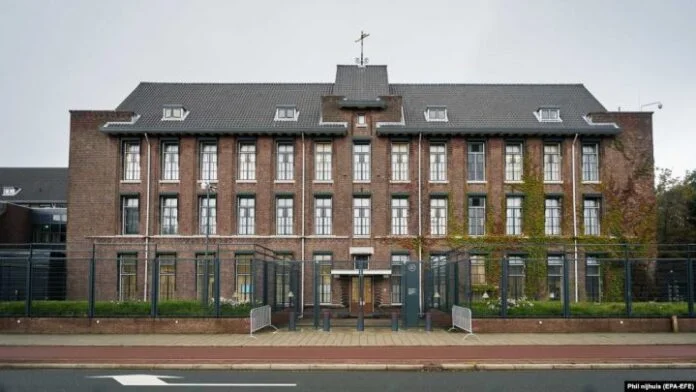
The Special Court for War Crimes in Kosovo was established in August 2015 with the decision of the Kosovo Assembly. At the time of its establishment, it was decided that the tribunal's headquarters will be moved to The Hague with the explanation that <x0-witters may feel threatened if judgments are held in Kosovo”. Court expenses are paid by the EU.
The official title of this court is “The Special Chambers and the Kosovo Special Prosecutor”. Room Speaker Ekaterina Trendafilova, special prosecutor head is Alex Whiting. The court also has a protection unit that ensures the protection of the victims.
Why was this court established?
The idea of establishing the Special Court came after the Council of Europe adopted a resolution calling on Kosovo to investigate allegations made by Swiss Europarliamentary Dick Marty, who in his EC-admitted report accused members and leaders of war crimes and organ trafficking. This report was submitted and approved to the EC in 2010. The charges of organ trafficking have not yet been confirmed. They are not even part of the actual indictment.
The Special Court is founded by the Assembly of Kosovo and has no connection with the former International War Crimes Tribunal in the former Yugoslavia. Two court processes against former KLA commanders, including Ramush Haradinaj and Fatmir Limaj, have also been held in this tribunal.
Special Court Political Dimension
Since the end of the war in Kosovo, there have been repeated clashes between PDK representatives (Democratic Party of Kosovo), founded by Hashim Thaci and the LDK (Democratic League of Kosovo) of former President Ibrahim Rugova.
Former LDK leader Fatmir Sejdiu has said without mentioning concrete names that members of his party have been the victim of acts of revenge because of their political position during and after the Kosovo war.
Because there have been repeated speculations about possible crimes after the war, it was Hashim Thaci himself who asked Kosovo's Parliament to set up a special court to whiteen all charges from Dick Marty's report, but also other faults. Later explanations said that the Special Court was founded under pressure, because if not established by the Kosovo Parliament, it would be founded by UN authorities.
However, since the establishment of the Special Court, other persons accused of war crimes have been sent to The Hague. So far only the former KLA regional commander, Salih Mustafa, has been convicted of war crimes. He's been sentenced to 26 years in prison.
The first estimates are said that the process against Thaci, Veselin, Krasniqi and Selimi will last for years. From the prosecution, they alone will be taken about two years to present their testimony and witnesses.
Thaci, Veselin, Krasniqi and Selimi were sent to The Hague more than two years ago. They say that “has gone to The Hague to prove personal innocence and to remove the stains of the KLA's fair war”. /DW