13 minutes ago
Who's going to pay the bills the Special asks for?
Periskopi(3 years ago)
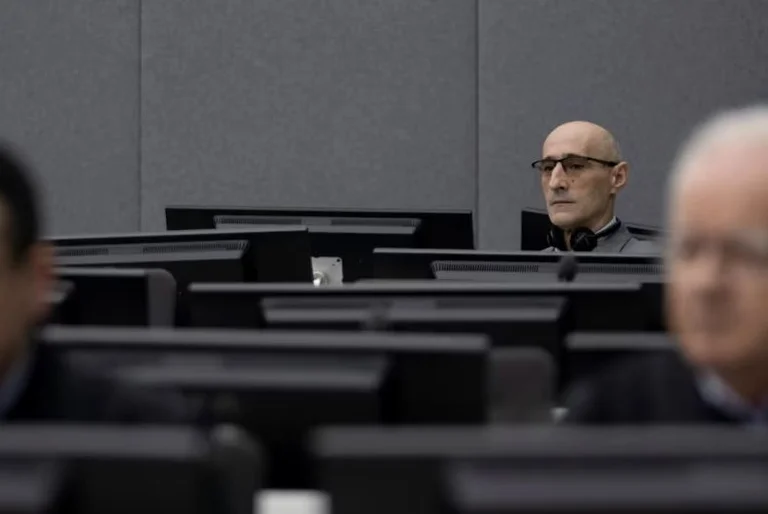
(3 years ago)The Kosovo government does not seem to have any concrete plans for possible compensation for the victims in the case of Salih Mustaf, former commander of the Kosovo Liberation Army, sentenced for war crimes in Kosovo by the Special Court in The Hague. This court, through a verdict made on April 6, ordered Mustafa to pay [...]
This court, through a verdict taken on April 6th, ordered Mustafa to pay 207 thousand euros on behalf of compensation for eight victims from the process.
However, during the proclamation of the verdict it became known that Mustafa has declared that he does not own the means to pay for the damage.
Founded in this situation, the court's court at the Special Court stressed the need “for the involvement of other actors in implementing the Order for Distrection, especially Kosovo”.
The REL asked the Special Court on April 18th whether it has received any response from the Government of Kosovo regarding its decision to damage the victims, but its officials denied accepting any information.
How is the damage to the victims in the Special Court envisioned?
The Special Court is part of Kosovo's judicial system, but operates internationally and has headquarters at The Hague.
There the alleged crimes of Kosovo Liberation Army members committed against ethnic minorities and political rivals from January 1998 to December 2000.
In the law, through which this court was established, it is estimated that the determined victims of crimes within the jurisdiction of this court have the right to damage.
The law envisions that the court could issue direct orders for damage, or, in some cases, instruct victims to file civil indictments in other Kosovo courts.
In the case of Salih Mustafa, the court issued direct orders for the damage to the victims.
Can Kosovo's budget pay for the damage to Mustafa's victims?
Under current legislation, the possibility of full compensation for these victims from Kosovo's budget is small.
This, because during the drafting of laws that the Special Court was established, no special fund was provided to compensate for possible victims resulting from the process.
Radio Free Europe asked the Ministry of Justice in Kosovo about how compensation can be made for these victims and in the written response reportedly the issue of compensation for crime victims covers the current law on the issue.
This law envisions that victims of crimes committed within Kosovo's territory can be compensated for by the state programme, in cases where one reason or another cannot be compensated by the person who committed the crime against them.
Within this law, however, restrictions are laid out for maximum amounts that individual crime victims can receive.
Depending on the type of damage that may have suffered the victim of a crime, the law envisions amounts of compensation of up to 4 thousand euros and, in very special cases, up to 10,000 euros.
The Special Court's decision to compensate the victims in Mustafa's case has seen amounts of between 2,000 and 80 thousand euros for each of the eight victims.
Despite Radio Free Europe's insistence, the Justice Ministry did not comment on the fact that the current law does not cover the amounts of damage already ordered by the Special Court.
Neither did the Kosovo Government's Office for Communication respond to the REL's request for comments on the matter.
Nongovernmental Organizations With Various Opinions About Harming
The Fund for Humanitarian Law in Kosovo (FDHK), which deals with transitional justice, welcomed the Special Court's decision to harm the victims.
“FDDK considers this order an advantage in implementing the right to compensation of victims”, the public declaration of this organisation of April 7th said.
This organisation also called on the Government of Kosovo to establish an adequate legislation and mechanisms that would offer the realisation of compensation for war crimes victims in Kosovo.
Bekim Blakaj, director of FDHK, told Free Europe Radio that compensation for war crimes victims is very important, but adds that compensation would have to be done for all victims even beyond the jurisdiction of the Special Court.
“If a fund had to be created for compensation of war crimes victims, which were confirmed by this court [the Special Court], it would not be fair to include only victims proven by the Special Chambers [at The Hague]”, Blakaj says.
But, according to the Council for Human Rights and Freedoms in Kosovo, the Special Court “cannot force the Government of Kosovo to compensate for these victims”.
According to this nongovernmental organisation, the funding for the victims' payment would have to be created from the Special Court's own budget, not to become an additional burden on Kosovo's budget.
We recall that the Special Court is financed by European Union states and several other contributing states.
According to the report published in 2021, this institution through 2016-2020 had a budget of more than 150m euros.
In 2015, when the Assembly of Kosovo adopted the Law for Special Court, MPs have adopted another law, which has guaranteed the potential indictees financial support.
The justice ministry did not show the latest figures for expenditures to accuse, but, according to some earlier estimates, this exceeds 13m euros.
This month, the trial of four former Kosovo Liberation Army superiors, Hashim Thaci, Kadri Veselini, Jakup Krasniqi and Rexhep Selimi, who are accused of war crimes and crimes against humanity has begun at the Special Court in The Hague.
The trial against former KLA member Peter Shala, accused of war crimes, is also under way.
How has the damage done to war victims in the region?
The region of the Western Balkans has been plagued by bloody wars in the years '90s, which have led to the breakup of then-Yugoslavia.
In 1993, The Hague Tribunal was established, which has dealt with war crimes committed in this region at the time.
The charges of this court have included the period from 1991 to 2001 and have targeted members of different ethnic groups in Croatia, Bosnia and Herzegovina, Serbia, Kosovo and northern Macedonia.
This court, unlike the current Special Court of Kosovo, has not issued any direct orders for injury to the victims, but the victims have been instructed to address local courts relevant to ensure damage.
According to a 2021 report published by the Fund for Humanitarian Law in Serbia, hundreds of indemnification indictments have been filed in courts in Serbia, seeking compensation from the Serbian state for crimes committed during the war in the 1990s.
This report does not show how many cases have won damages in total, but criticises the courts for providing small sums for compensation and have prolonged judicial procedures for victims.
On the other hand, according to data from Montenegro, millions of euros have been paid on behalf of the damage to war crimes victims in this country.
As for Bosnia and Herzegovina, this state does not have a specific state law to support war victims, including victims of sexual violence.
In an unprecedented case, a victim of sexual rape during the war in Bosnia and Herzegovina has managed through the United Nations Committee against Torture to force the Bosnian state to pay a compensation of 15 thousand euros./ REL/