2 minutes ago
Osman for “Serbia uses Russian tactics to spread violence in Kosovo
Periskopi(3 years ago)
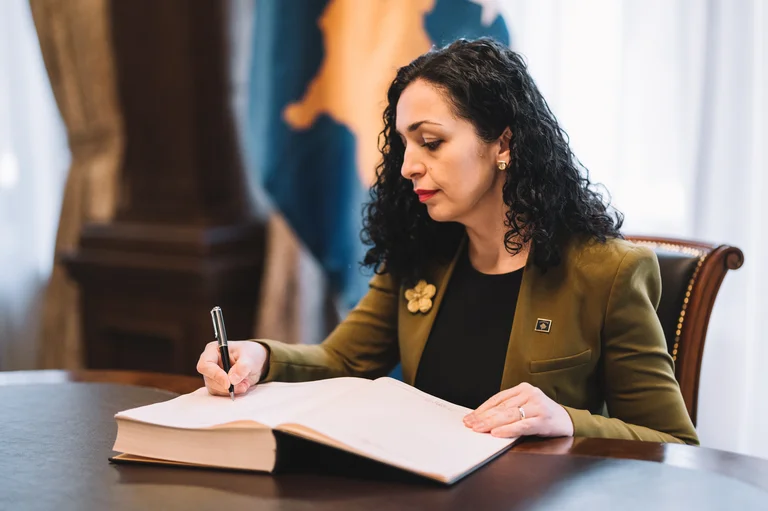
(3 years ago)Serbia, Vladimir Putin's ally, is using Russian tactics to intimidate their neighbour Kosovo, has warned the country's president, Vjosa Osmani. Ms. Osmani has spoken exclusively about The Sun Online in a long interview at her office in Pristina. It gave a cautious assessment of the unstable situation between the two states [...]
Serbia, Vladimir Putin's ally, is using Russian tactics to intimidate their neighbour Kosovo, has warned the country's president, Vjosa Osmani.
Ms. Osmani has spoken exclusively about The Sun Online in a long interview at her office in Pristina.
It gave a cautious assessment of the unstable situation between the two neighbouring states amid sweeping fears of a dangerous situation emerging in the Balkans, reports the newspaper 10.
Below is The Sun's complete article
Tensions have constantly flared between pro-European Kosovo and Russia-related Serbia, while the shadow of war in Ukraine has been thrown over Europe.
Miss Osman said about The Sun Online That while she still thinks a full-scale invasion is unlikely at this stage, she is concerned by Putin's tactics used by Serbia and its Russian-related president, Aleksandar Vucic.
It compared the early situation to that when Russia first annexed Crime from Ukraine in 2014.
Ms. Osmani said that Mr. Vucic is “is equally linked” to Putin, and she has earlier accused Serbia of planning an operation to seize Kosovo's territory, as Russia did in Crime.
The border of Serbia and Kosovo has historically been one of the most lighting in the Balkans.
Paramilitary groups, fearing they would be supported by the Serbian state and supported by Putin's mercenaries, the Vagner group, are active in northern Kosovo.
Mrs. Osman compared them to “the notorious green men” of Vlad who were deployed in the Crimea ʹ soldiers who wore no marks and headed Putin's annex.
Vucic also has about 48 military bases around his country's border with Kosovo, just as Russia gathered its forces before it entered the Crimea in 2014 and again in Ukraine at 2022.
I believe he's showing his purpose,” she told The Sun Online in the Parliament building.
It also fears Serbia arming and funding paramilitary groups, as did Putin with pro-Russian breakaway forces in Donbas after it invaded Crime.
Ms. Osmani warned: “All of this shows it's exactly the same plan”.
And the language used by some Serbian politicians is also extremely similar to Putin's comments to Ukraine.
The thrilling rhetoric from within the Serbian Progressive Party (SNS) Vucic when an MP called for the Balkan “denification” a popular expression often used by Putin to justify his bloodshed.
Ms. Osmani urged the West to continue supporting Kosovo, warning that the conflict in the Balkans will further destabilise a already fragile Europe.
This is not a remote problem,” she told The Sun Online.
The peace in the Western Balkans is very much related to peace in London, New York, Washington, Paris, Berlin, because history shows the lack of peace and security in Europe is a lack of international peace and security.
And this lack of peace and security in the Western Balkans means a destabilised Europe”.
Mrs. Osmani has said it's difficult to “understand the mind of the Ottomans” as Mr. Vucinq é saying that while the threat of occupation seems low now, this could change.
She said about The Sun Online: “Baptism does not seem very likely. However, many people said that it was impossible in Ukraine just two days before it happened.
And we were all at Munich Security Conference and the overwhelming majority were saying Russia would never do that.
Well, they did. ”
Kosovo and Serbia share a turbulent past, with a war lasting from 1998-1999, ending when NATO launched an air bombing campaign against Yugoslavia.
Western-backed intervention prevented Serbia's genocide of Kosovo Albanians, who was led by then Serbian President Slobodan Milosevic.
In the two decades since the end of the conflict, tensions have begun to boil, with strained relations coming back to the top in December last year.
Ethnic Serbs in northern Kosovo set up barricades in the divided town of Mitrovica using trucks loaded with stones, maiming the region.
Serbia still refuses to recognise Kosovo's citizenship and the bombings among Balkan neighbours sparked fears of a return to the blood-ridden conflict.
Popular leader Mr. Vuciq was former Information Minister for Milosevic who was indicted for genocide and crimes against humanity in a four-year trial.
Ms. Osmani tells us that Mr. Vuciq would give speeches criticising Milosevic “not because he did not agree with crimes”, but because they were not “severe enough against ethnic Albanians”.
Now, there are new concerns that Mr. Vuciq's support for Milosevic's policies could serve as a dangerous pretext for escalation.
Ethnic Serbs living in northern Kosovo continue to terrorise Albanians of the ethnic Kosovo minority in the region, as well as peaceful Kosovo Serbs.
Serbian paramilitary forces and criminal organisations help maintain violence in northern Kosovo, with Russia importing weapons and military uniforms, Ms. Osmani said.
It continued: “Serbia has openly supported these groups in northern Kosovo and committed crimes, including committing crimes against Serbs living in the north. ”
The imminent armed conflict seems impossible, as NATO forces and other international troops have a strong presence in Kosovo following the bloody genocide in the 1990s.
Lady Osmani has said her country is sure Serbia will fail if they try to invade and regain territory.
However, Russian infiltrate in Serbia remains a threat to Kosovo a country trying to gain EU and NATO membership.
In the latest talks, Kosovo Prime Minister Albin Kurti and Mr. Vucinq engaged in negotiations for nearly 12 hours.
The summit, held in the city of Ohrid in northern Macedonia, offered an 11-point plan unveiled by the EU last month.
The procedures ended with a hot verbal agreement, with Serbia refusing to put the pen on paper, despite willing co-operation from Kosovo.
The proposed EU-backed agreement says neither side will be involved in violence to lower disputes.
The main requirement from Kosovo was for Serbia to agree not to undermine their membership in the European Union or other international bodies.
It would also result in recognition between the two sides, with Kosovo and Serbia accepting travel documents, diplomats, plates and the other's customs seals.
It is not mentioned, however, that Serbia has effectively recognised Kosovo as an independent state a concession that Mrs. Osmani fears will only prolong tensions between the two nations.
She said: “We are absolutely disappointed that mutual recognition is not explicitly involved in this agreement, because this is the only solution that can lead to long-term peace and stability.
Serbia must reach the point where they realize that the reality of Kosovo as an independent sovereign state is a reality that will exist forever, we will not return, that will not change.
So, the sooner and more our partners say this and the more we make Serbia clear, the better for Serbia, the better for the region and certainly for our relations.
Another concern for Kosovo is Mr. Vuciq's close alliance with Putin, resisting pressure to support sanctions against Russia.
onja Osmani said: “is an illusion to believe that Mr. Vucic will be separated from Russia he will certainly play games and tactics and pretend like him, but he will continue to play with the same Russian and Serbian goals to destroy neighbours and destroy. Peace.
I believe it is time for Europe to stop calming him, because the calming of the Ottomans has never led to long-term peace. ”
The new reports have revealed that Serbian paramilitaries funded by Russia have smuggled weapons to Kosovo with the help of the notorious Wagner group, the Russian paramilitary organisation.
A week ago, Kosovo sanctioned the notorious private militia following widespread reports of their involvement in the destabilisation of the Western Balkans.
Ms. Osmani has said that Serbian paramilitary groups have clearly organised co-operation with Wagner.
A leader of an extreme right-wing party in Serbia visited the Wagner Group in Russia, calling it “a favor” to Russian media, while also mentioning that he knew Serbs who were already with the group.