4 minutes ago
Five months after the signing, stalling on adoption of agreements by the Berlin Process
Periskopi(3 years ago)
(3 years ago)Northern Macedonia has not yet ratified the 2022 agreements by the Berlin Process and dealing with movement only with identification, recognition of higher education qualifications and recognition of the professional qualifications of doctors, dentists and architects. Agreements by state leaders of northern Macedonia, Kosovo, Albania, Bosnia and Herzegovina, [...]
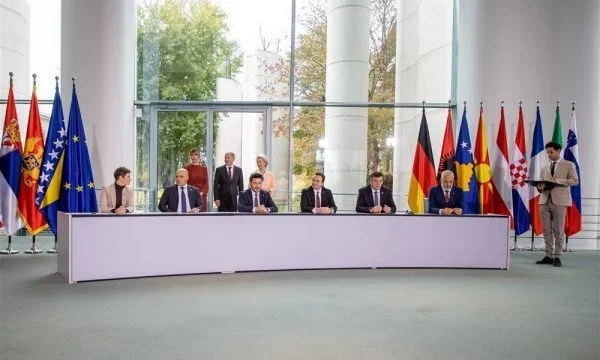
Agreements by state leaders of northern Macedonia, Kosovo, Albania, Bosnia and Herzegovina, Serbia and Montenegro were signed on November 3rd after nearly two years of negotiations, while entering into force after ratification by all states.
Five months after their signing, the agreements have been ratified only by Albania and Kosovo, while in northern Macedonia they have moved to the Government from which they have been sent for approval in Parliament.
“The bill for ratification of three agreements for free movement with IDs, recognition of diplomas and titles between Western Balkan countries, within the Berlin Process, as well as under the Central European Free Trade Agreement, has been submitted for approval in the Northern Macedonia Assembly of”, the Government said.
From the Parliament have told Radio Free Europe that the proposals are in parliamentary procedure, and soon their ratification is expected, as there is no obstacle to that.
From the Macedonian Institute for Democracy, they call on the Parliament to put them in order as soon as possible, as in the survey recently conducted this institute has found that citizens are very interested in starting to implement these agreements as soon as possible.
About 80 per cent of respondents expect ratification of the agreements due to the opening of the opportunity to work in another Balkan country for a longer period, the Institute for Democracy leaders say.
A large percentage of citizens see benefits from these agreements reached. It is clear that ratification of these agreements by Northern Macedonia will benefit the citizens of this country”, says Zoran Nachev of the Institute for Democracy.
Agreements have not yet been ratified by Bosnia and Herzegovina. This country's Council of Ministers has postponed the vote due to the lack of an internal consensus, respectively, of Republika Srpska's refusal because of Kosovo.
Bosnia and Herzegovina does not recognise Kosovo's independence, and citizens of both states must be equipped with visas if they want to travel to the respective states.
If the agreement were ratified, then it would enable the visa-free movement of citizens from Kosovo and Bosnia and Herzegovina.
Serbia's government, for its part, has approved the agreements, but the bills are still in parliamentary procedure, just like Montenegro.
The Berlin Process is an initiative initiated in 2014 by then German Chancellor Angela Merkel. This process focuses on the free movement of people and the creation of a common regional market.
The process also includes EU institutions, international financial institutions and civil society in the region.