4 minutes ago
International experts: Hard to convict former KLA leaders
Periskopi(3 years ago)
(3 years ago)Prosecutors specialising in The Hague will find it difficult to testify that former Kosovo Liberation Army leaders are guilty of alleged crimes, two transitional justice experts, Mathias Holvoet and Aida Hehir, told Radio Free Europe. Holvoet, legalist of International Criminal Law at Amsterdam University in Holland, says [...]
Holvoet, the legalist of the International Criminal Law at Amsterdam University in the Netherlands, says he is also impressed by how powerful the defendant's defence team is.
The problem is always finding the connection between physically committed crimes on the ground and the most powerful people in the organisation, such as [Hashim] Thaci, [Carri] Veselin, [Recep] Selimi and [Jakup] Krasniqi. And this will have to be witnessed by the prosecution and it will be difficult.
As an example of how difficult it is for such a link to be testified, Holvoet refers to The Hague Tribunal's judgments in cases against former KLA superiors Ramush Haradinaj and Fatmir Limaj, who were acquitted of war crimes and crimes against humanity.
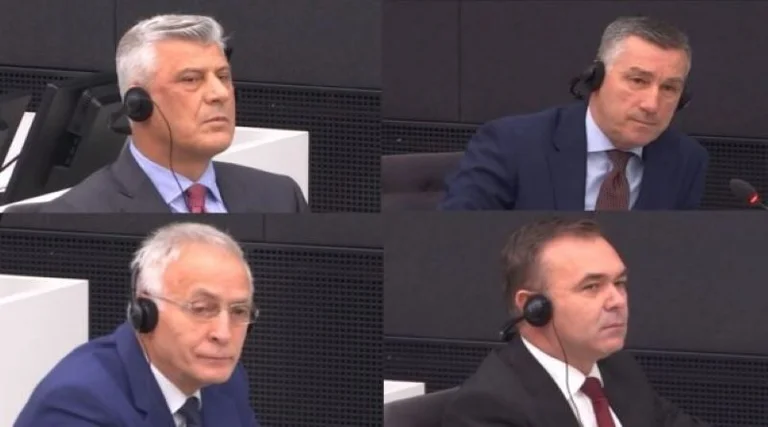
After more than two years of confirmation of the indictment, the trial of Hashim Thaci, Kadri Veselini, Rexhep Selimi and Jakup Krasniqi started on Monday, April 3rd, at the Special Court in The Hague. They are accused of war crimes and crimes against humanity.
During the opening statements, the prosecution argued that the accused and other members of the KLA have been part of a “joint criminal enterprise” targeting those who considered “corporations” and “traffickers” to gain power “.
While the lawyers dismissed all charges weighing on their clients, arguing that the KLA did not have an efficient command structure.
For Holvoet and Hehir student of transitional justice, humanitarian intervention and statehood in Kosovo by Westminster University in England what is most apparent is the use of the term “joint criminal enterprise”.
“Anyone aware of what happened in Kosovo will not be surprised that there are claims that KLA members have committed crimes. But this court seems to be accusing the KLA as a whole of some kind of big strategy, which I think is unstable”, Hehir says.
The “Ide that the KLA is a criminal enterprise... this term is very humiliating and I think it will alarm people [in Kosovo] and really affect the nerve people feel about as heroes”, he adds.
During the opening statements, the specialised prosecutor, Alex Whiting, said the case against the former four KLA leaders has nothing to do with them, not all the KLA, adding that the “most of the KLA members had nothing to do with the crimes for which the indictment was filed”.
On the last day of the opening statements, April 5th, the former spokeswoman The KLA, Jakup Krasniqi, said its statements at the time were used by prosecutors as evidence were only propaganda to create “the impression that the KLA was organised structure”.
However, Holvoet notes that there have also been penalties for spreading propaganda at The Hague Tribunal.
Milan Gvero, assistant commander in the Bosnian Serb Army, was sentenced in 2010 to five years in prison for distributing false information.
According to The Hague Tribunal's trial, through false information, he had contributed to the joint criminal enterprise intended to ethnically clean up the Srebrenica area in Bosnia and Herzegovina.
According to Hehir, the trial process against former KLA leaders will be under the shadow of protests that took place in The Hague and in Pristina before the launch of this process. This especially since he expects the process to be slow.
“I think it will be a slow process of revealing information for three, four, five, maybe even six years”, he adds, expressing disappointment at the length of this process.
But, Holvoet argues that even though the process seems to last too long, it should be so so that the lawyers of the accused can also argue.
“is inevitable. It is, in a way, to ensure the right to right judgment. But, I think the problem is that they will be in custody along the trial without being able to be temporarily released”, Holvoet concludes.
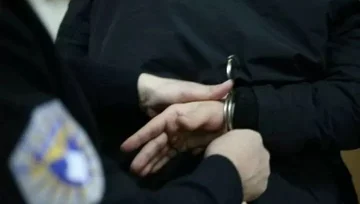
Thaci, Veselin, Krasniqi and Selimi are in custody at The Hague in November 2020.
They have been declared innocent of the charges brought against them.