6 minutes ago
“Keep your head down” Americans in Russia walk carefully after the arrest of American journalist
Periskopi(3 years ago)
(3 years ago)If Americans in Russia were concerned earlier, they now have an additional reason for concern. The arrest of Wall Street Journal journalist Evan Gershkovich has sent alarm waves to the community of American journalists in Russia, leaving many instead to ask who, if anyone, could be next. Gershkovich [...]
The arrest of Wall Street Journal journalist Evan Gershkovich has sent alarm waves to the community of American journalists in Russia, leaving many instead to ask who, if anyone, could be next.
Gershkovich was captured by security service officers FSB in late March while on duty in Urals, Yekaterinburg. He now faces a 20-year detention sentence for spying. The US government says it is “that it was accidentally arrested”.
Although the Kremlin insists that it was “caped in the background” by breaking Russian law, the arrest has been widely interpreted as a warning signal either to foreign journalists or to Americans alike.
Most of Gershkovich's American colleagues, who had continued reporting from Russia, despite military censorship laws, have now been sent to clashes.
Many Western news agencies that sent journalists to Moscow under Stalin have ruled that President Vladimir Putin's Russia is too dangerous for journalism,” said the Wall Street Journal last week, after withdrawing its office chief from Moscow.
The attitude among American immigrants outside the small community of journalists may well be summed up in the fact that none of those to whom this article was discussed wanted to be appointed for fear of consequences. Some refused to be mentioned at all - even anonymously.
However, most insisted that Gershkovich's arrest was not a change in the game that Wall Street Journal reporter was arrested because he was a journalist rather than an American, and that they, as ordinary civilians, were safe.
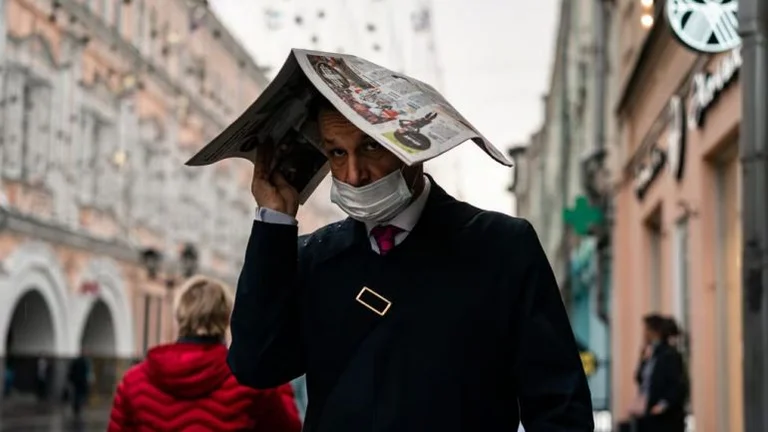
“If you keep your head down, then at the moment you can continue to live your life”, told about POLITICO An English teacher in her 30 ' s.
Hostage Diplomacy
The number of Western immigrants in Russia has dropped in the year since President Vladimir Putin's full attack on Ukraine, with travel restrictions, financial sanctions and the ecstasy of Western companies putting pressure on too much to flee.
Those who stayed behind often have deep family, economic, and emotional ties with the country.
How many American passports holders remain unclear. An American Embassy spokesman said the “number of American citizens in every country is fluent and we do not want to give in a number that is outdated or incorrect”. The figure is likely thousands.
For more than a year, the U.S. State Department has classified Russia as one of the most dangerous sites to visit, advising American citizens not to travel there and US residents to leave. Among the reasons given is the threat of arbitrary arrest.
Gershkovich's arrest marks the first arrest of an accredited journalist since the Cold War. Other Americans who were arrested in Russia include Paul Whelan, a former American businessman currently serving a 16-year sentence in Russia for spying and basketball player Britney Greener, who was sentenced to nine years on charges of drug possession.
Greener was released in December as part of a high profile exchange of prisoners with arms dealer Victor Bout in an agreement celebrated by its supporters, but was also criticised as encouraging, what some call a Russian practice of hostage diplomacy.
Fear is that as the war drags on, Moscow can capture more foreign citizens to use them as a lever against what it refers to as the <x0). In an up-to-date foreign policy document published by the Kremlin two days after Gershkovich's arrest, the US was named “the source of key risks to Russia's national security”.
As standard practice, the US Embassy examines and re-publics its advice every six months. He did so in February, weeks before Gershkovich's arrest. Major political developments may also serve as a reason to repeat or improve the message, as in September, when the embassy warned dual citizens in Russia against the risk of mobilization.
Now, senior officials are again urging Americans to leave.
“US citizens living or travelling to Russia must leave immediately,” Secretary of State Antony Blinken said a day after news of the Gershkovich detention was published, citing the “danger presented to American citizens within the Russian Federation”.
Forbidden Subjects
For many Americans living in Moscow, frequent warnings from the U.S. government have done little to change their estimate of departure or attitude.
For a long time, I have had no illusion that if I were arrested, the embassy could do little about it,” said a 36-year-old American national working as consultant. and lived in Russia for 14 years.
But, he added: “I work from home. I don't have a lot of situations where I'm crossing the streets with the authorities”
Another immigrant, a 39-year-old manager with a Russian woman and two children, outlined a similar calibration process.
When you get into a car, you have to consider the possibility that someone will throw you in the arm and kill you, he said. When you go to Russia, you need to understand that you can be targeted for one political reason or another, or do something stupid without understanding and ending up in prison”.
Americans in Russia should be more careful, he added, “the same way a black man should be more careful in the United States”.
He thought he had flown back to Russia at the end of 2021 when troops gathered at the Ukrainian border and was questioned by security officials and told to hand over his phone.
For some time thereafter, he would receive reports that someone was trying to access his account on the telegram text app.
Stories such as these are common among foreign journalists and, since postwars, even non-journalists.
The manager said he was not too concerned about his safety, as he had nothing he considered sensitive on his phone and because he was not a prominent figure like the others who were detained.
“has different coin cuts,” he said. “I'm not a basketball star or a journalist with a target on my back. I'm not worth it enough for anybody. ”
Others echoed that sentiment.
In the words of a 33-year-old PR employee with two citizenships: “as long as you don't mix on banned themes, I don't have the feeling that people with foreign passports will start to stop, like that”.
“Once this starts happening, then surely it will be time to get out of”. /Albanian newspaper