20 minutes ago
Grasping the current signals expensiveness of other products
Periskopi(3 years ago)
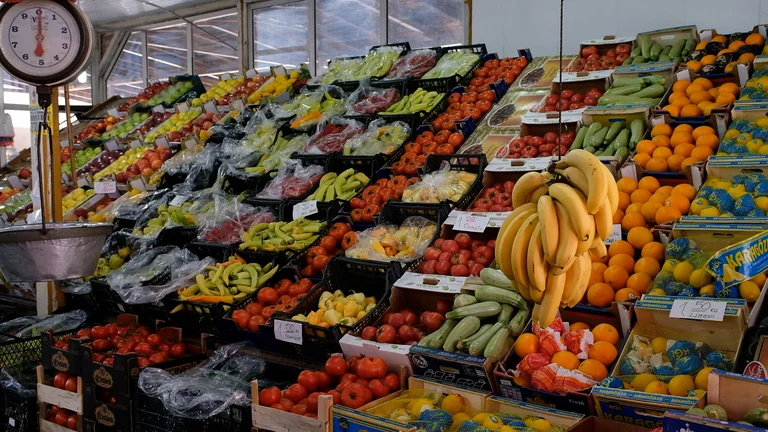
(3 years ago)For the four-member Makovci family from Miloseva Tbilisi Community a new increase in product prices would be difficult to bear. I don't know how we'd do... We'll buy less stuff. They are also expensive”, says the Sheriff's head of Radio Free Europe. Monthly income in family [...]
I don't know how we'd do... We'll buy less stuff. They are also expensive”, says the Sheriff's head of Radio Free Europe.
Monthly income in her family does not exceed over 400 euros. The only one employed is her son, who works as a taxi driver.
If more than a year ago I bought some of the products for a month... now they're twice as expensive”, the Sheriff says.
We're very hard to close this month. We have expenses not only for food but also for electricity, water, waste, and other”, she says.
In Kosovo, as elsewhere in the world, inflation has begun to rise at the end of 2021 as a result of market disorders that have caused the pandemic and the coronary while taking off from February 2022 when Russia has begun its invasion of Ukraine.
Kosovo has closed 2022 at the average inflation rate of nearly 12 percent.
But a new price hike is warning business representatives and owners of production companies. This is due to increased electricity prices.
From April 1st, new electricity tariffs with an increase of 15.4% for all consumer categories have been enacted in Kosovo.
Additional costs in production
The increase also increases production costs, says Sylejman Konushevci, owner of a Kosovo oil factory.
“At the moment, a liter of oil is 1.15 to 1.20 euros [resource price]. We cannot preserve this price we now have with this increase in the current that has been made. I'm sure one litre of oil will be done by 1.30 euros”, Konushevci tells Radio Free Europe.
Similar beliefs state the chairman of the Kosovo Chamber of Economics, Lulzim Rafuna.
“Getting electricity prices is not good news for businesses. This increase is an additional cost to local producers and will affect the expensiveness of other products”, Rafuna says.
Moreover, he adds, rising electricity tariffs put local producers in an unfair competition with companies exporting to Kosovo.
“States like Germany, Italy, Croatia, their governments have subsidised businesses the gap in increased electricity prices. This, with automatism, has not influenced the manufacturer to have extra costs, so that he can extract the product at the highest price of the consumer”, Rafuna tells Radio Free Europe.
Producers in Kosovo have repeatedly complained of unfair competition, high interest rates and unfavourable fiscal policies.
Free Europe Radio has reported earlier that due to this situation, local products are often more expensive than those imported.
Rafuna says producers have not found support from state institutions.
“has lacked public-private dialogue. We are demanding that a fair and transparent communication be established between businesses and government. We are demanding that before any decision is made, business should be discussed with them to know the effects that a person might have a relevant” decision, Rafuna says.
The government of Kosovo, in the past, has undertaken several initiatives, such as “superpuna”, which has subsidised company owners, paying the worker's salary for six months, worth 264 euros.
Kosovo Prime Minister Albin Kurti has pledged that his government will continue to support citizens.
Our support for citizens will continue even after the recent decision by the Energy Regulatory Office [for costing electricity], where, among other things, we will subsidise households for energy consumption up to 800 kilowatts per month, while vulnerable groups, such as families with social assistance, will have special treatment”, Kurti has said to reporters.
By September last year, the government has subsidised all citizens who spend less electricity a month compared to the same month of the year before.
Each consumer saving at least 5% of the bill receives subvention twice the saving rate. This government subvention is still in effect.
The sheriff shows that the latest electricity bill has paid 32 euros. With a price of 15.4 percent, it will rise for about 5 euros.
Kosovo Central Bank Governor Fehmi Mehmeti has warned in an interview given Radio Free Europe in January that inflation will decline in the second half of this year.