2 minutes ago
Financial Institutions in Kosovo Without Homelessness

Periskopi(3 years ago)
(3 years ago)Kosovo's three main financial institutions, which manage state and taxpayers' money, have remained without leadership because of “political struggle”, says University of Pristina Economics Professor Majidi Bektashi. According to him, parliamentary parties in the Kosovo Assembly aim at distributing positions to their people. While financial stability [...]
According to him, parliamentary parties in the Kosovo Assembly aim at distributing positions to their people.
While the financial stability of the state wavers, the institutions did not respond to the demand for comments.
The Kosovo Pension Savings Fund, also known as the Trust, has been left without board on March 1st. At the end of this month, the mandate of the governor of the Central Bank of Kosovo has expired, while the State Tax Administration is managed by task manager from last year.
On Friday, April 7th, the Commission for the Budget and Finance has demanded from Parliament Speaker Glauk Konjufca that the process of selecting candidates for governor of the Central Bank start from the beginning. In contrast, the candidate selection for the Pension Fund Board has returned to zero on Friday.
Kosovo's Pension Savings Fund collects the money of Kosovo contributors. The amount of these tools has reached over 2.4 billion euros, a portion of which is invested in international markets.
The first attempt at selecting candidates for members of the Trust Board has failed.
The Kosovo Central Bank announced on April 7th that, due to the registered shortcomings, the competition will be resurgent next week.
reportedly, during the “contest, there was a lack in the search for information needed to provide an assessment and objective verification of candidates within a reasonable period of”.
The event of the Savings Fund regulates the Kosovo Assembly, which appoints members of the Board, while overseeing it the Kosovo Central Bank.
The four-year term of all members has expired in November last year, but, due to their anonymity, they have continued the mandate for 90 days.
Their mandate ended at the end of February.
The competition for board members has been open in December last year, and 48 candidates have competed for these positions. From the Fund say to Radio Free Europe that all documents accepted by them have been sent to the Kosovo Central Bank.
The board consists of at least five professional members, two representative members, one of the employers' organisations, one of the employees' organisations and a government representative without the right to vote.
“In the absence of the Steering Board cannot change the investment situation. No vehicle movement, increase, withdrawal or change can be made by the other organs of the Fund”, says the institution's spokesman, Jeton Demi, for Radio Free Europe.
According to him, new contributions remain in the account of the Pension Savings Fund and the Central Bank of Kosovo. Trust tools are invested in 23 different funds worldwide.
In the event that any financial difficulties in international markets, where the means are invested, the lack of board cannot afford access to investment. The consequences, then, are carried to citizens, says Professor Bektash.
If the international stock exchanges have price fluctuations, investments could be reduced and, therefore, the value of contributors' means, it explains.
Every day lost in the election of the Steering Board is a potential risk to contributors' money”, Bektas says of Radio Free Europe.
Financial Stability in the CEC, in the hands of interim governor
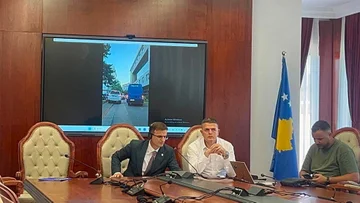
Meanwhile, the Board and Finance Commission, 7 April, has asked Kosovo Parliament Speaker Glauk Konjufca to return to zero, and the process of selecting Central Bank governor candidates, due to “oversumption of meeting conditions defined in law”.
Considering that the governor is also a member of the BQC Board, it means that this body is even without a member.
This institution is currently managed by the interim governor, Bashkiba Nubono.
The CEC, on February 1st, has submitted the candidate list for this position in the Assembly and Government.
Ferat Shala, a member of the Commission for Business and Finance, told Radio Free Europe on April 6th that the “legal breach” and that “has come (on commission) with strategies to fail it”.
Shala gave more information on what strategy this is about.
“This is the result of the majority's policies to place obedient quarts in financial institutions”, Shala told Radio Free Europe.
According to him, because of the ruling party's interests, the Vetevendosje Movement, the country's financial stability is at stake.
“Institutions without leadership, do not have the power, do not have the authority, do not have the courage to make big decisions, such as the Trust investment case, then big loans or even revision of institutions' policies. Currently, there is no decision-making power of the Trust and the CEC, to adapt policies to the conform economic situation the country is going through”, Shala said.
Free Europe Radio contacted Amend Muja, chairman of the Commission for Business and Finance in the Kosovo Assembly, simultaneously MP from the ruling party, to ask him about these processes, but he did not respond.
And during the word on the commission, he has said that “after the selection is made must be launched the integrity verification process. The list of electives must be secured, under the law, whether he was convicted of violation of the law, was a debtor in a bankruptcy procedure and because of poor behavior, there are other points...”, Muja said.
Even ATK with task guides
The Kosovo Tax Administration (ATK) is also guided, with task guides Ilir Murtezajn from February of last year.
The general director of this institution is appointed by Kosovo's prime minister, given the recommendation submitted by the Ministry of Finance.
The prime minister's office and the Ministry of Finance did not answer Radio Europe's free questions about when the competition for this position is expected to be announced and whether it impedes decision-making positions of the task leader.
The ATK mission is to collect taxes and contributions to support the economic development and welfare of Kosovo citizens.
Last year, this institution has issued 723.9m euros in taxes.
“
In the absence of the Steering Board, Governor and Director General, the institutions are not effective and are unable to make adequate decisions, says Professor Bektash.
Their anonymity, he calls “political warfare”, as in Kosovo, according to him, there are enough professional frameworks to lead these institutions.
“After all, this is a political struggle among parliamentary parties, but the consequences and damage are experienced by ordinary citizens, whether they are taxpayers or contributors to the Kosovo Pension Trust”, Bektas says.
The Fol Movement, which campaigns against corruption, describes the government of Kosovo as a failure to appoint leaders of financial institutions.
“There is no shortage of frameworks, but the attempt at political interference, yes, which is driving professionals away from applying at these positions”, says Viona Bunjaku, researcher in this movement.
Civil society organisations, but also international mechanisms in Kosovo have consistently voiced criticism that on the boards of most public institutions, people who have a political background or have direct ties with political parties are appointed.
In fact, a research by the Institute for Advanced Studies, GAP, published in 2020, has pointed out that among the most attractive positions in the public sector in Kosovo are those on board public companies and independent institutions.
According to this report, because of higher monthly income, distributed responsibility and minimum accountability to the public, the ruling parties view boards more like “employment opportunities for party members and their family members”, rather than a professional body for proper management.