18 minutes ago
EU: Commission for Monitoring Implementation of Kosovo Agreement Formed
Periskopi(3 years ago)
(3 years ago)The European Union has announced that the joint Commission for Monitoring the implementation of the Agreement reached between Kosovo and Serbia has been established on Tuesday for normalising relations. The agreement has been reached 27 February in Brussels, while compatibility for the implementation annex has been reached on March 18th in Ohrid. The Commission's founding news has made [...]
The agreement has been reached 27 February in Brussels, while compatibility for the implementation annex has been reached on March 18th in Ohrid.
The news of the Commission's establishment has revealed EU spokesman Peter Stano.
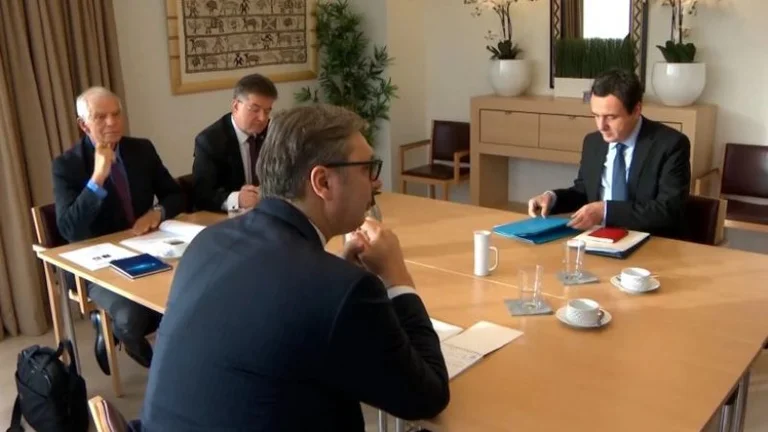
He has also confirmed that the next summit, between Kosovo Prime Minister Albin Kurti and Serbian President Aleksandar Vuciq, will be held 2 May in Brussels.
The joint Commission's “task is to monitor implementation of the Agreement on the road to normalisation of reports between Kosovo and Serbia and its implementation annex. This is the concrete result and concrete implementation of what was achieved 30 days ago, at the summit, between Serbia's president, Vuciq and Kosovo Prime Minister Kurti“, Stano has said.
According to the EU, the member of this joint commission will be EU special envoy for dialogue Miroslav Lajcak, who will head that body on behalf of the EU.
Kosovo will be represented by its ambassador to Brussels, Agron Bajrami, while Serbia will represent, its delegation's chief for dialogue, Petar Petkov.
EU spokesman has announced that this joint Commission will meet regularly in Brussels, while details will be exacted and approved at its first meeting.
The first meeting will take place, after the next summit, between Kurti and Vucciki.
The 11-mother agreement, made public on February 27th, does not force Serbia to recognise Kosovo, but requires both countries to accept each other's documents and symbols, including passports, diplomas and license plates.
Kosovo and Serbia have reached dozens of agreements from the start of the dialogue, but most of them have not been implemented and parties have blamed each other for the impasse.