8 minutes ago
Escobar: I expect Kosovo government to have a proposal for association by 2 May
Periskopi(3 years ago)
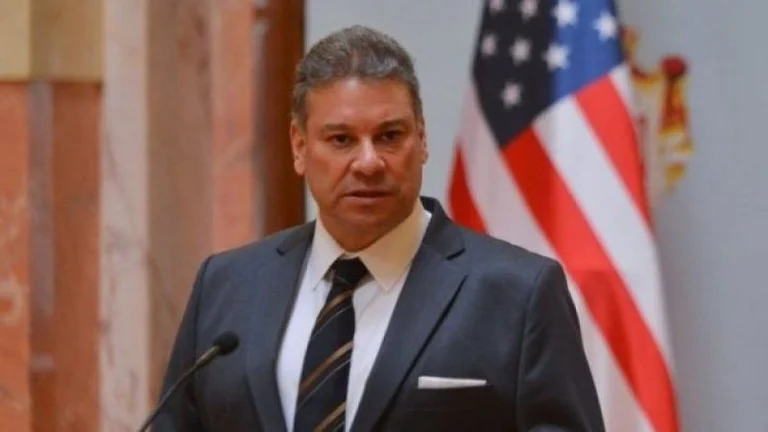
(3 years ago)The US special envoy for the Western Balkans, Gabriel Escobar, says he expects to have a proposal from the Kosovo government for the Association of Serb-based municipalities by 2 May when the leaders of Kosovo and Serbia meet in Brussels. Deputy Assistant Secretary of State for South and Central Europe praised in [...]
The State Department senior official also said the United States will recognise Sunday's elections in northern Kosovo if they are free and fair, and stressed that he has asked the Serbian List to play its role.
Voice of America: A month after reaching the Ohrid Agreement (between Kosovo and Serbia), the only progress is the formation of the Joint Monitoring Committee in Brussels. What is your assessment of the process so far?
Gabriel Escobar: First of all, I mean this was an extraordinary deal. It is an agreement for normalisation and good peaceful relations according to European standards, according to the European framework, between the two sides that would characterize me as two hostile neighbours. That's what we wanted. So I would say that this in itself was an extraordinary achievement. If properly implemented, I think this could bring a new era of peaceful relations between Serbia and Kosovo
Voice of America: Experience in the Balkans shows that reaching an agreement does not mean that problems have been solved. Implementation is the main issue. Where do we stand in this regard?
Gabriel Escobar: I must say that we have undertaken, or accurately, the European Union with the mediation of this dialogue, has set forth an aggressive agenda on which I hope to have an application calendar of all points within the year.
Voice of America: The so-called Serbian Majority Communist Association remains one of the main topics. Has there been any progress in this regard?
Gabriel Escobar: I would say yes. First of all, to be fairly direct, we have seen an extraordinary evolution in the Kosovo government's stance, and in particular, the prime minister, to accept this legal obligation. It is an existing obligation under the Brussels Agreement, and it was very difficult for this government and party to accept it as mandatory. But now they are considering it a obligation, agreeing with it and publicly saying what the framework and parameters of association should be. And we agree with these parameters.
Voice of America: Is there a timetable for Association and perhaps implementation of the agreement as a whole?
Gabriel Escobar: When the two leaders meet in May, I would like to see a draft plan by the Kosovo government.
Voice of America: Do you mean that nothing has surrendered yet?
Gabriel Escobar: Nothing was expected so far, but I hope that by 2 May there will be a concrete proposal.
Voice of America: Let's talk a little bit about elections in northern Kosovo. In an interview Wednesday, you said Washington is willing to recognise the outcome, regardless of whether the Serbian List boycotts them. Are you concerned about the legitimacy of these elections if they don't participate?
Gabriel Escobar: First, the boycott does not determine the elections. In the election campaign in Serbia in 2019, the opposition boycotted the elections. And we called on him to attend. Not participating was her choice (opposition). And after the elections, we recognized the government that was formed by them. In this election we have called on and I have personally asked Serbs, the Serbian List, to participate and not give up their role. Not participating is their decision. But these are predicted by the Constitution. There are unfinished places. There are people who aren't taking services from local government because there's no participation. So if these choices are free and fair, and I predict to be, the result will be legitimate from our point of view.
Voice of America: The person who can influence this decision is Mr. Vucic. Have you talked to him about asking to interfere?
Gabriel Escobar: I'd say he doesn't definitely specify whether they participate or not. Of course, he has influence and has tried to use that influence. But the Serbian List has insisted it has its reasons it does not want to participate.
Voice of America: Can you tell us what you talked to Mr. Vucic?
Gabriel Escobar: He's too worried about some things. He is very concerned about the conditions in which Serbs live. True, there is some isolation of that community by the central government and we have asked both sides to find ways to compromise on these issues. But the truth is, we have empty places in institutions that need to be fulfilled.
Voice of America: With the Serb List boycotting elections, what will be the impact of these elections on forming association? If you insist that this association be formed, who will you do with, who will be the people appointed there?
Gabriel Escobar: That's a question to ask them. This was one of the reasons why I wanted them to participate and continue to encourage them to participate in the civic and democratic life of the northern Kosovo. And I think that's important. Now, there are jobs to complete. There are jobs that need to be met and institutions that need participation. So I hope they find a way back to institutions. And I hope they find their way into the future into the chosen leadership.
Voice of America: Could their boycott potentially delay the establishment of association?
Gabriel Escobar: No. That obligation is immediate, existing. So no matter who's in power, the association should be formed.
Voice of America: Serbian President Aleksandar Vucic has said he will only partially implement the Ohrid Agreement. In fact, your interview Wednesday in many media was published in addition to Mr. Vucic's statement saying Serbia would not agree that Kosovo would become a member of the UN. Kosovo's membership in international organisations is envisioned in the Ohrid agreement. Does this compromise the deal?
Gabriel Escobar: I don't think so. Both countries must approach Euro-Atlantic institutions. That is the ultimate goal. The issue of UN membership is difficult. We should focus more on candidacy to the European Union, steps of approaching NATO and all other structures, including approaching each other, would have a direct impact on the lives of their citizens. So we are focused that through this agreement we bring Kosovo and Serbia as soon as possible to Europe and the United States.