34 minutes ago
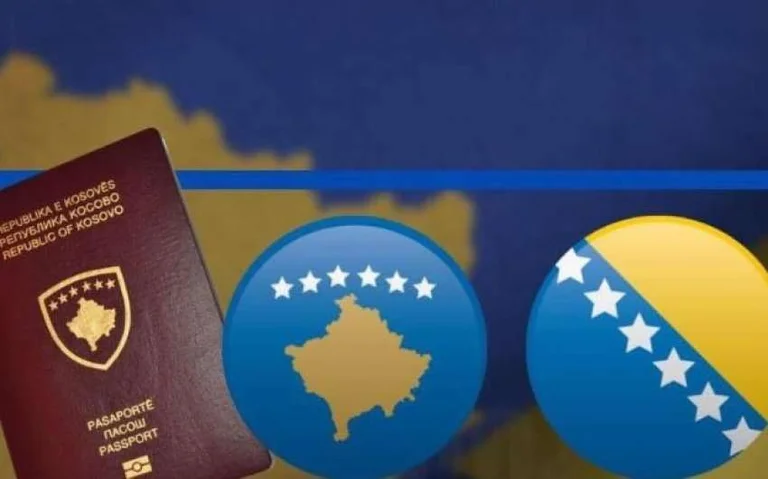
Double standards on the road from Kosovo to Bosnia, visas are only given in case of disease or death
Periskopi(3 years ago)
(3 years ago)Just in case of serious illness or death, God save us! “That is the answer Rizah Sokoli says he received from Bosnia and Herzegovina's Foreign Service after his brother, who lives in Kosovo, has sometimes been denied visas to visit his family in Bosnia. Bosnia [...]
“Only in case of serious illness or death does God save us!“
That is the answer Rizah Sokoli says he received from Bosnia and Herzegovina's Foreign Service after his brother, who lives in Kosovo, has sometimes been denied visas to visit his family in Bosnia.
Bosnia and Herzegovina does not recognise Kosovo's independence, so Kosovo citizens can enter Bosnia with visas that give “only in extraordinary cases”.
Meanwhile, Kosovo residents, who have Serbian citizenship, can enter Bosnia and Herzegovina without a passport but under separate conditions.
Earlier this month, Bosnia and Herzegovina's Ministry of Security has prepared a decision to approve the entry of more than 700 children of Serbian nationality from Kosovo, with birth certificates and school booklets.
This minister told Free Europe Radio that this decision should be approved by the Bosnia Council of Ministers, at one of the upcoming sessions.
Ministry officials added that, apart from the state government, the court and prosecution in Bosnia could also allow the entry of a foreigner without a passport or documents from a country Bosnia does not officially recognise.
After Serbia, Bosnia is the only country in the Western Balkans that does not recognise Kosovo.
The recognition calls for the consent of all three Bosnia's presidency members and since 2008, when Kosovo has declared independence, all members from Republika Srpska have rejected it.
Serbian representatives to the Bosnia Council of Ministers have also banned ratification of the agreement on identity card movements in the Western Balkans, which was signed on 3 November, 2022.
On the basis of a 2012 decision by the Bosnia Council of Ministers, Kosovo citizens cannot travel to Bosnia and Herzegovina as tourists.
They are forced to obtain a visa, which is not settled in the passport but is issued on a separate form, “only in extraordinary cases”, at Bosnian embassies in Skopje, Podgorica and Belgrade.
He can go to Belgrade, but not Tuzla
Rizah Sokoli, chairman of the association “Dania” that unites Albanians in Bosnia and Herzegovina, says it is absurd for a family living in five countries to meet without problems in the middle of Belgrade where Kosovo citizens can travel freely but not even in Tuzla, a town in northern Bosnia, where he has won the pension.
Sokoli has two citizenships. He crosses Bosnia and Serbia's border with Bosnian ID, then enters Kosovo with Kosovo ID, but says hundreds of Albanians from Bosnia, mainly young people, cannot do so.
Bosnian citizens need visas to enter Kosovo.
For some there is justice, for some there is no”, Sokoli comments on the fact that citizens of Serbia can cross the border with identification, or birth certificate, or student card, while those who have only Kosovo citizenship cannot enter Bosnia either with a passport.
Sokoli says that the association he is running has long given up “from organising the arrival, for example, of cultural and artistic societies from Kosovo, due to paperwork and visa issue expenses.
The Republika Srpska Committee for the Help of Serbs in Kosovo, registered as the humanitarian association, is organising the arrival of 728 children from Kosovo citizens of Serbia to Bosnia and Herzegovina from 24 June to 2 July.
The chairman of this association, Milorad Arlov, explains to Radio Free Europe that organisers should receive guarantees from the Republika Srpska Ministry of Education, as well as from municipalities and cities where children will be accommodated, so that the Council of Ministers of Bosnia and Herzegovina will approve their entry and position on specific conditions.
We haven't had any problems on the last ten visits in which more than 6,000 children have participated. Those children cannot obtain a Serbian passport in Kosovo, and it would be a great expense for them to travel at least twice to Belgrade for passports. They will travel with birth certificates and school booklets”, Arlovov says.
He adds that the best students from 40 elementary schools will be placed in the family in 19 cities in Republika Srpska é from Trebinje in the south to Gradiska in the north -- “with the goal of recognising Republika Srpska and all its” images. Spending will be financed by local communities.
Goods do, people don't
Bosnia and Herzegovina and Kosovo are signatories of the Central European Free Trade Agreement (CEFTA), which has removed customs duties and enabled free flow of goods between the two countries.
According to Bosnia and Herzegovina's Foreign Trade House data, companies from Bosnia each year export six times more goods to Kosovo than they import.
Total exports from Bosnia and Herzegovina to Kosovo in 2022 have reached around 71m euros, while imports from Kosovo have been around 11.7m euros.
A third of Bosnia's goods exported to Kosovo are iron and steel, followed by meat, milk and wood products.
Bosnia and Herzegovina imports iron and steel-ready products from Kosovo, as well as raw tires and leathers.