12 minutes ago
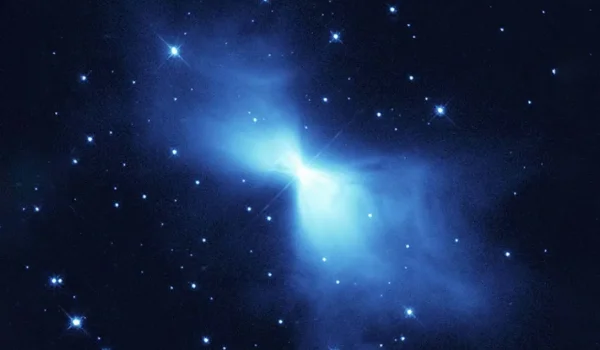
This is the coldest place in the universe.
Periskopi(3 years ago)
(3 years ago)Have you ever thought there might be a colder place than Antarctica? Set about 5,000 light years away, the Boomerang Nebula is the coldest natural environment ever discovered in the known universe. The Boomerang Nebula, consisting of gas from the star core, is also known as the arch Nebula. This cloud [...]
Have you ever thought there might be a colder place than Antarctica? Set about 5,000 light years away, the Boomerang Nebula is the coldest natural environment ever discovered in the known universe.
The Boomerang Nebula, consisting of gas from the star core, is also known as the arch Nebula. This gas cloud, which was once like the sun, is rapidly expanding because it moves too fast.
According to scientists, as cold as anything is, you will approach 0 Klvin, which is called absolute zero, or -273,15 °C, but you cannot reach that temperature.
Discovered in 1980 by astronomers Keith Taylor and Mike Scarott after being watched with a large ground telescope from Australia, the Boomerang Nebula temperature was calculated as 1 Kelvin.
In practice, however, it is not possible to reach 0 Klvin because of the thermodynamic laws.
Based on this information, we can see how close the Boomerang Nebula is to its lowest possible temperature, with a change of just 1 degree Celsius.
The boomerang Nebula, which is estimated to be still new, was first appointed the coldest place in the universe in 1995, and this discovery was confirmed in 2013.
What makes the Boomerang Nebula so cold has to do with what's happening at its core, but astronomers are not quite sure what it is.
According to some astronomers, the reason for its coldness is thought to be speed. The Boomerang Nebula was formed by a cloud of gas stemming from a star at the end of life in the Centaurus Contelation.
It is said that the reason for the very low temperature is that the gas in question moves from outside at a speed of 164 km/s and quickly expands into space.
The fog, which has been compared to a ghost swimming in space, was watched by the world's most powerful telescope on the Andes Mountains in Chile by radio.
This allowed astronomers to observe better the real form and the very cold nature of the Boomerang Nebula.
Ragvendra Sahai of NASA's Jet Propulsion Laboratory in California says this misty “