10 minutes ago
As China's deputy contractors in Serbia, where are they building Radoichiq and Veselinovic roads?
Periskopi(3 years ago)
(3 years ago)What do Pozhega, Likkovac and Pozharevci have in Serbia? In the vicinity of those cities, in various parts of Serbia, tens of miles of roads are being built by Chinese companies, under the direct contract with the state. At the construction sites are the cars of Serbian companies, which connect with the same people as Milan [...]
What do Pozhega, Likkovac and Pozharevci have in Serbia?
In the vicinity of those cities, in various parts of Serbia, tens of miles of roads are being built by Chinese companies, under the direct contract with the state.
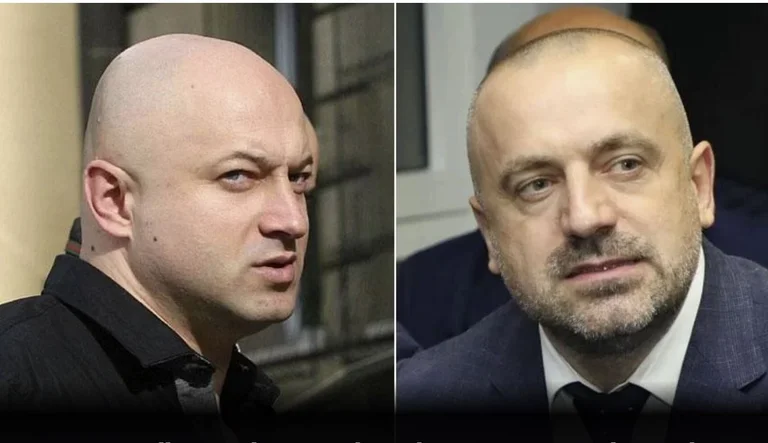
At the construction sites are the cars of Serbian companies, which connect with the same people, Milan Radoiciq and Zvonko Wesselinovic.
Both are sanctioned by the United States (SHBA) and Great Britain due to allegations of international corruption and organised crime. Kosovo authorities link them to criminal activities.
But Serbia, which does not recognise Kosovo's independence, does not even recognise the accusations of Kosovo authorities. Official Belgrade has also decided not to implement US and Great Britain sanctions because there is no international commitment to that.
In the Serbian public, Radoiciq and Veselinovic are represented as business partners, businessmen of origin from Kosovo.
Radoicic is also deputy chairman of the Serbian List of Serbs from Kosovo, which has the support of the current government in Belgrade, which is headed by the Serbian Progressive Party of Allexandar Vucinqi.
Where did Veselinovici and Radoichiqi companies build?
Radio Free Europe (REL) has proven that three companies linked to Zvonko Veselinovic and Milan Radoichicin have been under contracting at least three road axes in Serbia over the past two years.
The common one on these three roads is that contracting is Chinese companies Shandong and CCCC.
State institutions granted permission for companies associated with Veselinovich and Radoicın to come to the shipyards, while two jobs were given after the American sanctions were imposed in December 2021.
Roads were built by Incop companies from Quprea and Novi Pazar-put (Novi Pazar-tree), owned by Veselinovic and Radojchi, during the time they were added to the US blacklist.
In the third company, stoner Slovac, both were co-owners.
Companies were engaged in the construction of the Axi of the Prelina Podega Highway and the fast Iverak highways Ijjkovac and Pozharevc ledubac.
The number of subsurgeon companies is dozens, but REL has only analysed operations of companies associated with Radocicinqi and Veselinovici, because they are the only ones under foreign sanctions.
Loans From the State and Chinese Banks
The form of business seems like this: the state employs Chinese road-building companies under an agreement between Serbia and China, contracting it directly with them, meanwhile, to secure the money, foreigners are taken by Chinese banks.
Chinese companies later choose subcontractors, and for their commitment, they need the approval of public road companies and the Ministry of Construction.
Construction of three sections of the road, which together with Chinese companies also participate in Veselinovich and Radoichiqi, Serbia cost 950m euros.
The two largest loans were received by the Chinese Bank Exim in 2019 and 2021.
Because of borrowing and relations with China, which in reports of international organisations are described as nontransparent and leaving space for corruption, Serbia has also been the target of criticism from the European Union, in which it aspires to become a member.
The European Parliament reiterates its concern over Serbia's growing dependence on Chinese investments and the volume of loans... and urges Serbian authorities to improve transparency and strengthen legal compatibility for Chinese investments and from foreign authoritarian regimes”, the European Parliament report of July 2022 says.
The profits of sanctioned companies rose record-high
In documents analyzed by the REL, it is not known how much the companies of Veselinovich and Radochiqi have won from works with Chinese companies in the past two years, whether by or not, how much of the contract goes to them as subsurgeoners.
The financial reports of these companies in 2022 are not accessible to the economic registry, but the latest available data shows record profits on an annual basis.
Their Inkop construction company from Qupija earned 15.3m euros in 2021. This is six million more than in 2020, when Incop made a profit of 9.2m euros.
During that period, Incop did business with Chinese construction companies, but these were not their only projects.
Novi Pazar-put has been an Incop subsidiary since January 2020, when Veselinovic and Radojic bought it.
With the new owners, the profit increased more than 30 times more. At the end of 2020, Novi Pazar-put earned 5.8m euros, while in 2019 the amount of profits was 179 thousand euros.
Then, at the end of 2021, an even larger balance of 10.2m euros is registered.
In addition to co-operation with Chinese companies, during this period, Novi Pazar-put, has also received contracts from Serbian institutions to maintain local roads in several municipalities of Novi Pazar, Tutin, Vrnjacka Banja, Kralev.
Who are Veselinovic and Radochiq?
US Treasury Department sanctions were imposed in December 2021 against 13 citizens from Kosovo of Serbian nationality and over 20 related companies, marked as part of a network of corruption.
Topping the list are Zvonko Wesselinovic and Milan Radoic. Individuals and other sanctioned companies, founded in Serbia and Kosovo, are linked to them.
Milan Radojic is on the run from Kosovo authorities, due to allegations of corruption, meanwhile Kosovo Interior Minister Jhelal Svecla named him one of the leaders of criminal structures in northern Kosovo.
Kosovo's prosecution links Veselinovic and Radoiciqi with the murder of Kosovo politician Olliver Ivanovic. They have been cited as alleged masterminds of the criminal group, but no charges were filed against them since they were on the run.
Kosovo's law does not allow the establishment of charges against fugitives, unless they have been investigated before.
The Serbian list dismissed all charges against Radocicin, while in the case Ivanovic also spoke to Radojciq himself, saying he was not Oliver Ivanovic's best friend”, but that he “was a murderer” and that “had nothing to do with the politician's murder”.
Whom do foreign sanctions impose?
Since the sanctions of the United States and Great Britain are not binding for Serbia, Radojicic and Veselinovic companies operate without interference.
In December 2021, commenting on the US's decision to place Radoicicin and Veselinovic on the blacklist, Serbia's President, Allexander Vuciq, said competent authorities would investigate everything if there are “serious charges”.
In the months that followed, after this statement, the opinion in Serbia was not informed whether the government and the Presidency have been investigated, meanwhile, did not answer Radio Free Europe's question on the issue.
Milan Radociq has appeared at official gatherings, alongside Alexander Vuciqi.
In the United States report, in which sanctions are explained, Zvonko Veselinovic is said to be the leader of an organised criminal group, as well as that he is involved in a widespread bribery scheme.
The corruption scheme also mentions politicians, who allegedly helped in the election campaign, and in return, they would replace “with the best infrastructure contracts”.
It is not specified which politicians it is about. Zvonko Veselinovic has not issued a statement concerning US and United Kingdom sanctions, as well as no public appearance.
While there are no consequences in Serbia, sanctions are legally binding for American and British companies and citizens who are forbidden to do business with people from the blacklist.
“Enterprises in the United Kingdom will not be allowed to do business with individuals or companies that we have sanctioned and they will be fined by our Department of Business and Trade, if found to be doing this”, the British Embassy for Radio Free Europe said.
But the laws of their mother countries would not be violated by other foreign investors, like those Chinese, if in Serbia they do business with Veselinovici and Radoiciqi.
Who didn't answer the questions?
Chinese companies Shandong and CCCC did not answer the REL's question about their businesses in Serbia, nor on charges of a number of professionals that nontransparently agreed agreements leave room for corruption.
Neither has the Chinese Embassy in Serbia provided an answer.
While the vehicles and their workers were at the construction site, along with Chinese companies, companies linked to Veselinovici and Radoichi did not participate in projects which companies from the European Union and the United States do in the last two years in Serbia.
This can be found by the documents analyzed by the REL, for approvals for the work done by public companies “The streets of Serbia” and Serbia's “Corridors”, as well as the Ministry of Construction, Traffic and Infrastructure.
None of these companies and neither this dictatorship answered REL questions about what qualified companies associated with Radociqi and Veselinovici to participate in road construction.
Neither the companies owned by Veselinovici and Radoicqi, Inkop and Novi Pazar-put, nor the company in which they were co-owners until 2022, the Slovac cornerstone, answered questions.
What did the EU order?
In a response to Radio Free Europe, the European Union has not provided any comment concerning Chinese infrastructure projects in Serbia and the sub-proposors who commit them.
From the EU, they said Serbia has undertaken to implement EU rules for public procurement and environmental standards during infrastructure construction and that the European Commission monitors the respect of these obligations.
“Between the European Commission and Serbia important discussions were held under chapter 5 of membership negotiations (public procurement) in terms of exemptions from implementing the Public Procurement Law. Serbia took over to solve problems”, it says in response.
Rusty 1: Veselinovici and Radochiqi company on Pozharev Street c-Gollubac
The road to high speed from Pozharevci to Gollipac, east of Serbia, for 337m euros.
The contracts were made with the Chinese company Shandong (China Shandong International Economic and Techincal Cooperative Group Ltd) in August 2021.
The contract was established in the presence of the president of Serbia, who later declared it a highly fair offer by Chinese partners”, which “always receives local workers”.
New months later, Vuciq formalized the start of his work. It was warned that the Danube Corridor, as it is called the road that is about 70 kilometers long, will be completed by November 2024.
While cars and workers are working east of Serbia, among the associates of the Chinese company has also emerged the group of local companies, the NI consortium.
A member of the consortium is under US sanctions, the Incop company from Qupria, whose owners are Milan Radojic and the Zvonko brothers and Zarko Veselinovic.
The other member of the consortium is also the Kleeus company from Lazarevac, whose owner is Vdalmir Jevtic, with whom Veselinoviqi and Radoqi have also worked on other projects. Jevtic and his company are not under sanctions.
The document says that the Ministry of Construction has approved that those companies be subsurgeons, in February 2022, two months after Incop was imposed under sanctions.
What the consortium does on that site is not specified, nor is the price of the contracted works.
Rusty 2: Two Veselinovich and Radoichiki companies on their way from Valeva to Loznica
From Belgrade to Valeva, in 35 minutes. This has been warned by Serbian officials when they started work on the Iverak-Llajkovac highway.
Works were made official in June 2020 by Serbia's president, Allexander Vuciq.
He promised that the 18km axis, which connects the Valeva to Corridor 11, will be completed by the end of 2022. However, it has not yet been released for traffic.
The contract for this section, worth 158m euros, was signed six days before the start of the works, by then Minister of Construction Zorana Mihajlovovic, with the director of the Chinese company Shandong Foreign Economic & Tachnical Cooperation Ltd).
Much of the work is financed through loans from the Exim bank, worth 134.3m euros.
For the construction of the road from Iverak to Ljjkovac, the Chinese company proposed, in the summer of 2022, that its deputy contractor be a Novi Pazar-put company, placed on the American blacklist several months ago.
In June 2022, the public company “Streets of Serbia” has consented that Novi Pazar-put be engaged as a subcontracer for the construction of asphalt, arguing that it meets the terms.
Then the favor was needed by a higher instance, the Ministry of Construction, which gave its final permission in September 2022.
On the same site, prior to imposing sanctions, there was another company of Veselinovic and Radoicqi, Inkop from Qupija.
At the time, Incope was part of the consortium. The NCI, which also includes the IKleus company from Lazarevci and C&LC from Belgrade.
In October 2020, the public company “Rugs of Serbia” agreed with the Chinese company's proposal to give the consortium work.
The axis from Iverak to Ljikovc, among other things, was entrusted with the preparation and land work, the drain, the regulation of water flows, and the regulation of green surfaces.
From the Documentation That Has Been Delivered to REL, doesn't understand how much the consortium has benefited NCI from work on Iverak-Llajkovc Street.
A little over a year after Incop was given work, this company came under US sanctions, but continued to operate without obstacles.
Case 3: Divorced by the Slovac stoner for the Preline AX
The international Corridor 11, which must connect Serbia with the Adriatic Sea, was introduced as a key project the state is building for more than a decade.
Construction of the highway to Montenegro, 269km long, is divided into phases.
Aksi in western Serbia, from Preline to Pozega, is being built by the Chinese company China Communications Construction Company Ltd (CCCC).
To execute the works, worth 450m euros, the CCCC came with direct agreement with the state without tender. To secure the money for road construction, Serbia has received loans from the Chinese bank Exim.
The Chinese company CCCC was on the World Bank's blacklist because of allegations of corruption and environmental decay in the Philippines and other countries where there were projects.
The U.S. put this company on the blacklist in 2020.
In Serbia, the Chinese company CCCC faced charges of risking the environment during road construction, but the issue was not resolved.
Later, the CCCC company found collaborators in Serbia, who shortly later will also be placed under US sanctions.
Two years after the start of the works, in the summer of 2021, the Chinese contractor addressed Serbia's institutions -- Serbia's “Streets and the Ministry of Construction -- to approve the Slovac stonebreaker as a subsurgeon.
The triggerbreaker's task, which was then co-owner of Zvonko Veselinovich and Milan Radochiqi, was to provide crushed stones used for road construction. The state gave them consent to be the supplier of the material in November 2021.
A month later, the US imposed sanctions on Milan Radoicchi and Zvonko Veselinovich.
In documents analyzed by Radio Free Europe, there is no specifying what amount of material was required to hand over Slovac's stonebreaker and at what price.
The projected value of undercubated jobs is estimated to be 0.00 percent of the contract. In that case, this would be 405 thousand euros.
Meanwhile, Veselinovic and Radoic left the co-ownership of the Slovac stoner.
In July 2022, the company's 100 percent owner of the company is Sleus from Lazarus, who is a business partner of Radojchi and Veselinovici.
China's business model with Serbia
Officials from Serbia and China describe relations between the two countries as “steel and friendship”, which confirms with a series of infrastructure and other projects China has implemented in Serbia over the past few years.
Serbia is one of the countries of the “Brez initiative and the” road a Chinese state project initiated by President Xi Jinping, with the aim of penetrate that state in the West.
Stefan Vladsavlev, a researcher at the non-governmental Fund for Political Excellence in Belgrade, stresses that infrastructure contracts function according to a set model.
This works according to the principle: the Serbian government receives loans from a Chinese bank and for what has been taken as a loan, it is obliged to hire a Chinese company that will do the work”, he explains.
All credit agreements between Serbia and Chinese banks are accessible to the public, because they should be ratified by Parliament.
The problem does not concern the approach to contracts, but with the lack of transparency in the negotiations process, Stefan Vladsavlev points out.
There are no tenders and other bidders, but it's about direct shopping.
“We don't know how the conditions have been achieved, which contain the agreements themselves and we don't know how the cost is distributed, because the total amount of credit is shown. It is unknown what belongs to the Chinese company and what is to the subsurgeons”, he adds.
Vladsavev also estimates that lack of transparency “is a doubt that specific actions are not in accordance with rule of law, and ultimately not in line with market rules and competition”.
The process of controlling and monitoring Chinese investments is the responsibility of the Government of Serbia and its institutions.
Chinese companies, Vladsavlev points out, are not willing to communicate with the civil sector and independent experts.
<x0)
When it comes to the sanctions of the United States and the United Kingdom towards companies and individuals, Vladsavev points out that Chinese companies and the state pay no attention to the issue.
“On the one hand, there is no reason why China would have to enforce sanctions that have implemented another state, especially if it comes to a state that is also seen as a systemic rival, in this case the United States”, he added.
But, he stresses that neither Serbia pays attention to those sanctions.
According to Vladsavlev, the potential problem could present the active “commitment of companies that are on the US blacklist, the state that Serbia wants to build partnership relations with, especially in the field of investments.
“The US can point out to Serbia the issue that, if you as a state want to co-operate with us, you need to stop all the ties you have with individuals and business subjects that are on our black lists”, he points out.
How does the State grant consent to subcontacters?
The contracts for the construction of highways, which Chinese companies have with Serbia, force them to seek the consent of state institutions when employing sub-proposors.
This conclusion is reached based on documents analyzed by the REL.
The match must first be given by the public company in charge of work ) in this case Serbia's “Streets” or Serbia's “Commanders”.
When public companies give their approval, the final decision is made by the Ministry of Construction, Transport and Infrastructure.
By June 2020, this minister valued the work of the construction companies registered in Serbia, and for every three months it published “the owner of points of suppliers and contractors”.
Nearly three years now, up-to-date lists have not been published.
The list contains some information for the construction company how many employees there are, if inspections at the site have found illegal workers, whether workers are easily hurt or heavily, and whether they are in debt.
Companies with fewer violations are in charge, in the list's “white”.
Those with more violations are positioned at the bottom, so in the black “ ”.
The list would have to help state institutions with company engagement in construction works.
The recommendation was that before the decision is made, verify how the company is listed on the <x0 mc and black” list and avoid assigning jobs to weak ranking companies.
The ministry's <x0ndin and black list”, however, does not include all companies building in Serbia.
In the latest report released in June 2020, among the 508 companies, China's Shandong is 131st, and negative points were granted due to debt. The Chinese company CCCC is not even on the list.
Of the companies linked to Veselinovici and Radoiciqi, good estimates are Novi Pazar-put, while in “the black section” of the list was the construction company “Granit Peshcar”, until late in the co-owner of Veselinovic and Radoisic.
The construction company, owned by the Veselinovic brothers and Milan Radojchiqi, Inkop from Qupreja, has not been scored on the ministry's list. / REL