15 minutes ago
No or little chance of agreeing to an Association statute
Periskopi(3 years ago)
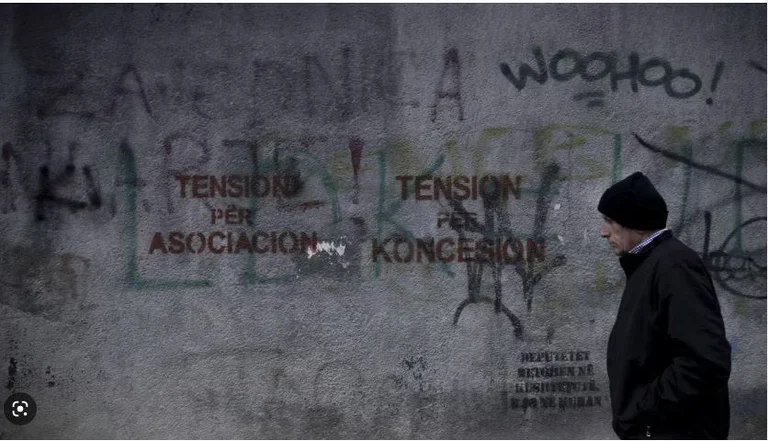
(3 years ago)The odds of Kosovo and Serbia agreeing to the draft Association of Serb majority municipalities at the meeting, which will hold their leaders on May 2nd in Brussels, are minimal, or at all, praised Naim Rashi, director of the Balkan Policy Group in Pristina, and Dusan Janjic, from the Forum for Ethnic Relations in Belgrade. [...]
European Union officials have already confirmed that on May 2nd, the focus of the meeting between Kosovo Prime Minister Albin Kurti, and Serbia's president, Aleksandar Vuciq, will also be the issue of Association, the presentation of the draft Association station, drawn up by the Management Team, respectively.
Free Europe Radio asked the Government of Kosovo what are the chances that official Pristina would accept this document, but received no answers. The Office for Kosovo in Serbia's Government similarly did not respond.
Kurti He said Tuesday. to the media that the work of the Management Team, which consists of Serbs, and the content of the statute are not the best known “”.
He has said he has indicated to the European Union readiness to draft the draft state of association on its own, but that it has been told by the EU that this is the work of the Managing Team.
“This has been the moderator's position, while I as Kosovo prime minister care about constitutionality, legitimacy and that everything is in place and in line with our goals and principles”, Kurti has said.
Serbia's president, Aleksandar Vuciq, has said the Management Team, on May 2nd, will present the statute for forming association, but has added that there are no high hopes the other side will accept it.
For this association, Kosovo and Serbia are Dakorudar with an agreement reached in Brussels in 2013, within the dialogue on normalising relations. The agreement has never been implemented, as Serbia insists on broad competencies for association, while Kosovo says those competencies would jeopardise the state's functionality.
What is known about the Management Team?
After Kosovo and Serbia have reached the Agreement on Association of Serb majority municipalities and two years later have agreed on the principles of its formation, the Ministry of Local Self Government Management of Kosovo has named the Management Team in 2016.
At the time, Lubomir Mariq, of the ranks of the largest Kosovo Serb party to have Belgrade's support, headed the ministry. Today, he is deputy of the Serbian Parliament by the Serbian Progressive Party.
Maric, who was the co-ordinator of the Management Team, appointed four people to write the Constitution of Association of Serb-run municipalities: Igor Kalammar, Dejan Radojkovic, Vinko Radosavlevljevic and Svetislav Durlevic.
Kalammar and Radojkovic are from North Mitrovica, while Radosavlevlik and Durllevic are from municipalities south of the Iber River. The REL has asked the Government of Kosovo whether members of the Management Team have changed, but has not received answers. Also, it is not known whether the Management Team has drafted a new statute.
Rashit: A Negotiation Process for Association Status
Naim Rashit, director of the Balkan Policy Group in Pristina, says the May 2nd meeting in Brussels will mark the start of implementing the agreement leading to the normalisation of Kosovo-Serbia relations, for which the parties have agreed on March 18th in Ohrid.
The presentation of the draft Association station drafted by the Managing Team, according to him, would have to mark the end of the body's work.
Rashit says the Kosovo side will not comply with the draft status and that Kurti's offer to draft it itself will not be acceptable either to Serbia or the European Union.
He says that, in the context of these differences, the parties will launch the long and complicated negotiation process, regarding what the statute for Association will look like and finalise.
I believe that it will be an intensive negotiation process, what this association will look like, or self-signation, depending on the form it will take at the end. But it will be between zero and ten, what Kosovo offers, as well as 100, what Serbia wants. There will be negotiation process for this and it will be with a lot of parameters”, Rashit told Radio Free Europe.
According to him, reaching a final draft for the Association statute will be a difficult process, for the fact that it will be difficult for Kosovo government to decide beyond the framework of the Kosovo Constitutional Court decision.
This court has concluded in 2015 that the agreement on principles for forming association -- achieved that same year between Kosovo and Serbia -- is not in full harmony with the Kosovo Constitution, but that the contesting points can be harmonised.
Rashit recalls that the agreement leading to normalisation of relations and annexes for its implementation is not formalised with the signing of the parties. Formation, according to him, would create legal laws for any new compromise or design for association.
We will come into a situation, during the summer and beyond, when we are asked to form the Agreement or continue with the format that the EU or international factor is claiming... that it will sequence the implementation of the” agreements, Rashi says.
Janjiq: Congestion in Dialogue Again
Dusan Janjic, from the Belgrade Forum for Ethnic Relations, says the Western states, which backed the Ohrid Agreement “, declared success before the time”.
It is true that the document [state] is written, but, as the people would say, you can hang it on the cat's tail. This is my prediction of what will happen on May 2nd,”, says Janjiq for Radio Free Europe.
He adds that local elections in the four majority Serb municipalities in northern Kosovo, which were held on April 23rd, had not to be held, before both sides could agree on the resolution of the Serb majority municipalities.
These elections were boycotted by the Serb community, following the call of the Serb List, the largest party of Serbs in Kosovo, which has Belgrade's backing.
The Serbian list said it made this decision, after its two conditions have not been met -- the formation of the Serb majority municipalities' association and the withdrawal of Kosovo Special Police Forces from the country's north.
Janzic believes that as a result of the failed “talks on the Association statute, there will be new impasses in Kosovo-Serbia dialogue.
The “at least gets stuck for a few months, with the renewed tensions“, he says.
EU urgently urges Association
Radio Free Europe addressed the EU with questions about what it expects from the May 2nd meeting, whether both sides will agree to the statute of forming association, as well as what are the next steps if agreement is reached.
Instead of answers, the EU demanded from REL toʹte refers to its spokesman Peter Stano's statement of April 25th.
The European Union, at all times, has been clear when it comes to the Association of Serb majority municipalities. We have reiterated that in response to local elections in municipalities in northern Kosovo, there is urgently a need for formation of Association”, Stano said.
He recalled that association is Kosovo's obligation, agreed with the signing of the Brussels Agreement in 2013, and that all agreements must be implemented.
Serbia's increasingly aggressive behaviour “
Vuciq has said on April 24th that members of the Serb community in northern Kosovo will not return to the institutions of this country if the Association statute does not comply with 22 principles of the 2015 Brussels Agreement.
These Serbs abandoned Kosovo institutions in a sign of opposition to a government decision in Pristina to reregister cars with Serbian illegal plates at the RKS Republic of Kosovo.
Rashit says that, while the parties will approach dialogue with different positions, Serbia will manifest behaviour “increasingly aggressive”.
“in all respects, refusing to negotiate the draft association status, preventing the return of Serbs to institutions, not respecting any of its obligations, continuing [the impact] on security issues in the north, the disk that is using and all in a row. But, I am convinced that Kosovo, with some steps, can make the international factor absolute responsible for Serbia's behaviour in relation to Kosovo and the” agreement, Rashi says.
These steps, according to him, are: intensive work on forming association, working with Kosovo Serbs and establishing mechanisms for their return to institutions, preparing the situation for implementation of the agreement reached in Ohrid, co-ordinating with the international factor for implementation of the agreement, and promising that there will be new local elections in the north at the end of the process and formal formation of the Association/