23 minutes ago
Car burns in the north
Periskopi(3 years ago)
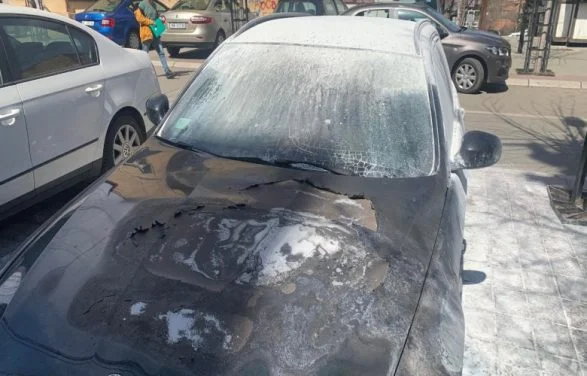
(3 years ago)Security officials estimate that the incidents that have occurred in the last few days in northern Kosovo, where several reregistered cars with RKS signs were burned are signals that in that part of the country there are trends for tension and escalation of the situation. “Tendence for destabilisation in the north of the country is limited and cannot [...]
“Tendence for destabilisation in the north of the country is limited and cannot spread to the rest of Kosovo, or to the region”.
So said former Kosovo Intelligence Agency Chief Inspector (AKI) Shkelzen Soopyan in a pronouncement for Dukaagjini Portal.
His statement comes as AKI has information since two groups in Serbia's District are conducting training to destabilise Kosovo's north.
This information has been provided by Parliamentary Commission for AKI Supervisor Ganimete Musliu, who has said he has given it to AKI director Petrit Ajeti.
According to her, members of the so-called” Civil Protection Organization” are being trained in the Race for gun and tactical shooting, aimed at destabilizing the north on the eve of extraordinary elections.
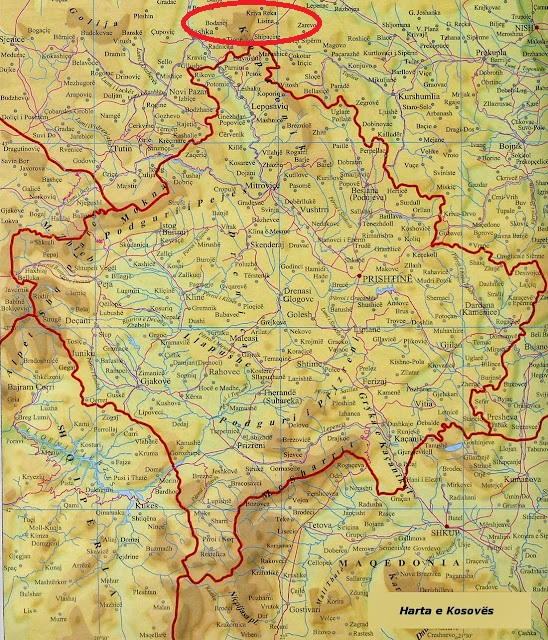
In this regard, as well as with the burning of vehicles in recent weeks and other threats in the north, Sopijan has said they are signs when destabilisation is tried, especially now when local elections in four northern municipalities are expected.
I'm not too worried that something will happen that we can't get to God or face”, he said.
He also said that the main danger to security in northern Kosovo comes from Serbia, which is postponed or influenced by Russia.
According to him, Russia and Serbia aim to destabilise the entire Balkan region.
The key “comes from structures designed by Serbia, security structures in Serbia. Russia is also very active through those structures. Russia is very active in those facilities, perhaps even Vucicicici himself cannot master its structures as it was guided by Moscow, Putin”, he said.
He has further said that the notorious Russian group, Wagner, has had presence in northern Kosovo, which are directly supported by Russia.
“Vulin is available, from open sources, it's sʹpo I say recruited, but it's influenced by security structures (Russia), it takes pictures of Vagner's symbols. Gashi has been the director of intelligent service in Serbia, which replaces the country with Vulin, these two are linked to Russia. Volinin has had frequent visits with Putin, the threat comes from Serbia with Russia's help. There were members of the Wagner group even in the north, they're private, but it's actually conducted by Putin”, Soopian said.
Security expert Nuredin Ibishi for Dukaagjini Portal has said this is not the first case that Serbia trains groups in Raccoe to destabilise the situation in the north, as, according to him, Serbia has previously trained illegal structures to cause fear with their presence.
Ibishi has said that international actors should take into account these data releases and begin with the closure of these facilities.
The “is not the first case, since Serbia has since trained groups in Raski such as barracks and polygons, but the priority already is that this is emerging and publishing. The paramilitary structures that he himself has trained to cause with their presence, therefore this hybrid war system causes this system to become what the Russians have done in many countries like Ukraine in 2014”, Ibishi said.
He has said that through this pressure, Serbia is trying to prevent Kosovo on issues involving sovereignty and security issues in the country.
“Rresic is one of these that will be created as structures that will oppose police presence when elections are held, the Serbian president held a meeting with Serb List deputies, warned platforms and political measures, as well as structured ones, meaning supporting extremist forces at the time of the elections. On the other hand, there will be police reinforcements on the part of Kosovo, the introduction of security forces to do control of the border and surrounding roads, especially where it concerns polling stations”, he has followed.
What security bodies should undertake, Ibishi has said Kosovo police, the Ministry of Internal Affairs and the responsible security bodies are listing extremists who are doing such works as burning cars and attacking police officials.
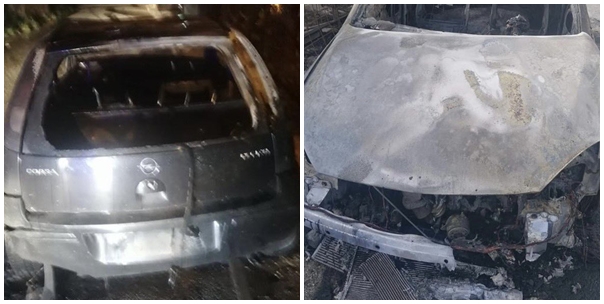
The police are taking steps, the Ministry of Internal Affairs, have arrested vehicle fire suspects... immediately put the extremists into the system, some of the Serbs are starting to register cars with RKS license plates, that's in response where they're starting to burn and threaten them, so it's a warning of elections that will come against any form of”, Ibishi stressed.
While Kosovo police have announced that during the year 2022, a total of 10 car-fire cases were reported in the country's north.
This figure has happened to be the same during the first quarter of 2023.
Over the course of 2022 reportedly, there were 10 cases of car fire. A total of 10 car fire cases were reported during 2023. Throughout this period of time, all investigative and operational actions have been undertaken to identify the perpetrators of these criminal acts. Pollsters/victims have been interviewed and a person has been arrested with reasonable suspicions that he committed these criminal acts in the municipality of Zubin Potok”.
For these criminal acts, police have managed to arrest a suspect in Zubin Potok, who has already been sent to custody at the prosecutor's order.
By the date 01.04.23, at Zubin Potok, The KPC has arrested a suspect on the grounds that the same criminal acts have been committed “Pesting or organising the organised criminal group”, “attempted murder”, “cause of general risk”, “assault on the official person during the performance of the official task”, ” fire><10>. Regarding the prosecutor's decision by the Special Prosecutor of the Republic of Kosovo, the suspect is sent to the detention.
For such attacks and burning cars in the north, there have been numerous reactions.
Kosovo President Vjosa Osmani has said the incidents in northern Kosovo are orchestrated by the <x0 illegal structures supported by Belgrade”, aimed at “the intimidation and rowage of the local Serbian population, as well as the creation of a climate of fear and uncertainty”.
While Kosovo Deputy Prime Minister Besnik Bislimi has said Serbia is trying to destabilise the situation through car burning.
The March “muaj has been the month of increasing citizens' readiness to convert plates. In a few days, approximately one-tenth of cars that have not been converted yet and at that rate very soon we could convert the absolute majority of illegal plates in Kosovo. The situation has changed on the eve of the meeting in Brussels”, Bislimi added, stressing that behind this situation of burning cars there has been a slight pace or halting of illegal license plates in the RKS.
Meanwhile, Serbia's Foreign Minister, Ivica Dacic, has accused the Government of Kosovo that “wants to destabilise the situation and avoid obligations he has undertaken through the Ohrid Agreement”.
Reaction also took place by United States Ambassador to Kosovo ( The US), Jeff Hovenier, who said that the Kosovo government has the responsibility to protect its citizens and ensure accountability for these criminal acts”.
Likewise, German Ambassador Jorn Rohde and United Kingdom Nicholas Abbott called it an unacceptable act of burning cars in the north seeking quick investigations.
Groups of Serbs in the north blocked several roads in northern Kosovo at the end of last year, and one of the reasons for the move was the Kosovo Government's decision that all vehicles with Serbian illegal license plates be reregistered to the RKS.
With the European Union's mediation reached, a license agreement was reached
Kosovo gave up punitive measures, unless car reregistering takes place, meanwhile, Serbia has said it will no longer issue new license plates to Kosovo.
The issue was also discussed at the last meeting between two chief negotiators, Bislimi and Petkovic in Brussels.