22 minutes ago
Bulgaria elections for fifth time in two years
Periskopi(3 years ago)
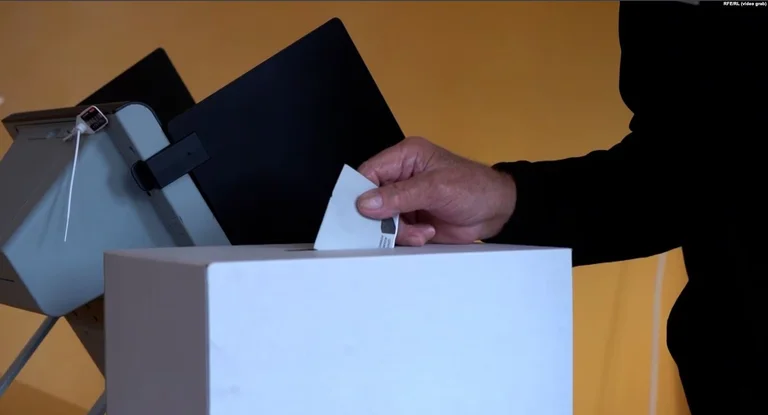
(3 years ago)Voters in Bulgaria leave on Sunday, April 2nd, for voting stations for the country's fifth parliamentary elections in two years. Polls suggest even this vote could not end the political stalemate that has engulfed the poorest country and one of the EU's most corrupt. [...]
Voters in Bulgaria leave on Sunday, April 2nd, for voting stations for the country's fifth parliamentary elections in two years. Polls suggest even this vote could not end the political stalemate that has engulfed the poorest country and one of the EU's most corrupt.
More than 5,600 candidates representing 14 political parties and seven party coalitions have decided to take 240 seats in Bulgaria's National Assembly. A party should secure at least 4 per cent of the vote to win seats in parliament.
The locations are open at 7 am local time and will be closed by 8:00. Analysts say turnout could be hampered by a wave of bomb threats this week, leading to the closure of hundreds of schools that would function as polling stations.
Bulgaria has been governed mainly by the provisional governments appointed by President Rumen Radev. This was because the anger heaped on corruption for years turned into massive protests in 2020. The political crisis has prompted Bulgaria to postpone euro approval as currency by 2025.
The Balkan nation, with nearly 8 million people -- the second most corrupt in the EU, according to Transparency International -- is also struggling with increased inflation that is preventing economic recovery from pandemic COVID-19. Bulgaria had the highest mortality rates from COVID-19 in the EU, due to low percentages of vaccines.
Center Right Party G ERB, which headed the government when the protests broke out, and the pro-European coalition we continue the change and Democratic Bulgaria are expected to lead the polls, as in last year's October elections.
Recent votes were followed by numerous attempts by parties to form a stable ruling coalition.
The Organisation for Security and Co-operation in Europe (OSBE) will have observers on the ground to monitor the vote.
Fears that it could be manipulated with the election outcome have increased the cause of an election officials' decision to limit the use of electronic voting machines and return to paper ballots.
Following the election campaign, Bulgarian National Television head Emil Kostlukov publicly acknowledged that the debates had been nothing but “parodio”. He apologised to viewers and TV exhibitors who were forced to listen to the full <x2marines”.
On February 2nd, Radev dissolved parliament and announced early elections after six attempts to form a government had failed since July 2022.
This came after the pro-Western government of Bulgarian Prime Minister Kiril Petkov collapsed in June through a vote of no confidence in parliament after only six months in power.
Daniel Smilov, professor at Sofia University, predicts the vote will not end the country's political stalemate.
“Unfortunately, I don't see a simple and very quick solution to the” situation, Smilov told the REL.
Instinctability will continue to have a negative impact on Bulgaria, added Dimitar Bechev, professor at Oxford University.
“Yes, instability is bad because of Ukraine because Bulgaria will continue to contribute, but because of delayed entry into the eurozone”, Bechev told Radio Free Europe.
Officially, Bulgaria, also a NATO member, was one of the last EU member states to officially offer to Ukraine military assistance. But, unofficially, Bulgaria is believed to have given more help.
Petkov said recently that his country had secretly supplied Ukraine with ammunition and oil in the first months after Russia began its invasion on February 24th, 2022. /rel/