15 minutes ago
BEC warns drop in interest rates on credit
Periskopi(3 years ago)
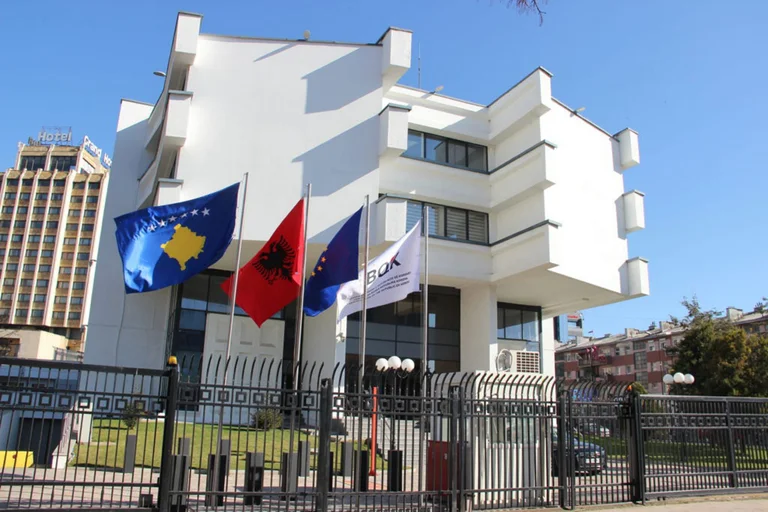
(3 years ago)The Kosovo Central Bank (BQK) warns that with inflation rate slowdown and price stabilisation, interest rates on credit will also begin to decline. “With inflation declining, banks are expected to gradually begin to facilitate monetary policies ], which will affect lowering real interest rates”, it says. [......]
With inflation declining, banks are expected to gradually begin to facilitate monetary policies ], which will affect lowering real interest rates”, a written BQC statement sent to Radio Free Europe said.
The CEC, however, gives no details on what percentages interest rates on loans that have already exceeded 6 per cent. This institution does not specify when inflation may fall, although the latter half of 2023 was mentioned earlier.
Credit interest rates have begun to rise elsewhere in the world in recent months of last year. This has happened as a result of the tightening of monetary policies by central banks, due to high inflation rates.
Kosovo has completed the year 2022 at the average inflation rate of nearly 12 percent.
Average interest rates on loans, according to the CEC, have increased from 5.8% to the same period this year in February last year.
In spite of that, data from this institution confirms that there is an increase in family loans in the banking sector.
In Kosovo, 12 commercial banks currently operate, and the value of loans in them has reached over 4 billion euros.
Based on the laws and regulations in power, commercial banks in Kosovo individually define interest rates based on their business policies, and the CEC cannot interfere with them.
Inflation exacerbates monthly tranche payment
Bardhil Krasniqi, a citizen from Pristina, tells Radio Free Europe that in January last year he received loans worth 40 thousand euros for buying a residence.
For eight years in a row, he must pay the credit bank a monthly installment of more than 500 euros, at an interest rate of about 5%.
The interest rate is high, but those rates are in all banks in Kosovo. To buy a flat or something in greater value, it does not go without a loan. We're also obliged to deal with these interest rates”, says Bardhil, who works in a private sector company.
The average salary in Kosovo is less than 500 euros, the minimum is brought from 130 to 170 euros, while pensions are between 100 and 265 euros.
Bardhil says there's a good <x0-pogue”, which has enabled them to take credit. But, he adds, continued inflation growth has made it difficult for him to pay the monthly tranche.
“I have salary above the average wage average in Kosovo, wife and son also work. The payment of the tranche is manageable, but not too easy to afford, following the rise in consumer prices. Prices are higher than officially being granted”, says Bardhil.
Increasing inflation elsewhere in the world has greatly contributed to the pandemic of the Coronaviurs and Russia's war in Ukraine.
Kosovo Central Bank Governor Fehmi Mehmeti has warned in an interview given Radio Free Europe in January that inflation will decline in the second part of this year.
Financial affairs experts, who say that with inflation dropping, interest rates on credit will also fall.
High interests slow credit recipients. With the slowdown of the loan, economic development” slows down, says Milazizim, former chairman of the American Economic Oden Finance Committee, for Radio Free Europe.
In addition to commercial banks, 30 microfinance institutions operate in Kosovo, which also provide loans to citizens. Although with fewer criteria, their interest rates are higher than 20%.
The data from financial institutions in the region, which has managed to provide Radio Free Europe, shows that average credit interest rates vary higher, somewhere lower.
The International Monetary Fund, which monitors the international monetary system and global economic developments, has also warned of declining interest rates in large economies. A report published on April 11 says that these rates are expected to drop to the pre-resurviral pandemic levels before 2020, respectively.