4 minutes ago
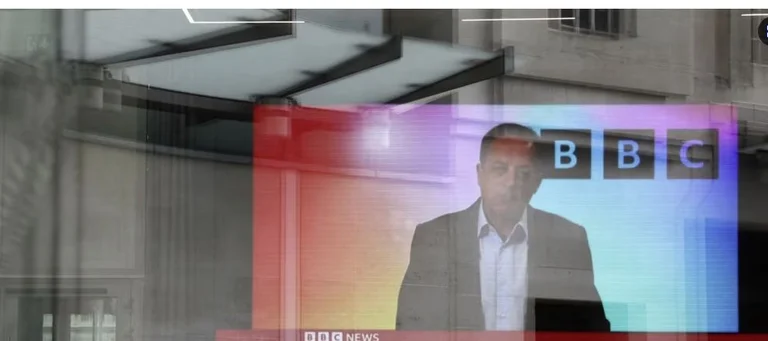
The BBC chief resigns, did not declare his role in a loan taken by Boris Johnson
Periskopi(3 years ago)
(3 years ago)BBC chief Richard Sharp resigned Friday after an independent investigation concluded he had violated the rules, not declaring a possible conflict of interest over his role in securing a $1m loan for former Prime Minister Boris Johnson. His departure comes at a time [...]
Its departure comes at a time when attention has been increased regarding the impartiality of the public public public public public public broadcaster financed by the public. Last month, the BBC was on the stage of the first headlines due to the criticism of famous sports host Gary Linecker against government policies on migration.
Sharp, a former investment bank banker with Goldman Sachs and a donor from the ruling Conservative Party, took over the BBC in 2021.
Since February of this year, he has been under pressure after a commission of lawmakers offered a report when it said he had made a serious <x0-> errors in judgment”, failing to declare, that he was involved in the loan issue received by Mr. Johnson.
Sharp has agreed to stay in office until the end of June until his replacement's appointment.
Although the BBC chief is appointed by the government, the broadcaster's independence is an important element that makes it play a central role in British cultural life. The BBC is funded by a fee paid by British families (the television rate).
Opposition Labour Party culture spokeswoman Lucy Powell said that the immoral “approach and the favour of friends on the part of the conservative government had damaged the BBC's reputation. She added that a truly independent and strong <x1 process” was needed in the appointment of Sharp's successor.
Asked by journalists whether the new BBC leader should be a non-political appointment, Prime Minister Richi Sunak, who worked with Mr. Sharp at the Choldman Sachs, said: “There is a clearly defined process of appointments and it would be good to address this issue at the right time”.
Questions about BBC impartiality are just one of the challenges facing the broadcaster. The public broadcaster is facing difficulties in maintaining its impact on the latest TV - watching audience, among other problems related to budget cuts.
Public appointments investigation
The investigation launched by the public appointments overseer examined the way Mr. Sharp was elected by the government to lead the broadcaster.
In particular, it was considered whether Mr. Sharp had stated all the details about his role in facilitating the procedure for taking over an $80,000 loan or $1 million loan, by Mr. Johnson, before he was appointed BBC chief.
The investigation found that Mr. Sharp had violated the government code for public appointments, but this violation did not necessarily make his appointment invalid. Mr. Sharp has said that his actions were an unintentional and useless material “.
But he said he believed that his stay until the end of his four-year mandate would create distractions from the good “work on” the broadcaster carried out.
“I consider it fair to give priority to the interests of the BBC”, Mr. Sharp said in a statement. This morning, I resigned as BBC chief”.
The report mentions that Mr. Johnson's office, when the latter was prime minister, recommended Mr. Sharp as a strong “candidate for the BBC chief's office, among 23 applications for the post.
Mr. Sharp has confirmed that he was not involved in lending or fixing a loan guarantee, but that he had done nothing more than a presentation of Canadian businessman Sam Blyth, with a government official at the end of 2020.
Andrew Heppinstall, who carried out the investigation, said it was the happy “to mark” in the report that he had not seen any evidence that Mr. Sharp had played a role in Mr. Johnson's private financial affairs, in addition to trying to introduce himself to Canadian businessman. /voa