19 minutes ago
Balkans Dissolved

Periskopi(3 years ago)
(3 years ago)Recently I've been very busy writing books to comment, but worsening the situation in the Balkans is the reason for this post. Bosnia faces the threat of partition in Bosnia and Herzegovina, Serbian member of the state presidency Milorad Dodik has confirmed his intention to declare independence. Nomine, it aims [...]
Bosnia faces threat of partition
In Bosnia and Herzegovina, Serbian member of the state presidency Milorad Dodik has confirmed his intention to declare independence. Nominely, it is aimed at integration into Serbia. His current problem is that state justice will not allow him to expropriate public land in Republika Srpska (RS) that he needs as collateral for loans he plans to refinance from Russia and other suspicious sources this summer.
However, this event should not turn away from the main objective. Dodik has long sought to avoid control of the state and the international community. His theft of RS sources and the misuse of funds provided by Russia make him vulnerable to prosecution. Dodik must be released from Bosnia and find a house where he does not risk arrest. It is unlikely that Serbia will open its doors because it would make Brussels and Washington very angry. But Dodik will be happy with an independent RS.
Even in Kosovo
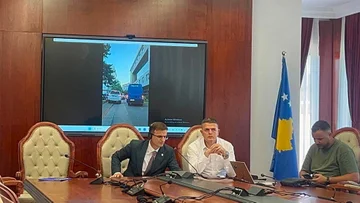
In Kosovo the situation has continued to deteriorate. Serbian President Vuciq has testified in two ways that he controls Serbs north of the Iber River. First, Sunday's elections were peaceful. That would not be possible without his command. Take it as confirmation that Belgrade historically ordered all unrest there. Second, the overwhelming majority of Serbs did not vote. That's what Vuchy ordered. Citizens who voted elected four Albanians for mayors in Serb majority municipalities. Vuciq and his prime minister reacted with the ire of ethnic nationalists, angry that the minority had determined the outcome of the elections because of the boycott they ordered.
I wouldn't want to be one of those mayors. Neither local Serbian officials nor most of the population will support them. Vuciqi's anger aims to mask the fact that it will continue to govern the de facto four Serb majority northern communities from Belgrade, using its network of organised security officers and criminals. Pristina will find it difficult to achieve something there.
Montenegro has already fallen
Vuciq has already taken Montenegro. He has used clever hybrid tools with Russian support to elect a new president. Jakov Milatovic claims to be pro-EU, but is more than addicted to Serbia. The Serbian church, pro-Serbian political parties and a populist anti-corruption mobilization have ousted Milo Djukanovic from office. He has been in power for most of the past three decades, governing with the support of ethnic minority groups. In the upcoming June 11th parliamentary elections, Milatovic will win a pro-Serb majority and against the minority in parliament.
Montenegro is a NATO member. Serbia claims military status <x0-neutral”. That should be enough to prevent an annexation, but also weakens the alliance by bringing among it another sponsor like Hungary.
Not by chance
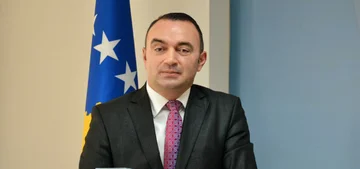
It is no coincidence that at the same time efforts are being made in three states to remove Serbs from the non-Serb government. President Vuciq aspires to the Serbian world “”, i.e. a state for all Serbs, which includes territory in neighboring countries. This is “Serbia's Great”, Milosevic's goal, by another name. In Bosnia he should just let Dodik do his thing. In Kosovo he is exploiting the reluctance of Prime Minister Kurti to start negotiations on a “government “mechanism for Serbs in Kosovo. In Montenegro, elections brought what Vuciq wanted.
As Americans and Europeans continue to declare that Serbia is heading west, Vuciq has finally turned his country east. For the Serbian “bot to become reality, Belgrade must hope for a Russian victory in Ukraine. This would create the precedent of Vuciqi's needs for annexing parts of Kosovo and Bosnia. He will also need China to provide the funds needed for Greater Serbia. It does not need to annex Montenegro, it only needs to be remarried to restore the state union of Serbia and Montenegro that existed in 2003-2006. Or it can co-exist with many bilateral agreements that are on the verge of melting.
Americans and Europeans, gentle
Vuciq knows that Americans and Europeans will not accept de jure Serbia the Great. But he hopes they will learn to live de facto with a Greater Serbia. They have, in turn, been mild. Washington has tried to ignore Dodik and calm Vuciqi. American diplomats strongly support the Association of Serb majority municipalities, which he views as an instrument for the Serbian “government”. Americans have also revived military co-operation and provided a large quantity of funds through European multilateral development banks. Polls for corruption in Serbia are slim. This calm has not produced any positive results.
Divisions hinder Europeans. Hungarian Prime Minister Orban acts as Vuciqi and Dodik's defender, preventing sanctions against both. France and the Netherlands have put brakes on enlargement prospects for Macedonia, Albania and Bosnia. This also reduces the EU's authenticity in Serbia and Montenegro. The five EU member states that have not recognised Kosovo are hampering any true consensus in its favour, even in this week's relatively incompatible Council of Europe vote for the Pristina accession process.
A Change of Direction Needed
The US and EU are failing in the Balkans. They have to change direction. Their basic analysis is wrong. They relied on Serbia as the key state in the region to ensure stability in co-operation with Croatia and Albania. But Serbia is a revisionist power. It wants to govern all Serbs in the region. Croatia and Albania have lower ambitions, but they go in the same direction: they want to control their fellow countrymen in neighbouring Bosnia and Kosovo.
Washington and Brussels need a much stronger, unified and principled approach. This would support the rights of each citizen, regardless of their ethnic affiliation. It would oppose ethnic nationalism where it abuses minorities. It would strengthen the sovereignty and territorial integrity of all states in the region. And it would only welcome those in the West who show real solidarity with the West. /Paceça/