18 minutes ago
AFP writes on the case “Panda”, also mentions Vuciqu
Periskopi(3 years ago)
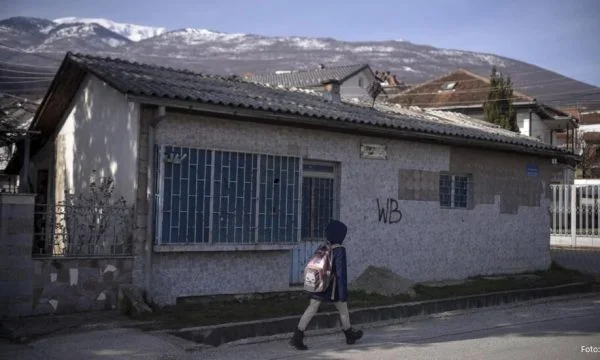
(3 years ago)Nearly 25 years after her brother's murder, Alexandra Sibiuvic remains tormented by unanswered questions about the murder that helped speed up the war in Kosovo, which still concerns the Balkans to this day, reports AFP. Six Serbs mostly teenagers were killed in the middle of the day [...]
Six Serbs mostly teenagers were killed in the middle of the day when masked armed men attacked a cafe in the quiet town of Pec in southwestern Kosovo in December 1998.
Sibinovic's 18-year-old brother, Zoran Stanojevic, was among those staying at the “Panda” cafe, frequented by Serbian youth at a time when such countries were already informally isolated.
After being shot several times, he was bleeding to death.
In the context of the growing violence between ethnic Albanians and Serbs, the events that followed were devastating.
The Serbian government launched a comprehensive attack on Kosovo, leading to thousands of deaths, a refugee crisis and charges of ethnic cleansing.
Belgrade's bloody attack brought a NATO shelling campaign that ended the 1998-1999 war and paved the way for Kosovo's declaration of independence.
However, the murders in Pec and a host of other incidents remained unresolved after Serbian forces withdrew.
The shooting initially went to Albanian rebels, but in the years that followed, different people, including Serbian President Aleksandar Vuciq, have questioned that outcome.
“I can only be released when the truth is proven”, Sbinovic, 46, told AFP in Belgrade.
No <x0 back up>
Kosovo and Serbia remain key rivals for more than two decades, with continued international efforts to improve relations that have achieved little results.
Just last month, an EU-backed peace process aimed at normalising ties between the two enemies appeared to have faltered after Serbia refused to sign the agreement after marathon talks.
“No one can impose on Serbia an obligation to recognise Kosovo”, Vuciqi told reporters.
Amid continued severity, many questions about massacres, missing persons and alleged war crimes stemming from the conflict in Kosovo remain unresolved.
This week the latest trial by a series of war crimes tribunals in The Hague related to the conflict began.
Former Kosovo President Hashim Thaci and three other Kosovo Liberation Army leaders (UÇK) face several charges, including murder and torture.
The trial is expected to last for years.
“A hope silk”
At the time of the attack on Pec, Serbia was under mounting international pressure to curb its armed forces in the fight against an increasing ethnic Albanian uprising.
Years later, Vuciqi, who served as Serbia's minister of information during the war, “dropped a” bomb during a 2013 broadcast.
In the interview, Vuciqi accidentally accused state institutions of guarding a “silence code” about the incident in Pec, Klankosova.tv broadcasts.
He went on to suggest that KLA rebels were not responsible for the killings, but refused to elaborate.
We don't have evidence of this, on the contrary. I just want to say there's a lot of terrible things we're going to have to deal with and we're going to solve these cases”, Vuciqi said at the time.
The Serbian leader, however, has rarely returned to the theme and has rejected repeated calls from victims' families for an audience.
His comments were a shocking blow to Sibinovic, who had long blamed the armed Albanians for killing her brother.
The physical pain I felt was equal to what I felt when I was told he died. Then, I felt a sense of hope that we will finally find out what happened”, she told AFP.
An official investigation began in 2016 but has so far given no answer.
“The investigation has not yet ended”, the Serbian prosecutor's office for organised crime told AFP on Thursday.
The Serbian president's office did not answer the questions sent by the AFP.
“Reason” adds pain
Popular mostly by Albanians, Peja was the former base of a notorious Serbian Special Forces unit.
Its members are accused of organising a number of war crimes in Kosovo, according to human rights groups.
After the shooting, Serbian police arrested several Albanians from the area, including Vlasnim Answering.
While questioned, he said he was beaten with “all possible tools from wood to metal”.
The truth is, I was usually unconscious for three to four hours, I didn't know where we were”, 43-year-old, told AFP.
He said he was later sentenced in 1999 to a year in prison for “public order rectification”.
Until today, no one has been blamed or condemned for participating in the shooting.
Both Kosovo Serb and human rights activists have argued that the incident was orchestrated by the Serbian government to offer a pretext for the large-scale war she started in Kosovo.
“This was a well-organized plan, a well-organised group of professionals who came in, did the job without a trace and very efficient way, and no one later found”, says about AFP in Behxhet Shala, chairman of KMDLNj.
But for Sibinovic, oral surgeons and mother of two, and other families, constant uncertainty has only added to their grief.
If I knew the killer personally, it would have been easier to face than that silence”, Sibinovic told AFP, saying the killer's ethnic affiliation was insignificant.
What difference does it make? It was carried out by a monster acting at the command of another monster”