3 minutes ago
Other Western companies are leaving Russia
Periskopi(3 years ago)
(3 years ago)An extremely large number of European companies are currently leaving the Russian market. The automobile industry is particularly affected. What do these companies basically have in common? Toyota from Japan, Nokia Tyre from Finland, Continental from Germany, TotalEnergies and Leroy Merlyn from France, Ikea from Sweden, Smurfit Kappa from Ireland, Swarovski from [...]
What do these companies basically have in common? Toyota from Japan, Nokia Tyre from Finland, Continental from Germany, TotalEnergies and Leroy Merlyn from France, Ikea from Sweden, Smurfit Kappa from Ireland, Swarovski from Austria? In just one month, in March 2023, they all withdrew in whole or in part from Russia or announced their future business sale to the Russian market.
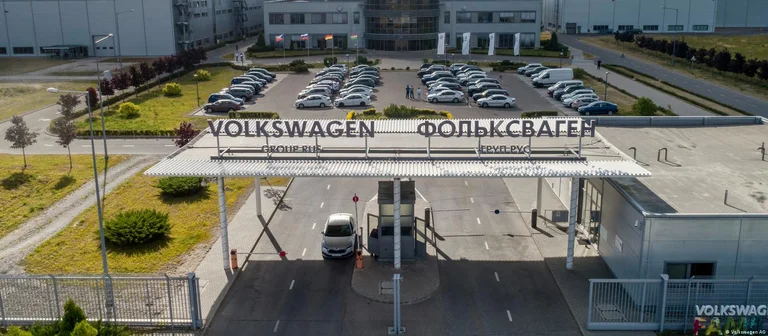
This list is also expected to be completed with Volkswagen. Europe's largest automaker had decided to hand over his factory in Kalugla in mid-March, but its assets were frozen by a Russian court. And second comes Hankel: Since February, German household chemical producer announced that he was aiming to sell his eleven factories in Russia in the first quarter of 2023.
Some wave of sale since the Russian attack on Ukraine
Looks like a huge new wave of attractions from Western companies. The first and most important took place in late February, early March 2022, when many foreign companies decided to suspend their activities on the Russian market immediately after Russia's massive attack on Ukraine. They shut down shops, banned production, investment and exports to Russia and began waiting to see how things would turn out.
But many companies are already acting on the principle “Examples include the British BP oil group, the American fast-food chain McDonald's, German commercial automaker Daimler Truck and the DIY Obi chain. Or French automaker Renault: In May, he simply sold the stake to the producers of Lada Avtovaz, the Russian automotive research institute NAMI, and the entire Moscow factory to the city government.
In the following months, waves of attraction followed. So in October, the most remarkable examples, to be limited to the automotive industry, were the German Mercedes-Benz group, the American Ford Corporation, as well as Japanese producer Nissan, who also sold his factory and research centre at St. Petersburg at the NAM Institute.
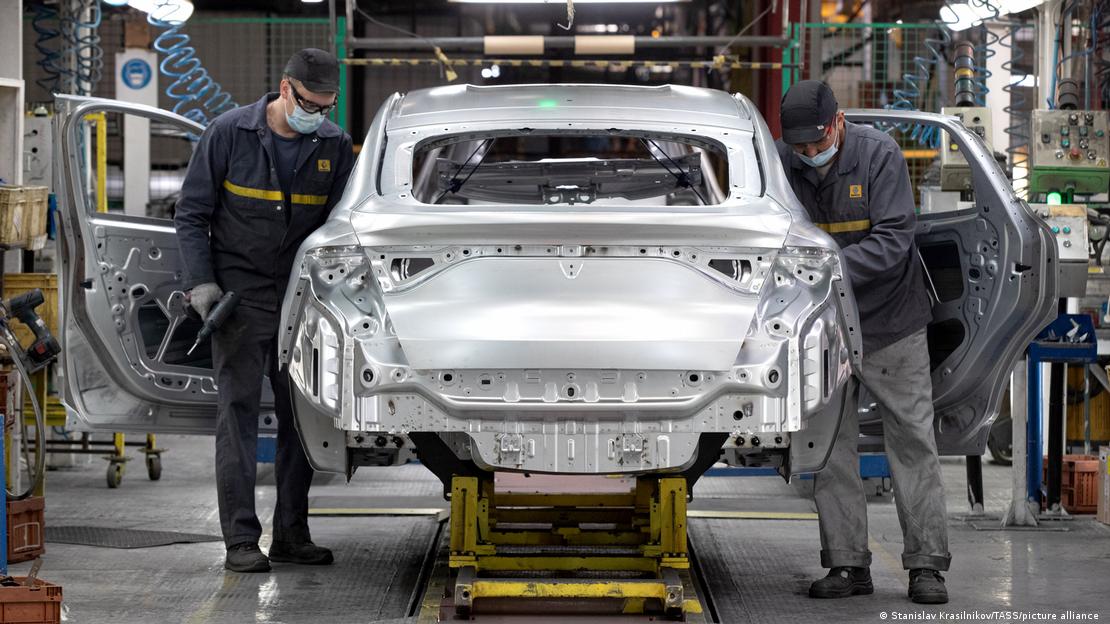
The owner of Western assets was often the local management, which generally lacks capital and knowledge to pay the seller adequately and for the technological development of purchased factories.
Therefore, a new wave of disarray is including the Russian automotive industry, especially in the most successful pre-war groups in Ukraine -- in Kalugla, southwestern Moscow and in the St Petersburg region.
Why is Moscow now allowing more business sales?
As of March 5th, the Kalugla motor oil factory no longer belongs to the French group TotalEnergies. On March 8th, the Continental reported “advanced executions” regarding the sale of the Clapla Tire Plant, with <x2 regulatory approval” still pending. On March 14, such authorizations were given to Finnish manufacturer Nokia Tyre: The factory near St Petersburg was purchased by the Russian oil group Tatneft. On March 16th, the Kremlin announced that it was working for the transfer of the Toyota factory to St Petersburg to the NAM Institute.
It seems that some Western investors are finding the opportunity (or obtaining permission) to get at least any money for their assets in Russia. Others, on the other hand, have to give up their assets so that they can legally leave the Russian market and be protected from possible complaints a current Kremlin decision envisions a tax equal to ten percent of market value. In some cases, it may also be the option of a possible return and perhaps at least partial return of property.
So we might ask what the logic that leads Moscow (some decisions are made by Vladimir Putin personally) when he authorises companies from the <x0). Another question relates: Why, one year after the start of Russia's major aggression war, is the number of such authorizations rapidly increasing? Is it a coincidence or a tendency?
The fact that these agreements have long been prepared argues in favor of chance. Thus, Toyota had already announced in September 2022 the final closure of the plant in St Petersburg, Total Energies had already stopped production in Kaluga in late April 2022. Ikea's example proves that selling Russian activities could last for a whole year. The Swedish group had closed furniture stores shortly after the Russian invasion of Ukraine, but was able to hand over its new owner to the only last of his three factories in Russia now on 24 March.
Some Western companies hoped for low-priced sales
Clearly, some Western companies still wanted to take something from their Russian assets instead of completely dismissing them in the face of the horror of Russian aggression. In addition to Ikeas, Nokia or Hankel, already mentioned, package specialist Smurfit Kappa is on this list. The Irish company declared the withdrawal from Russia in April 2022, but only finalised the sale of three factories in the St Petersburg region and a factory in Moscow on 23 March 2023.
The fact that selling assets in Russia is so complicated and takes a lot of time is certainly due to the reasonable desire of buyers to reduce the price. Another reason may be that the Russian government deliberately refused permits in the hope that some Western investors might decide to stay.
But later in the early year 2023, as the anniversary of the attack in Ukraine and without end of the war approached, those hopes were extinguished. Thus, it may be assumed that Moscow has issued more quick authorization to return to the service factories that have been stopped, at least halfway, or to finally ensure continued production of new owners. This could be one of the reasons for the current wave of evacuations. /dw