27 minutes ago
Prelec: Unless there is agreement with Serbia, risks increase for unrest in northern Kosovo
Periskopi(3 years ago)
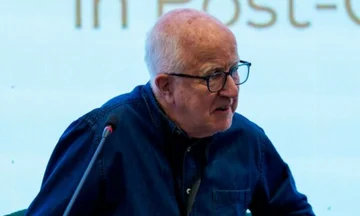
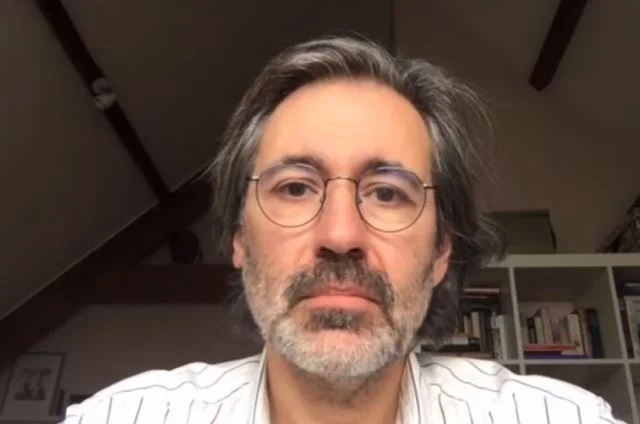
(3 years ago)International Crisis Group analyst Marko Prelec said in an interview with the Voice of America that failure to reach an agreement to normalise Kosovo relations Serbia adds risks to unrest in northern Kosovo, which could seriously damage the future of relations between the parties. Prelec said he did not [...]
Prelec said he does not expect any signing agreement at Saturday's Ohrid meeting between Kosovo Prime Minister Albin Kurti and Serbian President Aleksandar Vuciq, but hopes in some progress towards implementing the European plan for normalising relations between the parties.
He said Kosovo could win with this plan, while calling concerns that the Association of Serb majority municipalities could turn into a mechanism similar to Republika Srpska in Bosnia.
Voice of America: Mr. Prelec, Kosovo Prime Minister Albin Kurti and Serbia's President Aleksandar Vuciq will meet in northern Macedonia on Saturday to negotiate the implementation guide of the agreement offered by the West for normalisation of relations. What do you expect from this meeting?
Marko Prelec: It's hard to know what to expect considering the little amount of information that has been made public by all the parties involved, also considering that we have two leaders with almost no trust in each other, without any real personal relationship as we have in other cases in the history of the region, so it's hard to imagine that they can reach any content agreement themselves. The only reason why there is any possibility of this is because of the tremendous pressure under which the two are from the European Union and the United States actors, the pressure posed by the ongoing war in Ukraine - Russian aggression in Ukraine. So we have this powerful pressure, we have two sides that don't trust each other and it's hard to know what's going to happen. I expect there won't be any kind of “big-bang”, nor any large signing ceremony, but I hope there will still be steps forward in negotiating the implementation guide, which is the main part in the review, and thus launch “add meat” to this 11-point agreement that both sides have suggested has been approved.
Voice of America: The European envoy, Miroslav Lajcak, has said the plan is aimed at a favourable solution for both sides. From your point of view, who can actually be the real winner in this process?
Marko Prelec: This is an interesting statement from Miroslav Lajcak because from what I am seeing, Prime Minister Kurti and President Vucic do not see any opportunity to win both sides. They see each other winning and losing. Judging by the content of the agreement, it is clear that Kosovo is the overall winner in the process. It may benefit a significant measure of international recognition that it does not yet have, so at least it may have membership in the Council of Europe, to remove some obstacles, but not all on the road to membership in the United Nations, in hopes it will also take steps forward in the process of recognising it from the five unaware states of the European Union. Also, by gaining no recognition from Serbia but an admission on its part of key aspects of Kosovo's sovereignty as passports, if we add to it some issues like that of the constantly returning car license plates would further cement Serbia's consent to Kosovo's sovereignty over its territory, including the north. So all these are very important things that are clearly plus for Kosovo. The only thing Serbia benefits from this is in the application annex that has come up with information, if we assume that this anx draft is accurate, it's a reference for a donor conference, so it wins its relationship with European countries on issues that are related to development assistance, investment and aid in general. Kosovo wins that too.
Voice of America: The recognition is not mentioned in the plan, but government officials in Kosovo claim that with this agreement, Kosovo will gain a Qaeda recognition from Serbia, meanwhile, Serbian officials deny it. Is that actually some kind of recognition?
Marko Prelec: No, I don't think it is. I'm not an international lawyer but I know enough about international law to understand that there is a concept inside it under which states can recognise without a formal act, and we refer to it as recognition, and this agreement is not. I think Serbia has made it clear that it is not recognising Kosovo in any way, so this is not on the table for now.
Voice of America: So for now we have some kind of intermediate agreement, if they agree and then we'll have another round of long discussions later?
Marko Prelec: Exactly, I think that's perfectly accurate. The European Union's strategy seems to be to take as much as possible now, and it is clearly determined that it is not possible at present to have comprehensive, legally binding final agreements, which have been talked about for many years in European documents. But it is possible to reach an intermediate agreement that would mean a few steps forward in that direction and then to a future date, when years pass, from an improved midway position, to become the final climb towards the comprehensive agreement.
Voice of America: Mr. Prelec you previously said that Kosovo is a kind of winner in this process, but Kosovo is under tremendous pressure from the international community to create an Association of Serb majority municipalities, and there are many concerns that this mechanism could be transformed into a Republika Srpska. Is that fear reasonable?
Marko Prelec: Let me be open and say no, I think this is a matter of different opinions inside and outside Kosovo, when I say outside Kosovo I talk about friendly states that recognise Kosovo as the United States, the United Kingdom, France, Germany and others, plus from European Union institutions and different experts, so opinions are completely different. In Kosovo almost anyone I talk to shares this view with me that you mentioned this is a big risk. But, many people outside, I'm talking about myself at least, we see it another way, that providing a degree of decentralisation, a degree of self-awareness, of autonomy, these are all sentences with subtle overtones, even federalization, is something that can strengthen and in fact usually strengthen a state. Many countries which are models for many, states that usually do their best in terms of economic development, human development, that offer good life to their citizens, are states that have this mechanism, that have different types of autonomy within them. It is known that Mr. Lajcak has proposed a number of European models, there are also non-European models and there is no need to limit ourselves to things that have already been done, but the general question is that these are all models from very well-functioning states. For some reasons, which I honestly do not understand, public opinion continues to turn back to Bosnia, which is really a country with deep problems, but must also be remembered that Bosnia's experience is not the same as that of Kosovo. Republika Srpska's experience was a solution to a much more difficult problem, it is a completely different solution that no one is proposing for the Association of Serb majority municipalities in Kosovo.
Bosnia was a longer and more destructive war that ruined it as a state and then restored as a state. This restoration through the Dayton Agreement and through the acceptance of Republika Srpska by the international community was successful. So Bosnia now 27 years after the Dayton Agreement continues to be a state where the wounds of war are widely healed, where there has been a rapid economic development and life is much better for all. It's a state where with all the problems from Republika Srpska, and I don't want to minimize them at all, it's still possible for people everywhere who want to drive anywhere they want using the same license plates, the same coins, the same documents, and don't even ever notice when they're passing from one entity to the other. So this reality must be remembered as well. Republika Srpska was the solution to a much more difficult problem, it is a completely different solution that no one is proposing for the Association of Serb majority municipalities, and there are other forms of autonomy that have strengthened, instead of weakening states in Europe.
Voice of America: Mr Prelec, some analysts, but opposition officials in Kosovo also claim the devil is hiding in Article 7 of the European plan and, according to them, envisions an enhanced autonomy of Serb majority municipalities than association. What do you think?
Marko Prelec: As far as I can understand language has been changed and first there is no reference to the European Plan for the Association of Serb Majority municipalities, there is only one inclusive reference not to Article seven, but to another article on the need to implement all past agreements, and this includes the 2013 and 2015 Brussels agreements for Association. The other thing is that the language for self-defence for the Serb community is the most pale language, which, as I understand, is used at the request of Mr. Kurti's government, so that means a softening rather than empowering the idea for the autonomy of Serbs in Kosovo. All of this remains at almost total uncertainty level, all of it is still expected to be negotiated within discussions on the road map of implementation of the agreement.
Voice of America: How do you view the demand for formalism of the status of the Serbian Orthodox Church in Kosovo?
Marko Prelec: This is mysterious to me, I don't understand what reference it is. The status of the Serbian Orthodox Church is already present in the Kosovo legislation, and has been since the beginning of the constituent part of the (Martti) Ahtisaari process, which has led to Kosovo's independence. So I do not really know what additional steps, if any, are expected by that article.
Voice of America: Finally, Mr Prelec, if the parties, hypothetically, disagree and decide to refuse the deal, what consequences could they face?
Marko Prelec: That's hard to know. I think there are some alarms rising in the Serbian media for the extreme steps the European Union can take and I don't know how serious this is. My interpretation is that this is simply an effort by the government in Belgrade to prepare public opinion in Serbia for some concessions that seem otherwise to be very unpopular. What worries me the most, and I think it should bother the leaders of both countries is increasing the possibility and the potential risk of violent unrest in northern Kosovo if there is no agreement. The extent of Kosovo's northern integration into the institutional framework of Kosovo, which took place after the Brussels agreement, has turned far back over the past year, we are now almost at the starting point and this is not the stable situation in any option. I was in Kosovo and in that part of Kosovo also in January and the general opinion of local residents and international overseers was that Kosovo's north was very close to violent conflict several times over the past year, so that's my concern. If there is no agreement, I think the danger there could emerge again, and if there is violence in that part, the future of Kosovo relations could be seriously damaged Serbia.