37 minutes ago
Bill Gates: The age of artificial intelligence has begun
Periskopi(3 years ago)
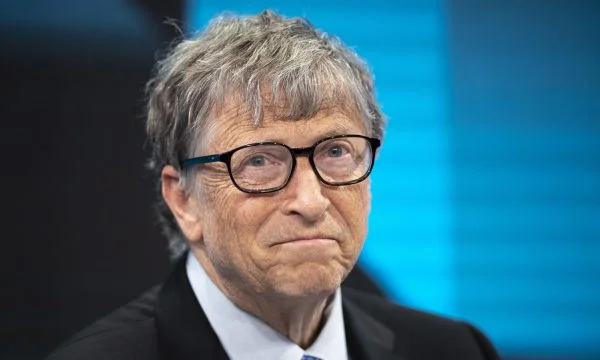
(3 years ago)Artificial intelligence is one of the most important technological advances in modern history, at the same level as the creation of microprocessors, personal computers, internet and mobile phones, writes Bill Gates in his blog entitled “The age of artificial intelligence has begun. ” Microsoft founder decided to write a long blog post [...]
Artificial intelligence is one of the most important technological advances in modern history, at the same level as the creation of microprocessors, personal computers, internet and mobile phones, writes Bill Gates in his blog entitled “The age of artificial intelligence has begun. ”
Microsoft's founder decided to write a long blog post at a time when competition in artificial intelligence (AI) is heating up and technology companies are competing to bring their chatbots to the market.
Gates has previously spoken of being excited about the future that artificial intelligence will bring, mainly because of how much it can facilitate people's lives, improve education and medicine.
The billionaire also shows that he shares concerns about Him, including the risk that people can use in a number of negative ways, as well as the possibility of a super-intelligent One that can set its own goals as technology advances.
In his seven - page blog, Gates promotes ideas and thoughts about how artificial intelligence can be used to increase human productivity but also to help correct job inequality, health, and education.
A qualified worker is available to help with many duties
At the workplace, It can be used as a personal digital “asist” to improve employee productivity. Integrated in digital tools of work, such as Microsoft Office, can help write and communicate via email.
AI-based personal assistants equipped with great knowledge of the company and industry can also represent an important source for employee interaction.
As computer power grows and becomes more free, the ability of chatbots to communicate their ideas will increasingly resemble an educated employee who can help you with a range of tasks”, says Gates.
A digital assistant that removes the burden from health - care professionals
In health, Gates believes artificial intelligence can free employees from certain jobs, especially in the field of bureaucracy, but also complete doctor form for visits.
Millions of people in poor countries cannot even be visited by a physician, and artificial intelligence can increase doctors ' productivity to see as many patients as possible. It is also possible that He can help treat patients who do not live nearby or who cannot go to a doctor.
Artificial intelligence is already being used to analyze health data and even design drugs, and the next generation will be able to help predict negative effects and dose drugs.
For agriculture in poor countries, Gates writes that artificial intelligence can help to produce specially adapted seeds to grow in local climates and to develop animal vaccines. All of this is essential at a time when climate conditions are changing and putting even more pressure on farmers in poor countries.
Teachers Will Have to Adapt
Gates also predicts that He will transform education in the next five to 10 years by being able to adjust educational content for each student, as well as learn what motivates or causes each individual to lose interest.
Artificial intelligence will also be able to help create learning plans and assess the level of understanding specific subjects by students.
Although technology is improving, learning will still depend on the student-learning relationship. It will improve, but will never replace student-Teachering relationship”, Gates points out.
He also adds that it is very important that He is available in poor areas around the world so that children do not fall behind.