7 minutes ago
Escobar sends a tacit message from Ohrid: We're not focused on signing, we're on finalization.
Periskopi(3 years ago)
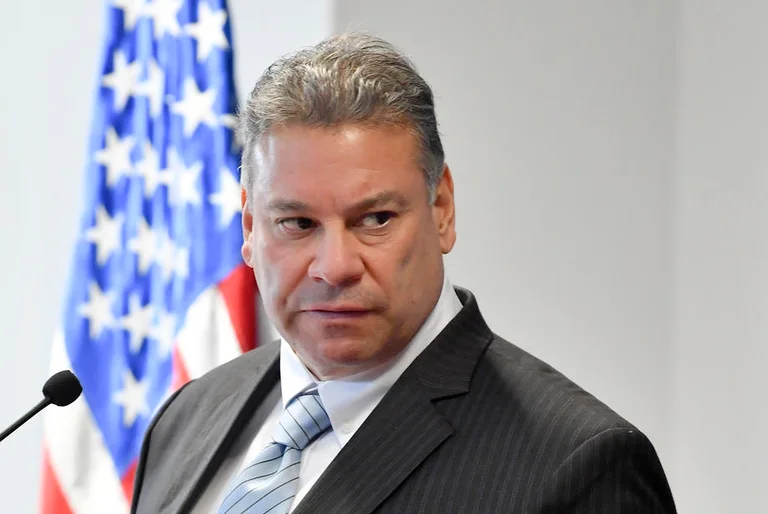
(3 years ago)The United States envoy for the Western Balkans, Gabriel Escobar, is standing in Ohrid from where he spoke on Saturday. Escobar will participate in Ohrid meetings between Kosovo Prime Minister Albin Kurti, and Serbia's president, Aleksandar Vuciq, in the quality of observers. Contact mediator Kurti-Wucciq is chief of politics [...]
The United States envoy for the Western Balkans, Gabriel Escobar, is standing in Ohrid from where he spoke on Saturday.
Escobar will participate in Ohrid meetings between Kosovo Prime Minister Albin Kurti, and Serbia's president, Aleksandar Vuciq, in the quality of observers.
Mediator of the Kurti-Wucciq meeting are European Union foreign policy chief Josep Borrell and EU special envoy for Kosovo-Serbia dialogue Miroslav Lajcak.
Radio Free Europe: Mr. Escobar, as we speak, the leaders of Kosovo and Serbia are holding a meeting within dialogue here in Ohrid. The last few days we've heard you talking about your expectations for this meeting. But what are your realistic expectations for today?
Gabriel Escobar: Our greatest expectations today are for finalising the annex of implementation of the [negotiation] normalisation agreement. This normalisation agreement creates peaceful, friendly and predictable relations between Serbia and Kosovo. But also, it opens the doors to both countries to move faster towards Euro-Atlantic structures. So this is truly historical from our perspective. This is, indeed, an opportunity to put far behind the events of the years, not just for Serbia and Kosovo, but for the region as a whole.
Radio Free Europe: Have you met both leaders today?
Gabriel Escobar: Not today, but I met them this week. I have recently met with [Kosovo Prime Minister Albin] Kurti and I hope to meet with [Serbia's] President Aleksandar Vuciq later in the day.
Radio Free Europe: Mr. Escobar, there's been a lot of pressure on the deal to be reached in March. Why is this timeline so important?
Gabriel Escobar: There are several reasons. First, we must admit that we are operating under the shadow of one of the greatest dangers to European continent security since World War II.
Therefore, in order for Europe to be willing to face security challenges, it must solve all the security challenges that exist within the European continent. And this is among the last.
We need to consolidate, not only peace, but also consolidate the European Union's expansion project for the entire European continent. That opens the door for that thing. Therefore, it is now the best opportunity we have to achieve that, through normalisation of relations between some countries that have not yet made sufficient progress towards Euro-Atlantic integration.
Radio Free Europe: Before this meeting, we have seen scepticism on both sides, especially from the Serb side. Has their attitude softened these days?
Gabriel Escobar: One thing I have to say about Serbia is that President Vuciq has launched a real national conversation about what a relationship between Kosovo and Serbia would look like in the future. And, I must say, both sides are taking this responsibility seriously.
So, I hope we will reach a finalised annex for a normalisation agreement today.
Radio Free Europe: Do you expect there to be a signature of the document today, especially from Serbia?
Gabriel Escobar: Look, we're not focused on signing, but we're focusing on finalization. This means having a reconciliation for both countries to prepare for real discussions and a real reconciliation in their relationship. So, this is more important: finalization of the annex.
Radio Free Europe: Let's talk about the proposal. It has been described as very useful for both countries, especially Kosovo. But it does not involve mutual recognition. Do you think this proposal can and will lead to mutual recognition?
Gabriel Escobar: Of course, it opens a door to this and you see, my attitude as I have consistently declared, both in Kosovo and Serbia, is that all countries in the region should know each other and have peaceful relations with each other. This region is a region of extraordinary promises.
And, however, outside the region, people believe that the Western Balkans is an area of conflict and ethnic tension. In reality, this would end one of the last remaining disputes in the region and allow the entire region to take its place in Europe as part of Europe's fastest growth.