3 minutes ago
Air pollution remains a threat to public health in Kosovo
Periskopi(3 years ago)
(3 years ago)Air pollution is one of the biggest environmental threats to human health, along with climate change. Even this winter despite high temperatures, many expressed health concerns from poor air quality. Sadat Morina even this winter parked his truck full of coals on the side of the road to [...]
Sadat Morina even this winter parked his truck full of street coals at the site known as the “Lapi's Jimia” in Pristina.
Unlike last year, when he had to be careful that he was being fined by inspectors, this winter the merchant has not been disturbed.
The global energy crisis, triggered after the Russian attack in Ukraine, had also greatly affected Kosovo.
State organs were not interested in upholding the law by fined coal merchants, since citizens would otherwise use electricity for heating.
The Kosovo Energy Corporation (KEK), based on the Government's undertaken measures to alleviate the energy crisis during this winter, resumed the process of selling coal for citizens and businesses.
But for coal dealers like Sadati, it was a good opportunity to sell as much of this product that Kosovars not a short time use for heating during the cold winter months.
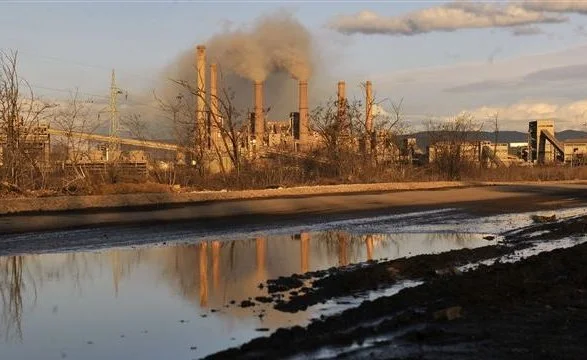
Energy production from lignite, respectively, is among the main sources of air polluting in Kosovo.
In the winter season, Kosovo's cities are mired in smog, which is seen and felt everywhere.
During winter and especially in the capital, air pollution also greatly contributes to the use of coal for heating.
From the regional initiative that also focuses on environmental protection, the “Balkan Foundation”, tell the Telegraph that both European states and Kosovo during this winter took measures that do not coincide with their long-term goals related to environmental protection or energy training.
“Polonia, Bulgaria but also Germany, known as the leader in the energy transition, which to replace gas coming from Russia, is set to return coal power plants to work. In the same spirit, Kosovo, as it does not have the capacity to cover demand growth during winter, and given that a good portion of citizens use electricity to warm up decided to allow the sale of coal for citizens and businesses”, says the Balkan Green Foundation's response.
This initiative says the need for affordable heating in Europe but also in Kosovo is causing air quality to deteriorate and thus threaten citizens' health.
“to reduce energy costs, the government may feel pressured to relax environmental regulations. Unfortunately, these hasty and dangerous energy policies endanger the health of citizens by increasing exposure to deadly pollutants and by exacerbating the environment in general”.
However, from the Balkan Green Foundation say that this winter has been characterised with higher temperatures than usual at that time, “ky was a factor that contributed to the slightest use of heating resources, including coal, and as a result the effect of pollution was lower than”.
Another reason [for the lower pollution than forecast] is that since the use of coal was banned for a long time, a portion of citizens have only replaced the equipment for its burning”, the Balkan “initiative Green Foundation”.
University professor, ecologist Zecir Veselilaj says to Telegrafi that the common cause of pollution are KEK, the last quality derivatives coming to Kosovo, old cars burning these derivatives on narrow and damaged roads, chaotic urbanism, waste and their burning in the open environment, etc.
Wessel's reference to the effect of the energy crisis on air pollution says that electricity heating also has negative effects on air quality.
And even if we don't heat up with wood, coal or diapers, and we heat up with energy, we need to know that that energy comes from burning coal. So by saving energy and saving additional pollution”, Vesela has stated.
Vesela says she does not expect improvements to the environmental issue until this is taken more seriously by state institutions.
“The environment has in fact never been treated well, nor has it been treated as a problem”, Vesela said.
The danger of air pollution caused by small air particles and long exposure to air pollution has been associated with a series of adverse health effects.
Plumologist Flamur Mark reports that the largest number of patients with contaminated air complications is between early November and March, when fuels are mostly used for heating.
According to him, patients seeking health services as a result of contaminated air complications are added each year.
“This year we were probably lucky that it wasn't very cold and the smog covering Pristina for a long time this year for good was not, but the number of patients was still quite large, whether ambillars or extended, who have sought medical help”, Mark declared.
“Those particles of released pollution create major obstacles especially in respiratory paths, in which there is a deterioration of existing diseases such as bronkitis, chronic obstrusive diseases, lung diseases, or even bronkial asthma”, Mark says.
Environmental Protection Agency reports that urban areas in Kosovo especially during autumn and winter face high levels of air pollution, pollution that is causing premature death of Kosovo citizens.
This is evidenced by data derived from air quality monitoring from the national network in Kosovo, published in Europe's “Air Boxing Report 2022” by the European Environment Agency.
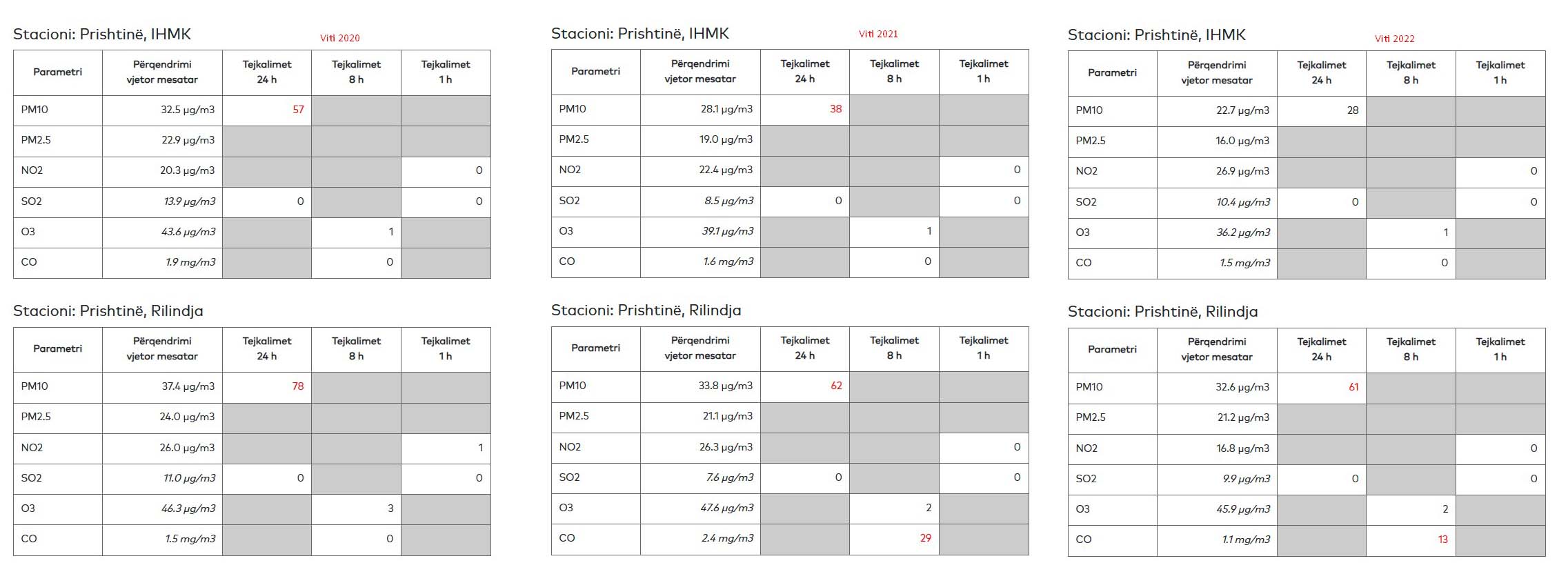
The agency reports that during 2022 alone, Kosovo Termocentrals have been named, 20 thousand tons Dioxid Sulfuri (SO2), about 23 thousand tons of Oksid nitrogen <x1) and about 60,000 tonnes of total dust.
However, high temperatures that have prevailed during this winter have reduced citizens' need to spend heat resources, slightly lowering air pollution levels.
Over the past few years, in winter season the quality of air, especially in Kosovo's capital, Pristina, had reached an alarming level, exceeding all recommended standards.
According to then released data by the American Environmental Protection Agency and Embassy, the values of the PM 2.5 were above the allowed values.
On a February 2021 issue of the IQ air page for global air quality measurements listed Pristina several times with the most polluted air in the world.
In 2020, pollution leaks had concentrations of 367,2 comg/m3 of the PM10, concentrations of 234.5 50g/m3 of PM2.5, concentrations of 206,5 m3 of NO2, and levels of SO2 of 294,8 ⇩/m3.
For degradation of the living environment, Kosovo was also criticised by international mechanisms.
In the reports of these mechanisms, Kosovo was ranked at the lowest level of environmental standards in the Western Balkans and in Europe.
The biggest potential is the Kosovo Energy Corporation that supplies the entire state with electricity, which is produced by coal and is located a few miles from Pristina.
By 2018, the Kosovo Energy Corporation has given coal as a gift to its workers.
In 2018, the Ministry of Economic Development has decided to prevent coal from being given as a gift to KEK workers.
But early this winter, Economy Minister Artane Rizvanolli has abolished this decision so that workers can be helped overcoming the crisis.
This article is supported by the United Nations Development Programme (UNDP) in Kosovo through the Macedonian Promise Project financed by the Government of Japan. Its contents are author responsibility and do not necessarily reflect UNDP or Japanese Government viewsW. /Telegraph