13 minutes ago
What agreements were implemented between Kosovo and Serbia, and which did not?
Periskopi(3 years ago)
(3 years ago)Since 2011, Kosovo and Serbia, with dialogue mediated by the European Union, have reached dozens of agreements on normalising relations. The implementation of agreements, whether technical or political, has often been blocked, causing both sides to meet several times to agree again to implement them. Lately, the two states through [...]
The implementation of agreements, whether technical or political, has often been blocked, causing both sides to meet several times to agree again to implement them.
Lately, the two states through what is known as the EU's proposal for normalising relations have again agreed to implement “all dialogue agreements from the past”.
Dialogue chronology
March 2011 Start technical dialogue
October 2012 First political appointment
April 2013 First Agreement on normalizing relations
August 2015 Subscripted agreement package for normalisation of relations
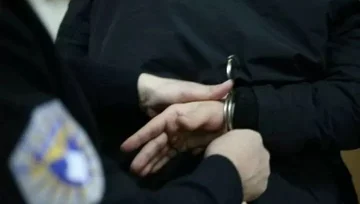
March 2017 Kosovo's Assembly suspends dialogue after then Prime Minister Ramush Haradinaj's arrest in France, due to a Serbian arrest sheet that treated him as war crimes suspect (Enter REL).
July 2017 ) political dialogue resumes at presidential level
January 2018 Technical dialogue continues between two countries' top negotiators
January 2018 Serbia withdraws from talks following Serbian politician's assassination in Kosovo, Oliver Ivanovic
February 2018 The Pauls return to talks seeking implementation of agreements reached by then
July 2020 Kosovo, Serbia resume political dialogue with high-level meeting
February 2023 Kosovo, Serbia agree with content of European proposal for normalisation of relations
March 18, 2023 Meeting expected to discuss implementation of European proposal
Key agreements reached between Kosovo and Serbia:
2011- Freedom of Movement Agreement
2011 Civil registry agreement
2011 Customs Seal Agreement
2011 Agreement for cadastral records
2011 Integrated Border Management Agreement
2011 Agreement for College Graduates
2012Agreement for regional representation and co-operation
2012 Agreement for liaison officials
2013 deal on local elections, functioning four northern municipalities in Kosovo
2013 Police Integration Agreement
2013 ) Agreement to break down “Civil Protection”
2013 The Justice Agreement
2013 ) Agreement to establish Association of Serb majority municipalities in Kosovo
2013 Telecommunications Agreement
2013 Energy deal.
2015 Ibrive Bridge Restatement Agreement in Mitrovica
The Symptoms of Citizens
Shkodran Azizi from Presevo, a town in Serbia, abandoned his profession as English language teacher in Serbia in 2018.
He graduated from Pristina University in Kosovo in 2012. However, after a few years, Serbia did not recognize this degree.
Reached in 2011, the agreement on mutual recognition of diplomas between Kosovo and Serbia was implemented for several years, through the Certificate of diplomas from the European University Association.
In 2014, the Constitutional Court in Serbia found that recognition of diplomas received in Kosovo after declaring independence in 2008 is contrary to Serbia's Constitution.
By 2017, Shkodrani began to be paid less as a teacher, since only middle schooling was known in Serbia.
So after living several years in Kosovo, he moved to Germany, where he now works as a waiter.
The Kosovo government said in a 2021 report that the diploma certificate process has remained “frozen”.
It has been very difficult after six and a half years of work and the contribution I have made in the Presevo Valley to stop it, due to an unfair and insincere discrimination”, says Shkodran Aszi, citizen of the Albanian community in Presevo.
Integration of Serb Community in Kosovo
The issue of the integration of Kosovo Serbs was included in several agreements, largely reached in 2013 and 2015.
These include the establishment of an Association of Serb majority municipalities, the integration of Kosovo Serbs into police structures and the justice system, the dissolution of parallel structures led by Serbia and others.
The association of Serb majority municipalities was never founded by Kosovo.
In 2015, the Constitutional Court of Kosovo found that the Agreement for Association is not in full harmony with the Constitution.
“ [The foundation of Association] would bring us a security and independence”, says Dusan, a North Mitrovica citizen of the Serb majority-run municipality in northern Kosovo, interviewed on February 27, 2023.
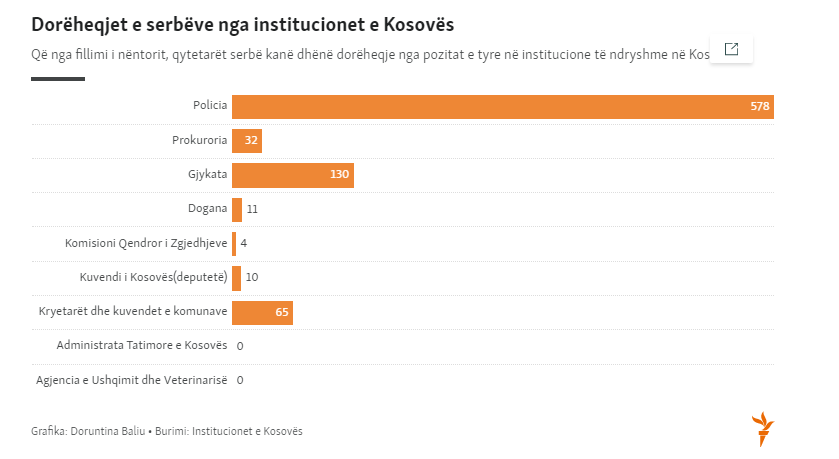
The integration of Serbs into Kosovo institutions, such as police, justice system and administration, marked a setback.
Energy: Another Unmet Agreement
In 2013, Kosovo and Serbia reached Energy Agreements, aimed at regulating electricity supply and billing in the four municipalities in northern Kosovo, inhabited by Serb majority.
After nine years, in 2022, a roadmap was signed for implementation of this agreement. But implementation of the deal stalled, as the Serbian company, Elektrosever, failed to respect some of the guide's obligations.
Thus, citizens in the four municipalities in the north of Mitrovica, Zubin Potok, Zvecan and Leposaviq continue not to pay the spent electricity. Their cost covers Kosovo's budget. This situation continues from 1999.
“A beautiful part of the blame for failing to implement the Agreement [for Energy] has Brussels itself, which has sent incorrect signals to Elektrosveri, through the wrong interpretations of the articles, which have nothing to do with the” guide, Kosovo Deputy Prime Minister Besnik Bislimi said on February 8, 2023.
Where was progress?
Civil registry agreement Through the deal reached in 2011, Serbia handed to Kosovo 12,036 copies of civil registry books, which were taken during the time of the 1999 war.
Agreement for Interconnective Officials After the 2013 agreement, Kosovo and Serbia established liaison offices in the respective states.
Telecommunications Agreement It was arrived in 2015. Kosovo now has its own +383 phone code, different from that of Serbia.
The deal that produced unrest in the north
The freedom of movement agreement was among the first to be reached in technical dialogue in 2011. It was expected that citizens of both countries could travel freely to each other, since official documents would be recognized.
Among other things, it was provided to remove documents issued by parallel institutions in Serb-run municipalities, including the license plates of Kosovo cities' acronym cars, used mainly in northern municipalities.
This caused unrest and initiated the departure of Serbs from Kosovo institutions. Later, during 2022, the situation deteriorated, and for three weeks the roads leading to the border points between Kosovo and Serbia were blocked. After the EU intervention, the Kosovo Government's decision was suspended until an upcoming agreement.
The original agreement envisioned the putting of sticky letters on national symbols on plates issued by both countries. This point began to apply in 2022.
An analysis of the Kosovo Democratic Institute (IKD) for Kosovo-Serbia dialogue, published in 2022, estimated that “the lack of transparency has almost always characterised the Kosovo-Serbia dialogue process”.
By June 2021, governments (over the years) have published reports of the state of implementation of dialogue agreements, but since then, such a report has not been made public. In this situation there is not enough information on what is the status of implementation of dialogue agreements”, says Violet Hajolli, researcher at the Kosovo Democratic Institute (IKD).
The European proposal for normalising Kosovo-Serbia relations does not envision mutual recognition and jury from Kosovo and Serbia.
However, senior European Union and United States officials have said that this intermediate agreement is the best that can be reached at this point for both countries.