10 minutes ago
Tromp: Be careful about association, not given a chance for secession
Periskopi(3 years ago)
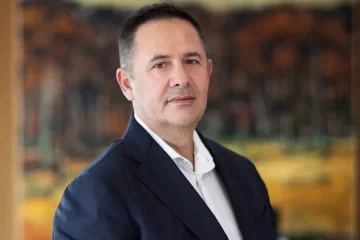
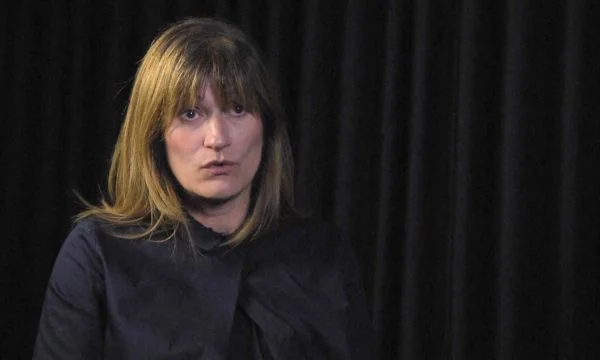
(3 years ago)The realisation of the issue of the Serbian Major Community Association in the context of an evental agreement between Kosovo and Serbia, researcher and professor at Amsterdam University, Nevenka Tromp, now takes it for fact. In an interview for Inseyder, she says that as regards a local self-government for the Serb community, she should [...]
But one thing, the details of which need to be further elaborate, is that “is not given to those who have bad intentions within the Serb community to use it [the association] to completely secede from the Kosovo government and the authority of the state of Kosovo”.
Tromp concerning Kosovo Prime Minister Albin Kurti's approach, notes it is extremely difficult for a new ruling politician to find himself prime minister in his first term. “It is another type of player; while Vuciq, who is much longer in power, is much more devious when we are in symbolic and verbal policies”, she estimates.
In terms of “, the praise <x2x1> towards Serbia, and the American rebuke of Kosovo, mainly in light of the performance of the Franco-German plan, Tromp views “verbal and symbolic Vuciqit” as a game.
“ [Alexandar] Vuciq understands, and Serbia has proved many times, that they will always say yes when they know the other side will refuse”.
So, it's much better for Vuciqi when Kurt refuses any important structural steps on the road ahead. Because if Kurt wouldn't specifically refuse something, then Vuciq would say no, but now if Kurt gives him space by saying no first, and this is not being a unilateral thing in what he wants to decide, Vuciq would abuse it by saying otherwise, just what the internationals want to hear by doing for himself, and let the internationals criticise Kosovo”, Tromp said.
Even the entire situation created since the license issue, Nevenka Tromp, who is also the author of the “Slovenian Milosevic's unfinished trial, sees the Serbian side detonated to blame Kosovo on the international level.
Although she initially says she understands that Kurti highlighted an administratively important issue, then there was the risk of escalation, she notes, while the withdrawal of Serbs from domestic institutions was exploited by Serbs in the international arena.
“First, let's see how you combine operational and strategic steps. When he engaged in this important administrative issue with Serbia's license plates in Kosovo, where he wanted to stop him. It was important enough to point out, but to make that problem that could lead to conflict in violence escalation is a completely different matter”, Tromp says.
Then you must think extremely strategically and think at a longer term. And why is it important to stress? Because the transition and focus of the complexity of Kosovo-Serbia relations on this single issue and the consequences stemming from the resignation of Serbs from many of the institutions were actually very confusing to see and hear. Because we know that his previous governments spent many and many years in establishing the negotiating position against Quinn, but also the international community, including and doing everything to include Serb representatives at each level of Kosovo government. This brief speculation critically undermined this process”.
Tromp says it is important to stress because it gives argument to the Serbs in internationals. And, believe me, internationals hear such arguments. Because internationals will never rise in situations in which they give support to one side and neglect the interests of the other”, she said.
Therefore, this is an interesting and dangerous position, where he had to do tricks between tactical operations and strategic issues; he did what he did, escalation did not, but what he also did was that he showed wisdom when he actually agreed to have another delay for stopping Serbian license plates”, Nevenka Tromp said.
Nevenka Tromp's full interview:
Insander: I'd like to start with “Elefant in the party room”, as we call it, which has already occupied the whole space; and it's the strongest nut to break into Kosovo-Serbia Dialogue. Serbia calls this association “the precondition of all preconditions”, while Kosovo says it can be considered if its counterweight can be measured with mutual recognition. What can you say about these two attitudes that exclude each other?
Nevenka Tromp: In all negotiations where there are two or more sides, and especially in negotiations where the political format is defined and the future of the two states is absolutely acceptable, and indeed there is the norm, for both sides to enter into negotiations with attitudes that say “we can negotiate, but these things we don't change, this is our basic position”.
To give you an example during the 1995 Dayton peace negotiations. The Serbian side, Milosevic said they have certain conditions, and one is that the borders of “Republika Srpska” remain as they are; and that the territory's composition to be divided between Serbs, “Republika Srpska”, and the Federation of Bosnia and Herzegovina, and that it would be 49% by 51%; that they would not accept less than 49% of Bosnia and Herzegovina's territory. The second condition Milosevic said would negotiate in Bosnia and Herzegovina is that we are negotiating, but Kosovo should not be in the agenda. And the negotiators accepted it. Croatians had their terms, we negotiate, but Mostar should remain within this territory controlled by Croats in the Federation of BiH.
So, I think that the sides by positioning themselves so, presenting goals, goals that will be non-negotiable, that's also common. But if you then look at their demands then note that Kosovo has the greatest chance of accepting the formation of the Serbian Communist Association, and then for Serbia to accept recognition of Kosovo as an independent state within its borders today.
So, not border change, but recognition. I think Serbia will have a lot of trouble to say no to this. However, I think that Pristina, the government in Pristina through careful details can accept some local Serb rule in those countries where Serbs claim it.
Insander: However, Americans have demanded that this association be formed, and that without delay, they have even made it clear that this association will be formed “, or without the” consent of the current government. Do you see that U.S. patience is running out and they want to close a deal between the two countries permanently?
Nevenka Tromp: If this is the attitude of Americans, and if this is a bit of a rush to rush it, then I'm surprised because we have the same situation since 1999. And during all these years, we have negotiations on format, internal structures for Serb communities, and I don't understand what this great rush will bring, and how it reasons.
I think much more important is that there's consensus between both sides and the consensus eventually won't be about the outline of the municipalities because pretty much we know what this territory is like, how it's carved. But the most important position is whether there will be special rights to a political entity, whether they have their own police force and others. That's the whole other subject. And, I don't think it would be practical, pragmatic, wasting so much time on how this local self-government of municipalities will eventually seem. Because if he continues to deal with such details then he may have a shift in past situations, where there is no movement at all.
To summarize what I said: there is no need for Americans to push you for urgent solutions, and clearly not to impose such on either side, in this case, the Kosovo government or the Kosovo state. And, yes, I think that for all, it is now clear that Serbian municipal territories, such as local self-government, now more de fact is also reality and now needs some kind of model; but without being given the opportunity for those with bad intentions within the Serb community to use to completely secede it from the Kosovo government and the authority of the state of Kosovo.
Insander: Now we have the Franco-German plan, whose contents have not yet been published except for some drafts here and there. However, Serbia's president says 90% of the drafts published by the media are true. I believe you read it too. How did you figure out this plan?
Nevenka Tromp: I think you agree that since 2017, we've seen many of these so-called non-papper plans, plans that circulate in different variants, but have never been raised to levels of peace plans or official documents for negotiations. However, when you read it, there is credibility for continuation compared with what we have seen in the past. And what I see in this plan as a development and actually a break from 2017's plans, when internationals seemed to be flirting with the possibility of territorial exchange, so that Presevo Valley will become part of Kosovo's state borders and Kosovo's north will be exchanged and become part of Serbia. I think this is a development to be very welcome. If this is a work document, like non-paper, it has major moves ahead. No more English exchanges.
But from all that emphasis? Yes, there must be something that makes the Kosovo Serbs so proud and through them Belgrade, so the Association of Serb-dominated municipalities can take any official form. At the same time, however, the emphasis is elsewhere. They mainly say that both states -- Kosovo and Serbia -- should help each other support their European integrations. This is very important. It is not that it says I will immediately follow the membership plan, but clearly say we have a future within the EU; both of you are welcome but under the conditions that you understand this is your path to peaceful existence and to work jointly through the EU platform.
I think this is promising gojo, and it tells me that these two states should, if they don't cooperate, at least accept the peaceful existence of themselves, and secondly, looking towards the EU means seeing peaceful solutions to their differences, and through the peaceful achievement of a reconciliation for their borders and accession.
Insander: [The Franco-German Plan] is said to be based on the UN Charter, where Serbia de facto would recognise Kosovo, and Aleksandar Vuciq says he has accepted the plan as the new framework of negotiations between Kosovo and Serbia. Just that formal recognition would be lacking. Do you see this plan as a step towards successful normalisation of relations between the two countries?
Nevenka Tromp: I think we should see two different approaches to bilateral relations between Kosovo and Serbia. One is what happens and has never stopped. Kosovo and Serbia have good trade, economic contacts, which have now fallen on radar, but we know what the borders are like, who-what-who-who buys and where supply chains are followed. So this is good news. Because economic activity tells us that in fact these two countries have never stopped working together.
The second thing is how this cooperation and contacts inside of them can be improved or even improved, but I believe in improvement by shaping their mutual recognition. And that clearly applies more to Serbia than the other way around Kosovo. Under what conditions and like Serbia will improve its relations with Kosovo at the bilatheral level, pledging not to stand in the way of Kosovo's membership in international organisations, which also is written in the French-German plan, so that Serbia is not an obstacle through its lobbying efforts that Kosovo is not part of the important institutions. And, then, how can Serbia influence this frozen situation where Kosovo cannot move towards recognition by UN states and leave it with recognition of all EU states.
Serbia can do much about it, and even in the early war in Ukraine, Putin and official Moscow very often said that Russia would not veto the KS if the Kosovo issue becomes a topic if Serbia recognises Kosovo. Even Russia said so at that time. What's changed now? Putin's the one Putin used to be, like, 10-5 years ago, saying things like that I just quoted him. Putin is another man, and Russia is the black sheep at the Security Council. The situation is now most unexpected even if Serbia itself meant yes. Would Russia do what everyone expects it to do, and will Vucinic take advantage of it? For Vuciq to say “yes, Serbia will recognise Kosovo” knowing that this post-Ukrainian Putin will not have elections or decide not to have elections, and Russia decides to vote against UN membership.
And the same to a degree applies to five EU states that have not recognised Kosovo. What is the role, and what can Serbia do in Kosovo's different treatment and say that “we know Kosovo”, how would this affect the five states? It may affect four of them, but I am not sure that anything could affect Spain to change its attitude towards Kosovo's independence.
Insander: One last question. I want to go back to how you have seen the performance of Kosovo Prime Minister Albin Kurti in the whole process; but also his approach to the international and most important community towards the United States, without whose support Kosovo would be largely uninhibited on the international stage.
Nevenka Tromp: In any way, it is a very difficult position to find yourself as prime minister in your first term. In Europe, there are now prime ministers who are in their third, or even fourth mandates. Albin Kurti is one of the politicians who won the election and found himself in the midst of a highly complex situation, and because of the war in Ukraine, it is becoming even more complex on the world stage. So how can we judge a politician inside such a complex domino game?
First, let's see how you combine operational and strategic steps. When he engaged in this important administrative issue with Serbia's license plates in Kosovo, where he wanted to stop. It was important enough to point out, but making it a problem that could lead to conflict in violence escalating is a completely different matter. Then you should think highly strategically and think for a longer time. And why is it important to stress? Because the transition and concentration of the complexity of Kosovo-Serbia relations in this single issue and the consequences that resulted from the resignation of Serbs from many of the institutions were actually very confusing to see and hear.
Because we know that his previous governments spent many and many years in establishing the negotiating position against Quinn, but also the international community, including and doing everything to include Serb representatives at each level of Kosovo government. This brief escalation dramatically undermined this process. Why is this important? Because Serbs in Serbia again won an argument to say and if you see Kosovo is not our state, see how we don't have representatives there; and, believe me, internationals hear such arguments. Because internationals will never rise in situations in which they support one side and neglect the interests of the other.
Therefore, this is an interesting and dangerous position, where he had to do tricks between tactical operations and strategic issues; he did what he did, escalations did not, but what he also did was that he showed wisdom when he actually agreed to have another postponement for stopping Serbian license plates. It again indicated that the Kosovar side is enough pragmatist to do nothing about the situation, and that it is again the first party to go to the negotiating table.
This is a good position to be, because it allows Serbs to come up with the existential demands that are not them to please the Serb people in Serbia, but that actually there are to prevent the process where both states will be treated equally by the international community and mediators. Also in general for Kosovo, neither Kurti nor any other prime minister has an account to make unilateral decisions that could lead to the crossings, because Kosovo as a fact state cannot survive, cannot have the support it has had for nearly 30 years, without the support of key international players, most of which represent Western democracy.
Insander: To add one thing to my last question; we have witnessed a change in the U.S. position, with the US Secretary of State praising Serbia's president for a constructive approach, and the same is done by Derek Chollet, while at the same time we witnessed a stern rebuke against the Kosovo government. Do you see this shift as a finding of understanding with the Serbian position, in this case?
Nevenka Tromp: I don't think this is a long-term U.S. commitment, but it's exactly what we've been seeing as the kind of dynamic Belgrade and Pristina have been developing since Albin Kurti took power, he's a different kind of political player; whereas Vuciq, who is much longer in power, is much more devious when we're in symbolic and verbal politics. He knows, and Serbia has proved many times, that they will always say yes when they know the other side will refuse.
So it's much better for Vucinqi when Kurt refuses any important structural steps on the road ahead. Because if Kurt wouldn't specifically refuse something, then Vuciq would say no, but now if Kurt gives him space to say no first, and that's not being a unilateral thing in what he wants to decide, Vuciq would abuse it by saying otherwise, just what internationals want to hear doing for himself, and letting internationals criticise Kosovo.
And, you know, internationals have many ways of putting pressure on Kosovo; and one is clear that Kosovo is a de facto small state; economically and strategically dependent on the states of lord, and Vucinic knows that very well.