11 minutes ago
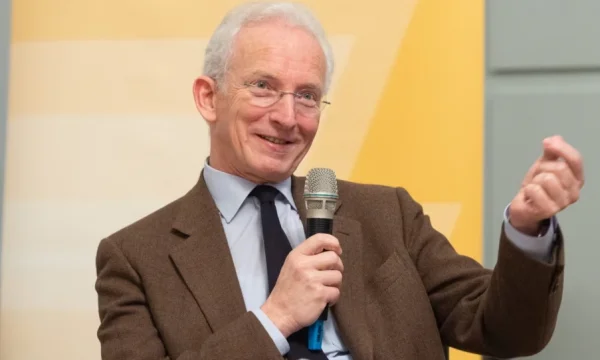
Stefan Lehne: Association is limited autonomy, should not be a Republika Srpska
Periskopi(3 years ago)
(3 years ago)The former European Union representative in Kosovo status talks, Stefan Lehne, does not believe the EU plan for normalising relations between Kosovo and Serbia would end their disputes. The sides present that plan as <x0immation from outside” and are unlikely to be constructive in its implementation, Lehne says. [...]
The sides present that plan as <x0immation from outside” and are unlikely to be constructive in its implementation, Lehne says in an interview for Radio Free Europe.
Moreover, he adds, the plan does not include full recognition of Kosovo by Serbia, and that would discourage other countries that do not recognise its independence.
“Even if Serbia was willing to accept Kosovo's membership in the UN, that would not happen, because Russia would not allow”, Lehne, now analyst at the Carnegie Europe Institute, adds.
Speaking of the Association of Serb majority municipalities, he says this association “would not bring miracles” in Kosovo-Serbia reports, but would unblock the European integration process of both countries.
Radio Free Europe: Mr. Lehne, formerly in the position of the EU special envoy on the Kosovo status issue, how would you describe Kosovo today, 15 years after declaring independence?
Stefan Lehne: I think Kosovo has made much progress in many ways, but there are many shortcomings as well. It's not a fixed place. And some of the things he wants to do are still blocked by the status issue still fully unresolved.
Radio Free Europe: What exactly are you talking about?
Stefan Lehne: More specifically for the European perspective. Kosovo has applied for EU membership last December. There is a Stabilisation and Association Agreement [with the EU], which has been a good start. There will be visa liberalisation, which is great progress, though very late.
But progress towards EU membership, towards enlargement negotiations, remains extremely difficult, because five EU countries do not recognise Kosovo as an independent state. And for Kosovo to move forward in this process, the agreement of the 27 member states needs.
Radio Free Europe: Tensions between Kosovo and Serbia remain also high, despite European Union efforts to normalise relations between them since 2011. Now another attempt is under way to broker a deal through the so-called EU plan. How did you see this plan?
Stefan Lehne: As you know, he follows the pattern of two Germanys from the early 1970s. It's an idea that's not entirely new. I think [Wolfgang] Ischinger [former EU envoy for Kosovo status] spoke of it in 2007. But current efforts seem to have found greater appeal, both in Kosovo and Serbia.
[Serbia's President Aleksandar] Vuciq has expressed himself openly in this regard. [Kosovo Prime Minister Albin] Kurt accepted it, too, as a basis for negotiations. But I think many issues remain open. Vuciq thinks that the Association of Serb municipalities [with majority in Kosovo] should be founded before engagement in this process, while Kurti sees priorities differently. I think there's still a lot to be solved.
But what is positive is that both sides appear ready to engage in this process in a serious way.
Radio Free Europe: Do you think this plan would end disputes between Kosovo and Serbia?
Stefan Lehne: I'm not sure. What worries me is that both sides present this as something imposed by the EU, by the US. They do not portray it as something that is basically a good solution to problems. According to them, it's something we don't want, we don't like, we hate, but we have to admit it because we don't have a choice. On the contrary, the road to the EU is blocked, Americans will not be satisfied and so on.
This doesn't fill me with much optimism. Because if you do something that is imposed on you by someone else, then you are unlikely to be very constructive in the implementation process. There are many issues that need to be resolved, and that reduces my optimism.
Radio Free Europe: Would you be more optimistic if this plan included mutual recognition between Kosovo and Serbia?
Stefan Lehne: Yeah, I think it goes this way. According to the stemming documents, the two countries will apply the principles of the UN Charter, in terms of territorial integrity, independence, non-use of force against each other, non-invention of membership in international institutions... That would certainly be great progress, but it does not include full recognition of Kosovo by Serbia. This means that other countries, which have not recognised Kosovo so far, may hesitate to move in this direction.
I think, basically, there are three motives for not recognising Kosovo. The first includes countries that are generally sceptical of Western initiatives. I would mention China, India, South Africa... Then there are countries that have a special friendship with Serbia. This is clearly Russia. Maybe even Greece. And countries that have problems with minorities themselves, unresolved status issues, have domestic political reasons. I mean Spain, Cyprus, Romania, Slovakia...
So there's a mix of motives. And I have doubts that if Serbia does not clearly recognise Kosovo's independence, these countries that have major internal problems, such as Spain, Cyprus, will do the same.
Then there is UN membership. In principle, if Serbia no longer stopped Kosovo from membership in the UN, it would be a major step forward for Kosovo. But, I don't think Russia, at this time, when at war with the Western world, will not block [Kosovo] at the Security Council. So even if Serbia was willing to accept Kosovo's membership in the UN, that would not happen, because Russia would not allow it.
Radio Free Europe: Kosovo is also under pressure to form the Association of Serb majority municipalities. Many in Kosovo, including Prime Minister Albin Kurti, worry that it will create a mini-state or another Republika Srpska. Would Association be a danger to Kosovo's sovereignty?
Stefan Lehne: It depends entirely on how it applies. I think the basic ideas of the 2013 agreement [for the establishment of association] are fully in line with Kosovo's capacities to function as unitary state. It would be a kind of limited autonomy and may be with limited competence. [The association] is something Kosovo has accepted and then blocked for various domestic reasons. It is something Kosovo must implement and entirely depends on how it is regulated.
In the last few years, I haven't followed him too closely to tell you exactly what to do. But it is something Kosovo must bring to the table. Without moving in this direction, the whole process will be blocked.
Radio Free Europe: The main problem in Kosovo is its executive competencies. What should this association look like to you?
Stefan Lehne: I don't want to get into details and speculation. I think that [should be] limited autonomy. Of course it must be meaningful. Serb majority municipalities would have to be able to organise part of the daily themselves. But, it should not be a Republika Srpska, it should not have the possibility of blocking the functioning of the state of Kosovo.
I think there are different examples where such structures work, but it depends on how they apply. I don't want to go into detail, because I haven't been following it closely in years.
Radio Free Europe: But I'd like to ask you another question about this. Prime Minister Kurti refers to association as “Ahtisaari Plus” and says Kosovo already offers the Serb minority quite rights and benefits. Do you offer them?
Stefan Lehne: In 2013, Kosovo has agreed to do more than Ahtisaari's package. Kurt's ancestors are committed to doing so. The European Union and the international community expect this from Kosovo. The international community is convinced it can be done in a way that does not threaten the existence or functioning of the state of Kosovo. The point is how it will be implemented.
Radio Free Europe: What are the chances that the Association will resolve the conflict between Kosovo and Serbia?
Stefan Lehne: Not entirely. There's big historical luggage on both sides. And it is unlikely that Kosovo and Serbia will be the best friends in the next 1015 years. But it's a process of normalisation. It will unblock the path of EU membership for both Kosovo and Serbia. It will greatly facilitate economic co-operation between the two sides.
I think, in general, it's a very positive thing, but I don't expect miracles. I don't see much reconciliation. I think the problem is deep in national psychics on both sides. It's not likely to be overcome too fast.
Radio Free Europe: Kosovo is recognised by more than 100 countries. In recent years, however, the pace of recognition has slowed. Why do you think this happened?
Stefan Lehne: I think Serbia has run a very active campaign for Kosovo's recognition and has had a limited success. Serbia believes that around 84 countries recognise Kosovo, while the Kosovo Foreign Ministry says there are 117 countries.
Many countries have behaved in a very unclear way. They sent out some positive signals, then pulled them up, then confirmed... I think for a country in the Global South this is not a very important issue. When they meet a Serbian minister, they say something else, and when they talk to an American ambassador, they say something else.
I don't think it makes any major difference whether there are 100 countries or 110 countries [know Kosovo]. The difference makes EU non-recognitional states, because they block progress.
Radio Free Europe: Does Serbia's recognition campaign pose any danger to Kosovo?
Stefan Lehne: I think it's annoying for Kosovo. Nothing changes. The important states -- most of the Western states that have recognised Kosovo -- will not be removed by Serbian officials. If Togo recognises Kosovo, it is not very important. So, I don't think that [Serbia's campaign] poses a threat to Kosovo, but I believe it is very annoying.
I think it's important for Serbia to stop this. I think the plan now under discussion will stop this. I think the two sides will commit to not doing anything like that in the future.