a minute ago
Serbia's Parliament Today discusses dialogue and Franco-German plan
Periskopi(3 years ago)
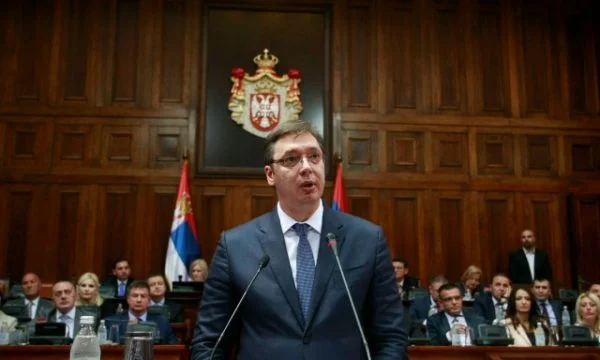
(3 years ago)In Serbia's Assembly on February 2nd, the special parliamentary session for Kosovo will be held. Serbian President Aleksandar Vuciq has also been invited to that session. He is expected to talk about the flow of dialogue and the Franco-German proposal for resolving the conflict between Serbia and Kosovo. What's on the agenda? MPs will be [...]
What's on the agenda?
MPs will be presented the report on the negotiations process with Kosovo authorities between September 1st 2022 and January 15th of 2023.
The report has been submitted to the Parliament by the Government of Serbia.
That report does not mention the Franco-German proposal for resolving the dispute between Serbia and Kosovo.
What's the Franco-German plan?
The Franco-German plan has already become the European Union's proposal for normalising relations between Serbia and Kosovo. This document has also received support from the United States.
This plan has not been made public, but it was introduced to Belgrade and Pristina in September and December 2022.
In that document, in which Free Europe Radio had access earlier, mutual recognition or membership of Kosovo in the United Nations is not mentioned in an experimental manner.
But the document mentions the support the parties must provide each other in the process of European integrations. Also, Serbia is urged not to undermine Kosovo's membership in international organisations.
How do we know Vuciq wants to talk about the plan?
He has confirmed this, on Twitter, the director of the Office for Kosovo in Serbia's Government, Petar Petkovovic, in one of his talks with Bosko Obradovic, leader of the opposition rightist party Dveri.
What did Vuciq say before coming to the Assembly?
A day before Serbia's Parliament session, Serbian President Aleksandar Vuciq said he does not believe unity will be achieved in the session regarding the plan for Kosovo.
He also stressed that there are no deadlines for accepting the Franco-German plan.
Earlier, he has declared he will answer all of the deputies' questions in the Assembly.
Vuciqi's Serbian Progressive Party, along with coalition partners, has 159 out of 250 deputies in the Assembly.
What did Vucinq say about the Franco-German plan?
On January 20th, Serbia's president met with the European-American diplomatic team in Belgrade.
After talking to this team, he declared that Serbia is willing to accept the concept and work on implementing the European plan.
Three days later, he informed the opinion that the team of diplomats has told him that, in the event it does not accept the Franco-German plan for Kosovo, Serbia would face the ban on European integration and investment, and that it would jeopardise the visa-free regime with the EU.
What is the position of the pro-European opposition?
Representatives of pro-European opposition parties in Serbia's Parliament have said that, before deciding whether to support the Franco-German plan, it is necessary for authorities in Serbia to publish it.
They insist they get acquainted with Brussels' proposal for Kosovo, so that they can be declared for it.
This bloc of parties has 51 deputies.
What is the stance of the right opposition?
The right-wing opposition parties' bloc, represented in the Serbian Parliament, has warned a major <x0-> national gathering” against the Franco-German proposal for resolving relations with Kosovo.
For them, the Franco-German proposal is “capitalization” and “
right opposition parties in parliament, Dveri, coalition NADA (Expecta) and Zavetnici (Swearers) have 35 deputies.
What is expected of Belgrade and Pristina?
European and American mediators in dialogue on normalising relations between Kosovo and Serbia have been engaged in recent months to complete this process.
To that end, the European proposal -- known as the Franco-German proposal -- was handed over to the two sides.
The diplomatic team, over the past months, has visited Pristina and Belgrade several times.
Kosovo and Serbia, since 2011, have been developing dialogue on normalisation of relations under EU mediation.
Kosovo declared independence in 2008, which Serbia does not recognise.
In recent months, relations between the two countries were marked by incidents and tensions.