10 minutes ago
Sejdiu: Kosovo owes it to create association, but not as Belgrade requires
Periskopi(3 years ago)
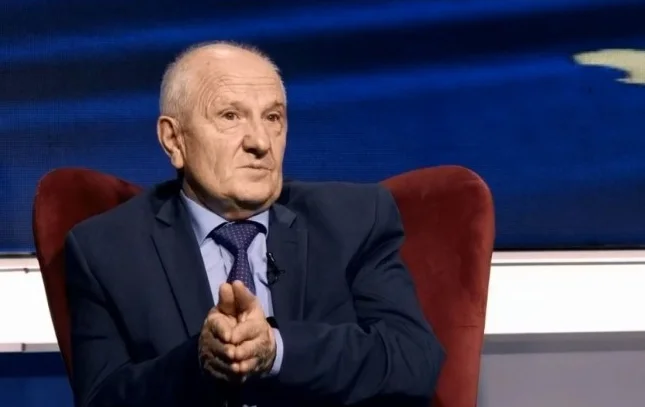
(3 years ago)Former Kosovo President Fatmir Sejdiu, in an interview for the DW, talks about the period of independence declaration, Martti Ahtisaari's package, developments in Kosovo-Serbia dialogue and the final Kosovo-Serbia agreement. DW: Kosovo marks the 15th anniversary of its declaration of independence. At that time you were the president of Kosovo, one of the main figures of the declaration of independence, where [...]
DW: Kosovo marks the 15th anniversary of its declaration of independence. At that time you were the president of Kosovo, one of the main figures of independence declaration, where do you see Kosovo 15 years later?
Sejdiu: When man thinks of this period of time, he cannot be without emotion, because we were part of a generation that we experienced the most important historical act that has taken place, Kosovo's declaration of independence. So it is simply the fulfillment of a dream and the fulfillment of a multi-generation alliance that has been sacrificed for Kosovo. The second is what we want parallelly to build a state of all citizens, a state that fulfills the dreams of both the living, in the sense of walking, development, integration and sustainability of it as politically, and remains a debt of political elites, which have overcome election processes to meet in the most responsible way possible. Of course, there are good moves, there are those of the first stage after declaring independence in two to three very intensive years of fulfillment that we have faced the Martti Ahtisaari project, not only in the part of the legislation, but also in other political and international actions and relations.
Here I would single out the aspect of recognition Kosovo had to provide, the issue of integrations, in maintaining partnerships with the international community specifically with the US and other countries. But parallelly, certain deadlocks have also been observed, which have necessarily come to the fore also due to the subjectal obstacles that have been made to this process with the failure to integrate a part of the Serb community in Kosovo, such as constructions from Belgrade and constant pressure on that part of the population, especially on some of the northern Kosovo municipalities. In parallel, an extremely bizarre and malicious commitment of Serbia has been due to Kosovo in the sense of non-international recognition by most countries that would make it without hindrance to walking up to the last aspirin, meeting the idea that Kosovo is a member of the UN.
But what we find in parallel at this time is the part of closing a country's independence process even with that additional formula that has been the international oversight of Kosovo's independence and entry into an era that has, surprisingly, raised new reactions in the sense of insisting on opening a new dialogue. We have in mind the great events that have taken place like this. It is the International Court of Justice's decision that has sanctioned all of those actions that were done with the declaration of independence and the ID of Kosovo what it will be, that it is not contrary to international law, it is not contrary to Resolution 1244, but in parallel to opening a dialogue which has unfortunately in later stages sometimes slipped even on the ground that, in one form or another, have hit that general approach to closing the overall process of Kosovo independence. The other page is recognition of Kosovo's independence in those numbers at the time that was satisfactory, also in the face of Serbia's very controversial foreign policy movements and its partners to undo the act of recognising independence.
DW. By 2012, an international monitoring followed. Reports with international partners continued in other forms. How do you see Kosovo's reports with the international factor currently?
Sejdiu: I think that despite having completed the institutional monitoring process, what has to do with the bilateral reports, but also with international institutions, especially those that have supported Kosovo, should be sustainable and further developed. I don't say to be those reports that have been too tight from the previous period, as it was since 1992, that has been a response with a great understanding of President Bush Senior that Kosovo represents the red line, which cannot be crossed and the second in the later phase that is also characteristic of international intervention. Those people of Kosovo cannot forget and also all that investment that has been when the children and daughters of American mothers or other countries have risked themselves by bombing Serbia for 78 days. That also means the share of investment in politics. And the second is characteristic at a later stage that probably not the best formula of co-operation has ever been found either by us or in the rest of the international community with any idea that in some other form or form has created certain concerns.
Serbia's idea to prolong processes, aimed at compromising those achieved so far, is impossible to compromise the results as the declaration of independence, and the International Court of Justice ruling. Now the international community's latest project for a final solution to Kosovo-Serbia reports can be more serious in later stages, and we hope to work more and more closely in the sense of analysis and finding a good and appropriate exit formula for the part of the next walk in relations between the two countries. Serbia's gross idea of an Association with executive competence is an idea to make the state of Kosovo dysfunctional. Ahtisaari's idea is sufficient and does not allow dilemmas. There may be a type of association that was built earlier in Kosovo to be aid mechanisms, but in no way in other qualities as insisted. So such a type of mechanism to have representative and executive character means nothing more than repeating the idea of what we find in Bosnia and Herzegovina and what makes Kosovo an dysfunctional country.
DW: There is a insistence on the international community's inconsistencies in the establishment of the Serb-run municipality Association. Meanwhile, we have a government stance in Pristina, which says that association creates a third power that will make the state of Kosovo dysfunctional. How do you see this?
Sejdiu: I believe that Kosovo has to build a mechanism, but not as Belgrade asks for the Kosovo Serb community. An association can be established a mechanism of bilateral co-operation of Serbian municipalities on policy implementation issues that are in line with the Kosovo constitution, which are compatible with its entire legislative system and with the state structure in the state hierarchy. Any insistence on going out and on a mechanism that excludes the essence of being Kosovo a subject that is territorial integrity and the Kosovo state action mechanisms would jeopardise the state of Kosovo.
DW: What do you think is the time for reaching a final agreement with Serbia, if we are based on all this insistence of the international community and to establish association and move to the next phase of reaching the final agreement?
Sejdiu: I think that time has been spent on numerous tests so far and whether this would mark an important guarantee of internal and complete sustainability of Kosovo, it is good to move forward, but with the share of international parallel concessions and in this sense nothing more than what is designed with the Ahtisaari project. I don't know if there's anything else that could comfort what we've done in the process. Nothing should be against the Constitution of Kosovo, and you know that the Constitutional Court has had a response about earlier agreements and controversy with Kosovo's being with its legislation. So it should all be compatible.
DW: How much is a unity of the entire political spectrum needed about the proposal being made for final agreements with Serbia, although not much details are known yet, or does Kosovo simply have its own institutions and the government of Kosovo can act alone since Prime Minister Kurti in the last elections had great support over 50%?
Sejdiu: The main weight of the whole process is to be a constructive process for Kosovo, and it means incorporating all necessary institutional factors primarily those who have citizens' votes and an analysis in the Kosovo assembly, regardless of its structure, even in opposition positions or other parts that sometimes people may have hesitations. What we have used as a work practice has been that in addition to the negotiations the Kosovo delegation has conducted, mandated by the Parliament of Kosovo, - because we have all been mandated by the Assembly of Kosovo - was also part of the early announcement of parliament structure and the adoption of the document before moving to the next part. This is about the fact, because the special representative of the secretary general except for the visits we have had and contacts until the final project he has made, he has handed us the document almost on the same day in Pristina and Belgrade, and that document we have approved in the Kosovo Assembly.
Something that is important is, not to silence the voices, but to find the power of Kosovo's stay on the formula it will accept as useful for Kosovo's walk further. At a certain stage preserves part of the privacy of the negotiations, but in the phase of completion what will be the merger of all common ideas to get a sustainable formula, it must be and is treated in this form. What I think and want to believe is that the United States as part of this partnership with the rest of the European international factor agrees with the ideas laid out in the document, despite Serbia's opposition. I think to find the formula that does not allow further time, but to be done in a formula that is not contrary to Kosovo's interests.