10 minutes ago
“Take or leave”, what Kurti will set up in Brussels for the 10 characteristics he read for himself in the Parliament
Periskopi(3 years ago)
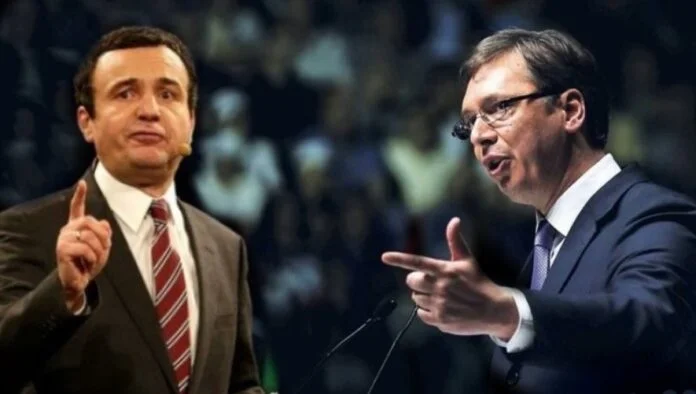
(3 years ago)Kosovo Prime Minister Albin Kurti, and Serbia's president, Aleksandar Vuciq, will meet Monday afternoon in Brussels, within the dialogue on normalising relations, which the European Union mediates. Initially, EU top diplomat Josep Borrell will have separate meetings with both leaders, accompanied by the envoy [...]
Initially, EU top diplomat Josep Borell will have separate meetings with both leaders, accompanied by the European bloc's special envoy for the process, Miroslav Lajcak.
Later, the joint meeting will take place.
European Union for Foreign Affairs and Security High Representative Josep Borrell is expected to meet with Prime Minister Kurti at 1500. While at 16:15, Borrell is expected to hold meetings with Serbian President Aleksandar Vuciq. After separate meetings at 17:15, Josep Borrell is expected to hold a joint meeting with Prime Minister Albin Kurti and Serbian President Aleksandar Vuciq“
The European bloc considers the sixth meeting between the two leaders as the most important, because this time, according to sources in Brussels, there will be no discussions on crisis management, but on a new dynamic of reports.
Both sides are expected to reach compliance with the EU proposal, as a “basic agreement” for normalisation of reports.
This proposal is supported by the United States.
European Proposal Characteristics
Kosovo Prime Minister Albin Kurti, on February 13th in the Parliament, read “certain features” of the first version of the European proposal for normalising relations between Kosovo and Serbia.
These characteristics, according to Kurt, are:
1. The proposal is based on the model of the 1972 German-German agreement and of many other models of defacto citizenship recognition in the history of interstate relations, for example. South Japan-Core deal. The Constitutional Court of the Federation Republic of Germany had established in 1973 that the German-German agreement included the de-phacto recognition of each other's citizenship and recognition of territorial integrity by the prism of international law.
2. The proposal included within itself the acceptance of the principle of equality in the international system, which is the key principle of the United Nations Charter regarding relations between independent states.
3. The proposal also defined recognition by the parties, principles of sovereign equality, territorial integrity, peaceful resolution of conflicts in relations between Kosovo and Serbia.
4. The proposal included giving Serbia up from preventing Kosovo's membership in any international organisation that includes not only organisations on the European continent, but also universal-wide ones like the UN, U. NESTO or NATO.
5. The proposal included recognition of parties towards each other of the right to state representation on the grounds of international relations.
6. The proposal included the exchange of permanent diplomatic offices in the form of legatus, which are actual embassies and constituted the normal form of interstate relations before World War II.
7. The proposal contained recognition of state documents that have the international effect of citizenship for citizens, including of each other's passports.
8. The proposal, however, contained two standards related to the rights of the Serb community in Kosovo: The first, the rate that the Serbian community defined, will have a right to self-adherance in line with instruments, conventions of the Council of Europe, as there are every minority community in member states in the Council of Europe.
And, second, formalising the status of the Serbian Orthodox Church, which we have only done through recognition of the Church's existence in our Law to religious communities in Kosovo.
9. Point 10, saw the rule that all Brussels agreements would have to be implemented by the parties.
EU sources in Brussels have said on the eve of this meeting that, they expect Kurti and Vuciq to accept the proposal, without further discussions.
The debate point is expected to be only an annex for implementation of the agreement's provisions.
Sources in Brussels have told Radio Free Europe that the contents of the proposal are known for the parties from September 2022, and no longer need to talk about this content.
A updated version of the plan, the parties are believed to have received it in December.
Also, given the experience of the past, EU officials think, if there is going to be a demand for text change, then everything will have to start from the beginning and opportunities for success are small.
A senior EU official has said on Friday that he understands that Prime Minister Kurti and President Vuciq have not found it easy to reason in their countries to accept the agreement, but that they have had no better solution.
Vuciqi is considered a problem in that, according to EU interpretations, Serbia de facto recognises Kosovo.
The Serbian president is believed to face Russian pressure not to accept this proposal.
In a draft that has seen Radio Free Europe, the proposal envisions equal rights for Kosovo and Serbia, respect for territorial integrity, border impunity, recognition of state symbols and a special arrangement for the Serb community in Kosovo.
It also plans that Serbia will not oppose Kosovo's membership in international organisations and that the parties will not stumble each other on the road to European integration.
On the other hand, for Kurti, the biggest challenge is to create the Association of Serb majority municipalities.
Kosovo and Serbia have reached agreement on Association in 2013 and later 2015 on principles for its establishment.
But in 2015, the Constitutional Court of Kosovo has found that the agreement is not in full harmony with the Constitution.
Serbia wants Kosovo to implement the agreements reached, but the Kosovo government has been declared against a single-ethnic association.
But there is no doubt in the EU that with the EU proposal admitted, the obligation for association is accepted.
The Serbian majority communities' association is part of this proposal. So, with the admission of this proposal, the application of the commitment to the establishment of this association, a European Union official said on Friday.
That request has also been repeated to Kurt in a letter issued Sunday by French President Emmanuel Macron, German Chancellor Olaf Scholz and Italian Prime Minister Giorgia Mellon.
The engagement of these three largest EU nations to ensure concrete results in dialogue has increased optimism in Brussels for the February 27th meeting.
Even senior US State Department adviser Derek Chollet has said he expects visible progress in this meeting.
In addition, the EU proposal has been collectively supported by the countries of the European bloc at the European Council's latest meeting.
Kosovo and Serbia have started negotiations mediated by the European Union in 2011.
During this time 33 agreements have been signed, but not all have been implemented.
For now, both countries have different goals for the final agreement.
Kosovo insists on mutual recognition, Serbia seeks compromise solutions.