10 minutes ago
Far Right Leader Arrested After Serbia's Presidency Accidents
Periskopi(3 years ago)
(3 years ago)Police in Serbia have arrested Damjan Knezevqi, the leader of the right-wing organisation “People's Patrol” and two members of that organisation on Thursday, following incidents earlier at the presidency of Serbia. “People's Patrol” has organised the protest march in Belgrade on Wednesday, February 15th, in which they were asked [...]
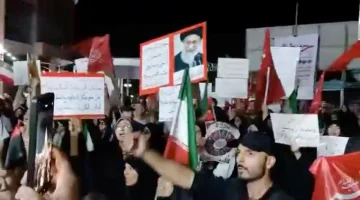
“People's Patrol” has organised the protest march in Belgrade on Wednesday, February 15th, in which authorities in Belgrade are urged to withdraw from negotiations with Kosovo.
Gendarmerie members have prevented protesters from entering the Serbian Presidency building.
Protesters have been seen removing stops around the presidency, and individuals have laid eggs in the building.
Serbia's Ministry of Internal Affairs has announced Thursday that, in co-operation with the Security and Information Agency, as well as the Prosecutor's Office in Belgrade and Novi Sad, three people have been arrested.
Citing initials, the ministry has said they have been arrested because “has doubts that have committed criminal offences, calling for a violent change of constitutional order”.
One of those arrested has also been charged with possession or carrying weapons and explosive equipment.
All three are accused of calling on citizens to gather in Belgrade and violently to bring down Serbia's government and president, Aleksandar Vuciq.
According to authorities, the 48-hour ban has been implemented.
What happened to the organisation of February 15th?
The crowd has shouted “Serbia, Russia” and “Trdhti”.
Protest organisers have urged authorities in Belgrade to withdraw from negotiations with Kosovo and for Serbian President Aleksandar Vuciq to not participate in the dialogue.
In an address to the crowd, Knezevic has said none of the members of the Serbian Progressive Party “cannot call themselves Serbian”.
Knezevic has also addressed foreign-language media journalists, saying meeting participants “prefer the Russian proposal” for Kosovo instead of that Franco-German one.
Some participants are also seen with symbols of the group “Wagner” and the letter “Z”, which is known as the symbol of Russia's war in Ukraine.
Serbian President Akexandander Vuciq has later told Pink Television that the state will not allow violence and will react quickly and efficiently.
The European Union's proposal for normalising Kosovo's relations with Serbia -- also known as the French-German plan -- is supported by the United States.
Both Kosovo and Serbia have accepted the plan, but it has never been presented in public.
In a draft that has seen Radio Free Europe, it does not specifically mention recognition, but sets forth equal rights for Kosovo and Serbia, respect for territorial integrity, the invisibility of borders, recognition of state symbols and a special arrangement for the Serb community in Kosovo.
Kosovo and Serbia have started negotiations mediated by the European Union in 2011.
During this time 33 agreements have been signed, but not all have been implemented.
For now, both countries have different goals for the final agreement.
Kosovo insists on mutual recognition, Serbia seeks compromise solutions. /Rel