11 minutes ago
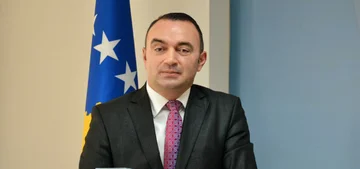
Kurti for Franco-German proposal: There is recognition defacto from Serbia

Periskopi(3 years ago)
(3 years ago)Kosovo Prime Minister Albin Kurti says the Franco-German plan envisions de facto recognition between Kosovo and Serbia. But he stresses that this plan is rather a basic agreement aimed at normalising relations between the two countries, but it is not a final agreement. Kurti said it was the request of European states that the Franco-German plan [...]
Kosovo Prime Minister Albin Kurti says the Franco-German plan envisions de facto recognition between Kosovo and Serbia.
But he stresses that this plan is rather a basic agreement aimed at normalising relations between the two countries, but it is not a final agreement.
Kurti said it has been the request of European candidates that the Franco-German plan not become public.
It is the request of European mediators, emissaries from Brussels, Paris and Berlin, that without a concrete step towards its accession, there should be no complete bleaching of the text”.
Kurti said this plan is a good basis for further discussions on normalising relations between Kosovo and Serbia.
The first time we were brought in on September 9th, it wasn't taken or left. Meanwhile, on January 20th, because of having spent a lot of time, for my unnecessary obedience, we were able to meet more often, earlier, to do more, was very close to take it or leave it. So as I said in September, I repeated in January, which is a good basis for further discussions”.
Kurti said the German franc plan has been accepted in principle, but that we must negotiate.
We accept it in principle, we have to negotiate and then we have to turn that proposal into an agreement because there are a lot of things still undefinated. Especially in terms of international guarantees, implementation mechanisms, and time sequence”.
On the other hand, the Kosovo prime minister said this plan has de facto recognition between the two countries.
“is not meant as a proposal for final agreements. But it is a normalisation that is not yet full normalisation, since it presupposes, we can say, de facto recognition. The de facto recognition is right there”
The “is rather a basic agreement, which makes normalisation of relations, not full normalisation. With agreements that are legally and internationally binding, though not final”, Kurti added.