4 minutes ago
Did Kurt change his attitudes about association?
Periskopi(3 years ago)
(3 years ago)The conditions set up by Kosovo Prime Minister Albin Kurti for establishing the Association of Serb majority municipalities are relatively acceptable, except for one that may be more problematic, the connoisseurs of political issues in Kosovo assess. Dusan Janjic from the Forum for Ethnic Relations in Belgrade estimates Kurti wants to impose the position that Association [...]
Dusan Janjic from the Forum for Ethnic Relations in Belgrade estimates Kurti wants to impose the position that the association should include only four municipalities in northern Kosovo.
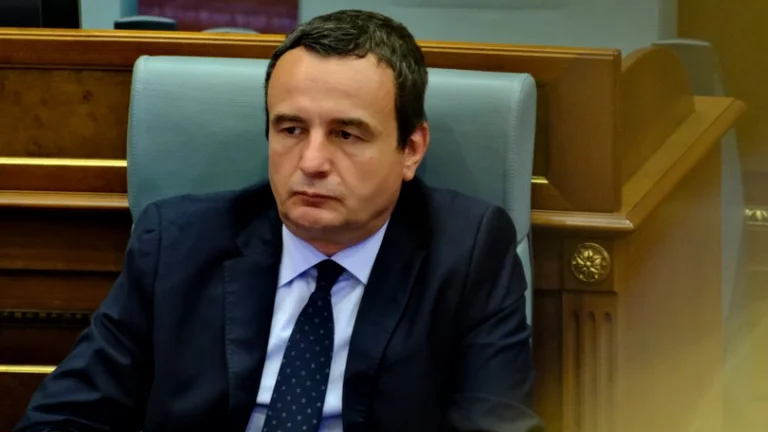
Kurti, who has so far strongly opposed the creation of single-ethnic association, unveiled before Kosovo Assembly deputies six conditions for forming it.
According to Kurti, the association cannot be one-ethnic, it should be in accordance with the Constitution and the laws of the country, have another name and not have executive competencies, have included the principle of reciprocity among states on the rights of national minorities based on European models.
Kurti has also called for the removal of illegal structures in the north and for the handover of weapons, as well as for Serbia to withdraw letters sent to five EU non-recognitional states for Kosovo's refusal to the European bloc. Kurti conditioned the foundation of the Association even with his involvement in a final event agreement with Serbia, and to be implemented after mutual recognition.
Serbia's President Aleksandar Vuciq has named “the conditions for association”. At a session of Serbia's Parliament, during discussions on Kosovo, Vuciq has said that Kurti actually “will not form Association”.
Kosovo and Serbia, under European Union mediation, have signed the agreement on forming association in 2013, but it has never been implemented. In 2015 another agreement was signed, as it were, the principles of this association.
The Constitutional Court of Kosovo in 2015 found that 23 provisions of the Agreement on the principles for establishing association were not in harmony with the highest judicial act of the state. But the court said they could be harmonised.
“Open before Kurti”
Maliqi says the stance expressed by Kurti is open forward and the possibility of moving from the <x0 solid> ” position of the head of the Kosovo Government in association.
The “is a position movement in the sense that the association already becomes acceptable. It's a conditioned spot. The conditions are real, in terms that are Kosovo's rational initial position. I think within those conditions there is room to reach the kind of association that is acceptable to”, Maliqi says.
For political affairs connoisseur, at the University of Pristina professor of Sociology Artan Mujazirin at the same time, Kurti's statements for Association are an involuntary political evolution, but, according to him, they present a strong message to the international community.
He says that behind these statements there is a willingness to move from the blocking attitudes and to seek creative find, to reach a point that is appropriate for all.
“... because this approach alone can normalize reports damaged with our allies, especially the United States and the European Union. It's a very important change because it shows another level of communication on the topic of Association, since it is no longer automatic rejection, as it was so far”, he says.
Muhramir adds that Kurti has already created space to discuss the Association, based on its requirements.
The European Union and the United States have asked Kosovo to form association.
The US has asked Kurti to present its vision of Association, saying it wants it to comply with the Constitution of Kosovo rather than create a Republika Srpska, as in Bosnia and Herzegovina.
Janjeq from the Forum for Ethnic Relations in Belgrade estimates that Kurti, setting conditions for forming the Association of Serb majority municipalities, is trying to impose the stance that the association should include only four municipalities in northern Kosovo, and not the ten Serb-run majority municipalities located throughout Kosovo.
Under the agreements reached in Brussels, the association would have to include ten Serb majority municipalities in Kosovo: Northern Mitrovica, Klokot, Partesh, Ranilug, Gracanica, Zvecan, Zubin Potok, Novoberda, Leposaviq and Shrpca.
This would give the Government of Kosovo an opportunity to finally come up with an integration proposal. None of Kosovo's governments have had an integration programme, only a programme for the removal of Serbian institutions and the achievement of full sovereignty. I understand, but it's an unproductive policy”, says Janjaq.
What is the problematic condition?
Despite some of the conditions set by Kurti are acceptable, it is seen as problematic.
This could be problematic because of circumstances, due to complicated geopolitical context. Serbia cannot be expected to recognise Kosovo in a simple way. But, of course, some creative modulation must be made, so that one can be found between where Serbia would accept the existence of the state of Kosovo”, says Artan Mujariri.
Maliqi, meanwhile, estimates that some of the conditions imposed by Kurti are not even conditions, as “is meant in the agreements, whether existing or in the drafts that have circulated”.
Why did Prime Minister Kurti change his attitude?
Agon Maliqi says Kurti has estimated that Kosovo is in a position that cannot further the topic of Association. This, according to him, may also be due to guarantees that the prime minister may have received from the allies for the process to move forward, or even for fear there may be punitive measures, whether for Kosovo or even for it personally, politically.
So it's a modification of attitudes, which probably stems from the support of the wall and the lack of more maneuvering space”, he points out.
Meanwhile, Muhyari believes that this change of attitudes has resulted from international pressure.
“Prime Minister Kurti knows that there can be no normal government in the future. Either he should resign or change his attitude. It seems that it has chosen the second option, that is, the modification of the attitude, a kind of evolution in relation to the situation”, he estimates.
The US has praised the formation of association as a top priority, and a discussion on this issue has been organised on January 31st.
The United States Ambassador to Kosovo, Jeff Hovenier, said his country has already made it clear that “does not support any agreement violating the Constitution of Kosovo” or that “threatens its sovereignty, independence and multiethnic character”.
The US and the EU have recently stepped up their efforts to know the dialogue process, mediated by Brussels.
The Kosovo-Serbia dialogue, which started in 2011, aims at the full normalisation of reports between the two states.
Despite Kosovo's saying that in this process it is not discussed on its status, Dusan Janjic of the Forum for Ethnic Relations in Belgrade, tells Radio Free Europe that authorities in Pristina should understand that resolving Kosovo's status is actually the solution to the status of the Serb community.
The Serbian community in Kosovo cannot be treated as one of the minorities. It is just a very important minority for Kosovo to become a state. It is a fundamental problem that is not understood, and Belgrade often misuses”, says Janjic.
While Kosovo and Serbia have been offered a plan for normalising reports, known as the European plan, the two states have opposing positions on the outcome of the dialogue process. Kosovo insists that a final eventual agreement include mutual recognition, but for Serbia the recognition is <x0-line red <xx1>, while Belgrade insists that dialogue be closed with a compromise solution, without specifying what compromise it is about. /rel/