11 minutes ago
Football unites ethnic groups in Kosovo
Periskopi(3 years ago)
(3 years ago)A UN project in Kosovo enables Serbian and Albanian girls to play soccer together. Sports and related meetings blur boundaries that normally seem insurmountable. It is cold and fog in Brezovica, a mountainous town in southern Kosovo, but there is much activity in front of the light hall that is so typical [...]
It's cold and fog in Brezovica, a mountainous town in southern Kosovo, but there's a lot of activity in front of the light hall that's so typical here. Many young women come to the hall with their sports bags and prepare for future soccer training. This in itself is a particular feature, after all, football in Kosovo is a male thing. But what is absolutely extraordinary is that Kosovo girls from Serbian and Albanian families are jointly pursuing their passion for football.
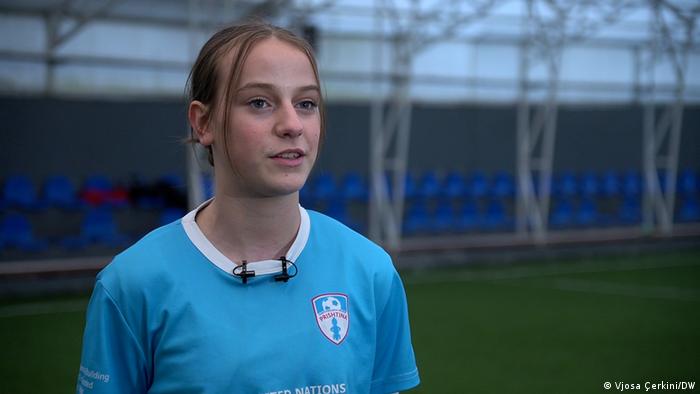 Aurora Calcolly
Aurora Cakoli is only 14 and came to Brezovica with her team from KFV Pristina by bus from Kosovo's capital, 80km away. Aurora wants to train here and then play against the FC Brezovica team in the nearby town of Shtrpce. Brezovica and Shtrpca make up one of the few large Serb communities in southern Kosovo, which is inhabited mainly by residents of Albanian origin. Serbian is spoken in local schools, while in Pristina Aurora teaches in Albanian.
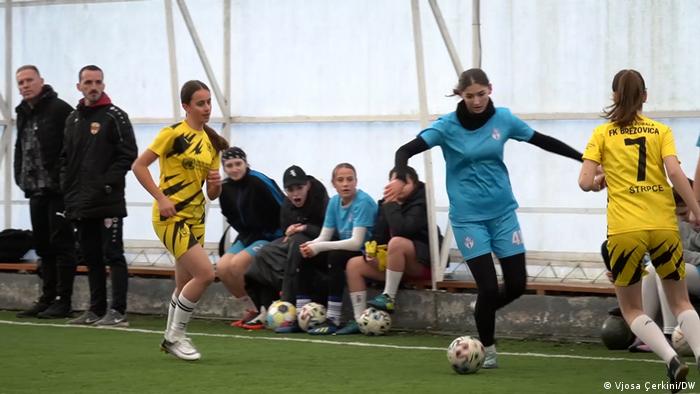 View from FC Brezovica match against KFV Pristina
But that's not a problem for football players, because they still communicate in English. There are no contact barriers, because they combine passion for football and interest for others even because there is only a few possibilities for Kosovo girls to play soccer. It is difficult to be a football player in Kosovo”, Aurora confirms. I first started with the men's team until I found out about KFV Pristina”.
Strengthening Through Football
Unlike the men's category, the Kosovo Football Federation offers only girls and women over 17 opportunities to play in a league. To give young girls access to KFV Pristina football, a project aimed at giving girls in Kosovo more opportunities to develop and at the same time cross ethnic borders within the population.
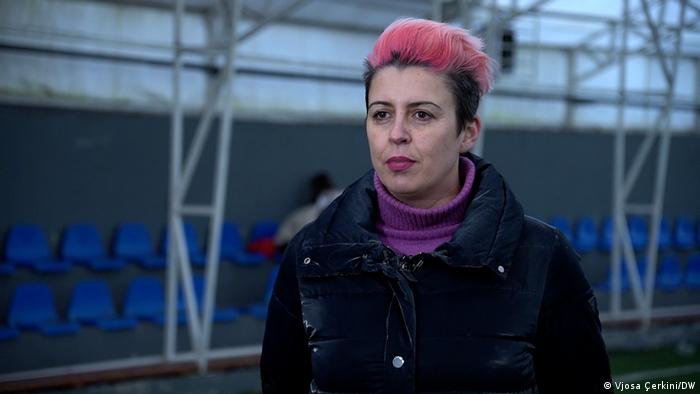 Armenta Filipaj, founder of KFV Pristina
“Girls under the age of 17 do not have only the chance to play soccer with this project”, says Armenda Filipaj, founder of KFV Pristina. Strengthening through football is very important in our country, especially when these teams are girls from all ethnic groups. Thanks to the UN project, five clubs, two Albanian, two Serbs and a Gorani club have been established so far. Gorani are the Slavic minority from southwestern Kosovo. Fans for players were bought through a grant. Grants also cover expenses for trainers, judges and transport.
Dystanas are sometimes long because there are only a few good artificial-field football fields in Kosovo, which are also used by men's teams. However, Armenda Philipaj always finds training opportunities and games for her daughters.
International match between Kosovars
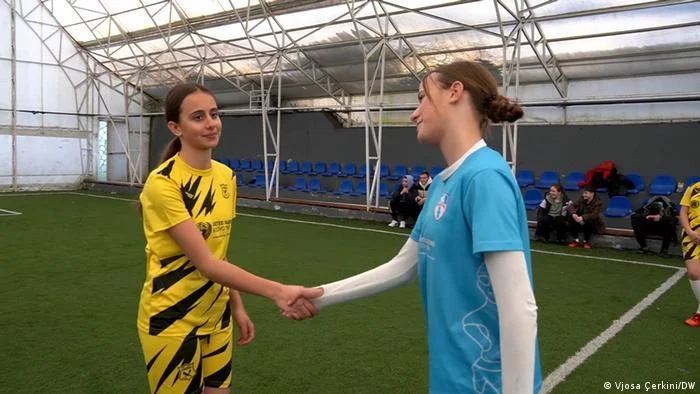
“I love football and now I'm happy for the good opportunities of training and game”, said 14-year-old Jana Sinovolic, one of FC Brezovica's players before the match. KFV Pristina. Both teams run in the field with a UN logo on their fans. All in yellow is the Kosovo Serb team, while the Kosovo Albanian team is all dressed in blue.
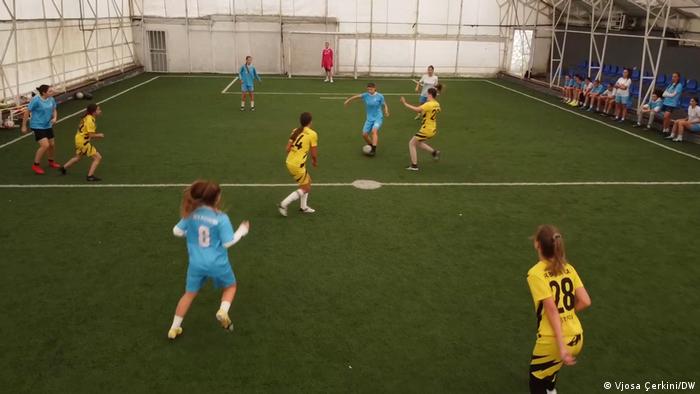 Kosovo Serb team in yellow, Kosovo Albanian team on blue
Over 170 girls are currently active in the project. Team fights against each other are peak points, they have a kind of international character because players come from the same country, but from different ethnic cultures and groups. Of course, both teams want to win, and the trainers do their part by constantly giving instructions from the contact line throughout the game. But even when it's five minutes before the start of the game, it becomes clear that contacts and meetings are also important. One or another friendship has already developed.
Football nothing else
The modern-day training session and friendly game with the school “Pristina” is something special, because we know where we live and what the situation is here”, said Zvonko Staletovic, coach of FC Brezovica. For us, only football is important, nothing else”.
Another particular feature of the UN project is that it eases borders that are usually very difficult and strict. In the rest of Kosovo, no Serb can be a member of a Kosovo team or the local sports association.
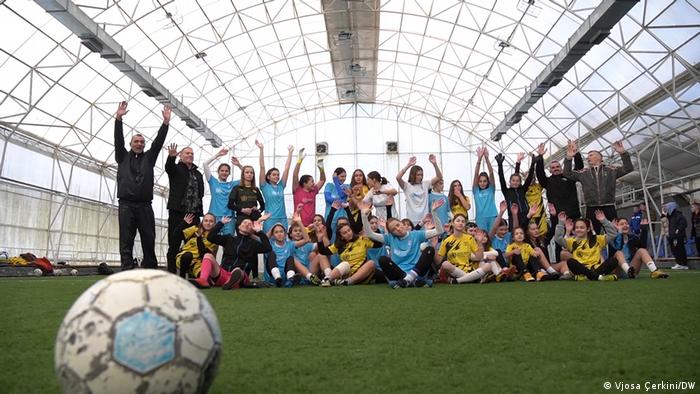 Football eases extremely difficult and strict ethnic borders
Kosovo sport is organised exclusively by Kosovo Albanians. “There have been initiatives to hire footballers from the Serbian minority”, DW Taulant Hodaj, secretary general of the Kosovo Football Federation, told DW. “There were Serbs who wanted to play for Kosovo, but unfortunately there was political pressure from Serbia that prevented male and female players from participating in the events organised by the Kosovo Football Federation”.
Veto from Serbia
Kosovo is FIFA and U member EFA has its national soccer association since May 2016. At that time Serbia protested accession and took the case to the highest sports court CAS in Switzerland. There all this was seen as apolitical and membership confirmed.
But while Kosovo has been anchored in international sports federations, its political status is a point of discussion. On February 17th 2008, the Kosovo Parliament declared independence. Kosovo has since been recognised by international law by 115 states, including Germany. However, states like Serbia, Russia and China, as well as five EU member states, have not yet recognised Kosovo's independence. Serbia still considers Kosovo its breakaway province.
So also for FIFA was clear that with Kosovo's accession, tensions and political conflicts could also be carried out in the field of sports. World Organisation decided that Kosovo's team would not be allowed to play against Serbia or Bosnia and Herzegovina in international competitions like qualifications for the European Championships and World Cup or the U League EFA for political reasons.
A Positive Experience With Long - Term Effects
Girls in Shtrpce are far from such a divisive influence. What matters to them is the opportunity to pursue their passion for football and exchange. It turns out that besides football, they actually have the same interests and preferences.
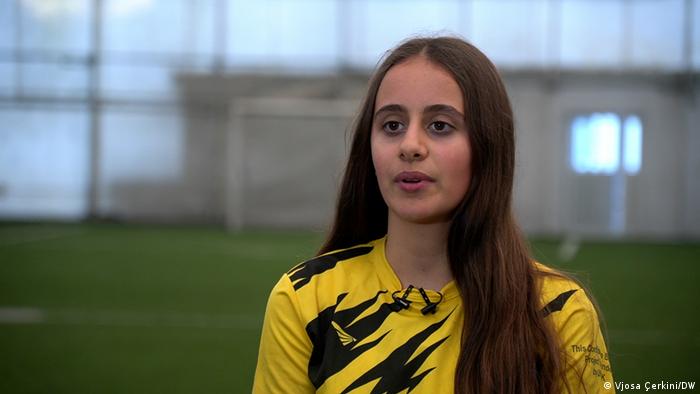 Jana Simanovic, Serbian from Kosovo
“It would be good to play soccer together every day and enjoy the day together”, says Kosovo Serb Jana Simanovic. She dreams of becoming truly successful in football and one day participating in international tours.
In the spirit of Janes too, it should be hoped that her example and that of other girls will be a precedent. The more positive experiences there are in the exchange of Serbian and Albanian young people and children, the better is it for all relations with each other and for normalising the political situation. Because without them the football world between Serbia and Kosovo will not be normal. / DW