6 minutes ago
Bislem lowers Kurt's terms for Association: Just three.
Periskopi(3 years ago)
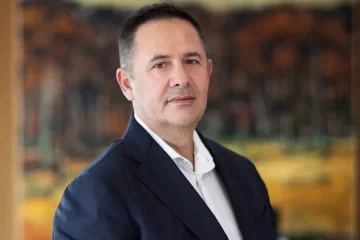
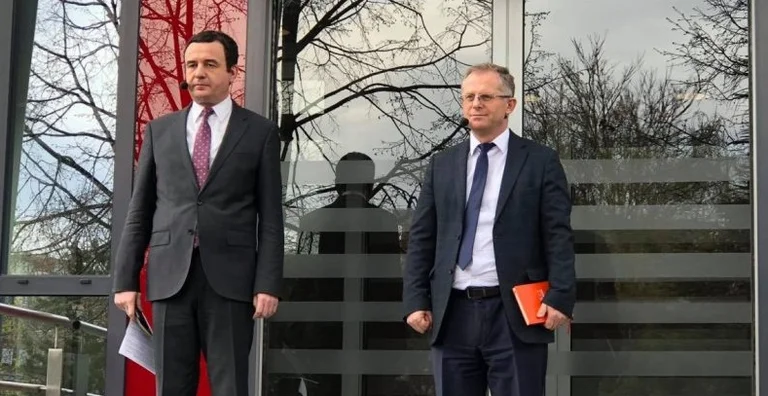
(3 years ago)Kosovo's chief negotiator in dialogue with Serbia, Besnik Bislimi, has told the European Parliament in Brussels on Tuesday that there are three key conditions for forming the Association of Major Serb municipalities in Kosovo. “Association must be in line with Kosovo laws, should be in line with EU positions that it does not [...]
The “Association should be in accordance with Kosovo laws, should be in line with EU positions that there cannot be executive power, as stated in the letter former High Representative Federika Moghrini had sent to the world to Kosovo prime minister. Third, the association does not represent the third level of power”.
He has said that under Kosovo's laws, there can be no territorial autonomy of Serbs in Kosovo.
Bislimi has mentioned that 60 per cent of Serbs in Kosovo live outside the northern part of the country.
Kosovo and Serbia have reached agreement on Association in 2013 and later 2015 on principles for its establishment.
But in 2015, the Constitutional Court of Kosovo has found that the agreement is not in full harmony with the Constitution.
Serbia wants Kosovo to implement the agreements reached, but the Kosovo government has been declared against a single-ethnic association.
Bislimi has mentioned the association when he discussed the agreement towards normalising relations between Kosovo and Serbia, which has been reached in Brussels on Monday, between Kosovo Prime Minister Albin Kurti and Serbian President Aleksandar Vuciq.
He has said the agreement also includes a provision envisioning the implementation of agreements reached in the past in dialogue, but that it should be clarified.
This paragraph must be detailed. First let's do an analysis of past agreements. Because there's no point in discussing some of the agreements that have been overcome and that are now resolved with the final agreement. Like stamp recognition deals, cadastres, etc., if all documents are known by this agreement. So, we need to see which deals are still valid, which are already exceeded”, he said.
In the debate held at the European Parliament's Foreign Policy Commission, most Euro-Deputes have welcomed the achievement of compatibility between Kosovo and Serbia on February 27th.
Bislimi has said that the focus now remains on dining for the plan to implement the agreement.
What we agreed on is that we will no longer discuss the proposal, but we will focus on the second part, which is even more important because it has to do with implementation. We need to focus our energy on designing the plan to avoid confusion, and to clarify the obligations of all parties that come out of this agreement, as well as sequence the activities that will follow. Time deadlines and implementation monitoring modes must also be set, Bislim said as he responded to MPs.
The appropriate implementation plan alone will ensure that this will not only remain one of the 34 agreements that have been reached so far, but will create a positive change in the” reports, Bislimi has said among other things.
Bislimi has also mentioned that Kosovo expects obligations that exist to eliminate all parallel structures to be discussed
Discussing developments on February 27th, Bislimi has said EU countries that have not recognised Kosovo -- Spain, Cyprus, Slovakia, Romania and Greece -- change their stance after that agreement.
“There should be a unification of staying in the EU even from five member states that have not recognised Kosovo's independence. If EU countries have managed to take a unique stand over Russia's aggression against Ukraine, it is even easier to agree to reports between Kosovo and Serbia. If Serbia has the obligation not to prevent Kosovo's membership in any international organisation, there are no more reasons for either of the five EU nations not to support Kosovo, for example in membership in the Council of Europe, or in the EU integration process”, Bislimi has decaed.
Kosovo and Serbia have started negotiations mediated by the European Union in 2011.
For now, both countries have different goals for the final agreement.
Kosovo insists on mutual recognition, Serbia seeks compromise solutions. / REL/