13 minutes ago
Within the Agency Censoring the Internet in Russia
Periskopi(3 years ago)
(3 years ago)In the first half of October last year, workers of a secret Russian government network, working at a small business centre in northeast Moscow, have been worried about the weather. Not for weather conditions in Moscow, but in four Ukrainian regions, which Russian President Vladimir Putin has [...]
Not for the atmospheric conditions in Moscow, but in four Ukrainian regions, which Russian President Vladimir Putin has declared annexed and part of Russia.
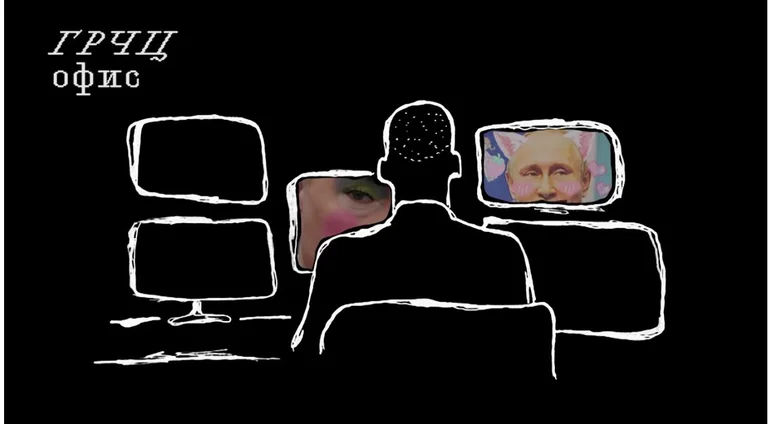
The employees of IT experts and analysts have been engaged in an unknown entity called the Main Centre of Radio Frequency, a unit of the government federal agency that compiles policies on internet access, Roskomnadzor.
They analyze the content on the website, on social networks, TV channels, if they eventually face problematic content: opposition protests, antigovernmental protests, offenses against Putin.
They have been particularly concerned that 15 Russian websites featuring weather forecasts, Ukrainian regions that Russia now claims its own have yet to be represented as Ukrainian territories.
Center workers have compiled a list of websites and information about them.
By November 6, 10 of them have changed their descriptions of Ukrainian territories, considering them Russian.
Since Russia invaded Ukraine on February 24, 2022, the Kremlin has been repeatedly accused of trying to censor news and information published on Russian pages.
A few days after the start of the war, Putin has signed a legislation that renders the publication of each writing for the Russian Army, to be criminally published. The Russian state considers it false.
As a result, from the start of the war, in Russian search machines Yandez and Mail.ru. More than 11,800 texts have been removed, in which it was reported on the Russian armed forces' big <x0 loss to their equipment, as well as attacks on civilian infrastructure and the killing of civilians”.
The Roskomnadzary agency has blocked the pages of at least 95 Russian media organisations.
At the top of these efforts is the Main Centre of Radio Frequency, which one year before the start of the war, has created an internal message system called “Zyra Interactive Operations”.
This system has linked the monitoring centre to key law enforcement agencies in Russia: Attorney General's Office, Federal Security Service, Federal Defence Service, National Guard and Interior Ministry.
A research by the Russian Radio Service Free Europe shows how the Main Centre of Radio Frequency and Internet censorship in Russia monitor electronic communications and how government agencies limit access to what Russians read or watch.
The investigation is based on large amounts of internal corruption that was secured in November 2022 by a group that identifies itself as the Belarusn hackers' organisation called the Cybernetic Partizans (Cyberpartisans).
Materials shared with Radio Free Europe and another media community include Russian media like: The Insider, itories, and the Russian newspaper, Sueddeutsche Zeitung.
The documents derived from the Main Radio frequency Centre more than 700,000 letters and 2 million internal documents provide a detailed view of how the internet is monitored and censored in Russia.
The more systems they make, the more they can block the page. Every document I've seen is a potential criminal case against Roskomnadzor”, said Radio Free Europe, Philip Kulin, an independent information technology specialist who runs a channel in Telegram called Escher II.
Because this is the real observation of people”, he said.
Roskomnandor is a civilian “rup. Who sanctioned his surveillance capacity for collecting personal data?
Old Centure, New Methods
Moscow's attempts at censorship are nothing new.
In the Soviet Union, the Communist Party has created a censorship device through which it has attempted to block the spread of news outside the Iron West, preventing broadcasts of news on radio and television.
Mikhail Gorbachev's policy of opening up “glasnost”, in the 1980s, has enabled the release of information abroad and has left room for different access to the home.
After the collapse of the Soviet Union, the media environment in Russia has become noisy, as there has been freedom for newspapers, television and then for websites to report and criticize.
After Putin officially won the presidency in the 2000s, one of his first actions has been to conduct public television control ʹ the main source of information in Russia.
It includes NTV, which has broadcast extremely critical reports of the first Chechen War in 1990.
In the early 2010 ' s, the Kremlin has begun to make punitive labels for some media and nongovernmental organisations, considering “foreign agents”, and largely limiting media freedom.
Later, Russian authorities have created a sophisticated system for internet service providers in Russia, collecting and storing all information that has been circulated.
The decision has also affected technology giants Google and Facebook who have been asked to store Russia's data on several servers on Russian soil.
Centure has been applied to other websites like: V K, Mail.ru and Yandex.
Founded initially in 2000 under Roskomnadzor to monitor and control radio frequencies, the Main Centre of Radio Frequency has expanded the event, with the aim of internet control.
The agency, which has publicly accepted retaliation in November, has declined to answer Radio Europe's free questions for censorship operations.
Neither has Roskomnadzor answered Radio Free Europe questions.
Athmosphere protest
The inside system for messages called “Interactive Operative Office” seems to have been more charged because of the authorities' concerns of law enforcement to control protests that have erupted in several cities in Russia in 2019.
Among them were protests that were held to protect nature and against the construction of a church in Jekaterinburg Park.
The system has since been updated, adding technical changes, including a mobile phone version, the possibility of sending private messages, audio, and photo.
According to reviewing material from the Radio Free Europe team, employees of the agency monitor various sources of information and then, using the internal system for messages, mark materials that must be viewed by other government agencies.
By November 2022, various conversations have been held in the internal system regarding the type of protests under appointments: terrorism, foreign intervention, and extremism, according to documents.
The data from more than 35,000 national and local accounts has been discussed in those groups, and members of various Russian agencies and ministries have participated.
The documents have also seen the way information about powerful business and oligarch leaders was censored.
Using an automated information system, the Main Centre of Radiofreeties has responded to the demands of business leaders to block access to critical reports.
Consider an example. Assistant to Mikhail Sirotkin, the head of the Cossage Management Department in the gas giant Gazprom, in February 2020 has sent letter to the Roskomandardz agency to block more than 150 articles on Sirotkin.
Before 2018, Roskomnadzor, who is responsible for the disappearance of information, has blocked access to Russia's Russian website since the latter published a material for Alexandr Bortnikov, the head of the internal intelligence agency in Russia, FSB.
Same year, billionaire Alisher Ussanov has filed a lawsuit demanding that Roskomnadz block access to the articles on his connections with a criminal group leader.
Yandex U special task
According to documents stemming from the Main Radio Health Centre, Roskomnadzor blocked 89,000 websites in the third quarter of 2022.
Most violations are related to publishing information about illegal drugs or content related to suicide and child pornography.
This center is also employed by a clinical psychologist who works with workers who are committed to separateing specific content, since they are believed to have faced “large emotional and professional demands”, “anchth” and mood disorders, according to documents.
The workers at this centre are also alarmed by the engineers of Yandex, the largest internet search machine on Russian territory.
However, within Yandex it was reported for resistance, following the start of the war in Ukraine.
Many executive leaders have resigned, and the company has sold the news branch, saying it will focus on activities that are not connected to the media field.
According to the available documents, the employees of the Main Radio Frequency Centre (GRFC) have collected more than 200 materials with words like “the modernisation of Putin”, “delivered from Russia” and “what Russian boys are dying in Ukraine” and sent them to Yandex to eliminate.
In a statement to Radio Free Europe, Yandex has denied involvement in censorship.
<x0)
Yandex itself does not eliminate any of the search results. A specific link can be expelled from the search machines if it is included in the Roskomnadzor registry for banned websites and if there is a court decision. Such websites automatically disappear, as soon as they are included in the” registry, she said.
Artificial Intelligence
In 2021, to help increase monitoring skills, employees at the Main Radio Frequency Centre have begun to engage ʹrobots to perform automated operations so that they can answer complaints or do research.
The Main Radio Frequency Centre offered 800,000 dollars in August 2022 to develop an artificial intelligence-based system, Oculus to monitor social networks, websites, and quick text services.
According to documents that the Radio Free Europe Radio team has seen, this centre has created a “packager of entity” to train the Oculus system to find insults against Putin and merge them with photos from video.
This classified classification includes <x0/famorative prayers for President” and “supporting the president with negative characters”.
Among the rankings have been researching whether Putin's figure has been compared to that of Nazi dictator Adolf Hitler. / REL