13 minutes ago
Townsend: Various ideas to reach compromise between Kosovo, Serbia
Periskopi(3 years ago)
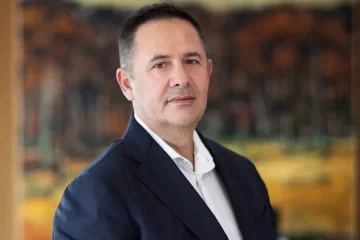
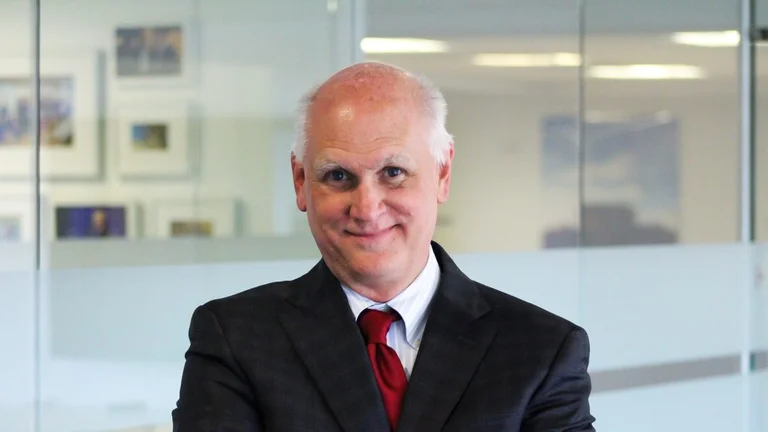
(3 years ago)Former US Deputy Defence Secretary for Europe and NATO Policy Jim Townsend estimates that one of the biggest frustrations of post-Cold War developments in Europe is the failure of Balkan states to achieve peace with one another. Townsend, who has played a critical role in NATO enlargement. [...]
Townsend, who has played a critical role in NATO enlargement and strengthening bilateral relations with the new democracies that emerged after the break-up of the former Soviet Union, says in an interview for Voice of America that thirty years after “Christmas warning” that President Bush made for Serbia for Kosovo, the likelihood of the outbreak of war is small, but the United States, the EU and NATO should continue to focus on problems in the Balkans and make sure they are not left out of sight.
Your career spans more than three decades, during which you have dealt with the formation of American policies for Europe and NATO, including countering Russia and expanding the alliance. What is your assessment of the security situation in Europe currently and in particular in relation to the Western Balkans?
Townsend: I think the current security situation in Europe is a little surprising to all of us who worked for the reconstruction of Europe after the Cold War in the 1990s, following the break-up of the Soviet Union and NATO enlargement with Balkan states. We tried to predict a Europe where integration would occur through membership in NATO and the European Union. At that time it was even said that Russia could join NATO. That sounds like a crazy idea now, but in the early 1990s, it was a seriously discussed idea. We didn't think developments would take that lead, especially those that are happening with Russia. As you know, wars in the Balkans took place during the 1990s. Diplomacy at the time, some courageous leaders... did a very good job of establishing peace in the Balkans to manage Yugoslavia's breakup. At the end of that decade, we had a vision for Europe, including the Balkans, we imagined a completely different future. Many of those predictions have occurred. Expanding NATO, EU enlargement, many of the Balkan countries have been placed in NATO. But Russia is the biggest surprise because it went in a completely different direction than we thought then. And this is one of the perverse. The other disappointment was that we sincerely hoped that Balkan countries would achieve peace quickly with each other and integrate into European institutions such as NATO and the EU. That will happen, I am confident that it will happen, but slower than many of us do.
It's been 30 years since President Bush made a “Christmas warning” then you were in government and contributed to the formation of that policy, which ended the Balkan wars. Are you concerned that history can repeat itself?
Townsend: I don't think it's gonna happen again in the form of how it happened during the 1990s when the fighting was really terrible. We witnessed many tragedies, many civilian deaths. I don't think there's gonna be a war explosion like that. But we're all concerned that there's still some conflict there. Over the past few months, we have seen increasing tensions between Kosovo and Serbia in particular, and there is political unrest in Bosnia as well. But what is now different from the 1990s is the presence of the European Union and NATO with KFOR on the ground. Today we have tools available to manage the conflict and prevent its explosion, since then we did not. The years were a period during which the international community learned what kind of tools we needed there... I think we learned from that period as did the Balkan countries. Conflict is always possible, but now we have the means to prevent repetition of what happened in the 1990s.
You are reminded of the means and frustration for the speed with which the Balkan countries have moved. What do you think kept the region back?
Townsend: Very good question, but not easy to answer. I think that some political personalities we know of have not been willing to have aspirations, or ambitions for integration, are much more nationalist, more prone to conflict than diplomacy and communication, and are unwilling to compromise among the aspirations of people living in the Balkans... And second, the whole political conflict and feelings toward each other are deeply rooted in many dimensions. It will take longer than a few decades to overcome them. It will take a change of generations, generations coming to the political scene in the Balkans, to have a different view of life they want for themselves and their children, unlike that of their parents or grandparents. Perhaps a generation that will be more willing to compromise and that embraces nationalism less, which wants to be European, member of the European community, and not just a local community that constantly looks inside. This will bring more change than anything else. Europe and the United States, the EU and NATO must continue to focus on Balkan problems and make sure they are not ignored or ignored because of the war in Ukraine or Gaza. We must continue to be patient and face problems there. At the same time, we should react strongly to personalities who refuse to compromise or refuse to listen to the concerns of others and who become obstacles to peace. So I think that the West, its institutions and countries like the United States should be firm in attitudes and clearly say they will support continued progress in the Balkans and not allow anyone to become an obstacle, to promote problems... And in recent years some countries have been able to do that. But others have gone through cycles where through voting or other ways, autocrats have come to power and have stopped the path of development and integration. NATO, the EU, European states and the United States should be really cut off and keep the region's politicians focused on integration and development, rather than returning nationalism and conflict.
NATO is considering the possibility of increasing its presence in Kosovo and Bosnia many years after the end of the war in these countries. The European Union has taken an initiative to condition Serbia's EU membership with agreements Serbia has signed with Kosovo, leading to its de facto recognition. Do you think such an approach will be helpful in ending this conflict?
Townsend: I think it's worth a try. I support the European Union's efforts. I know that for years they've been engaged to NATO and the United States in trying to come up with political approaches that might work, and not all have worked, but some are...
But I consider that if the EU is persistent, it may already have political change in Serbia. We should not give up, we must try different means and ways that may influence to bring about political changes or change political attitudes, compromise. We have to sit at the table and discuss different ideas to compromise. I support EU efforts. I know it will be difficult, but we have to try, just as we need to increase KFOR forces and other missions when the conflict escalates. We must show our seriousness by increasing our strength to maintain stability.
How do you see further development of the situation and what would be your advice for policy makers in Washington and European capitals?
Townsend: My first advice is to continue the pressure, keep working there, and not turn attention away from the Balkans because of developments in other countries. The risks are great in the Balkans and many good things can happen there if we work together. Secretary - General NATO was there recently, also Secretary Blinken was in the region for the OSCE meeting, all good developments, but we must have patience. It will take a generation, or two to change, and it is our duty to help those politicians who want good. We need to be there to help shape that development. And to do that, we have to be there because it's not something that can be done by Washington or Brussels...
We should always be looking for new approaches and have to be tough when we have to be tough with those Balkan leaders who cross hands and say we won't move, we have a different future in mind. We should be tough on them even if we have to send more forces to KFOR or EUFOR, even if it means sanctions, or delaying EU and NATO membership. We must be patient, but we must be firm. And we must always support those people in the region who aspire for better than we have seen in the past. / VoA/