10 minutes ago
Politico: Milan Radoicqi hiding hand of Vuciqi among Kosovo Serbs
Periskopi(3 years ago)
(3 years ago)Serbian President Aleksandar Vuciq's trend for the ongoing call of elections appears to turn and bite it, as a united opposition is raising a surprise challenge to his power for decades in early general elections on December 17th. Using public anger for [...]
Serbian President Aleksandar Vuciq's trend for the ongoing call of elections appears to turn and bite it, as a united opposition is raising a surprise challenge to his power for decades in early general elections on December 17th.
Taking advantage of the public's anger over two tragic mass killings in May é, which killed 19 people, including 10 at a Belgrade school the opposition has joined under the motto “Serbia against violence”, claiming that the Vuciqi administration inspires a culture of culture spread in part through divisive television programmes and disincentive reality emissions, reports “Politco”.
It is a political base based on the irritability of fears that Vuciqi is leading the apparent decline in EU candidate country's democratic standards, press freedoms and public institutions' independence.
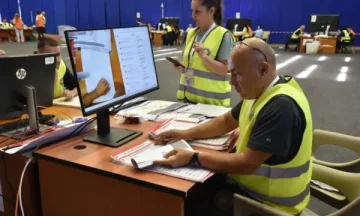
Serbia's “Against Violence” is now at about 40 per cent, while Vuciki's coalition has about 49 per cent support, according to CRTA, an independent election monitor. While that means that the president's allies are still on their way to victory, they can be hurt badly. More importantly, the coveted Belgrade mayor's headquarters is in doubt, with numerous voting agencies predicting an opposition triumph in the capital.
Victory in Belgrade would have more than a talisman importance. The opposition established substantial support as during activism against illegal construction and in condemning contracts for magnificent projects given to Vuciqi's friends in the capital.
“POLITICO Dobrica Veselinovic of the Green-Mayta Front, one of the parties united in a major opposition coalition. He added that the opposition had <x2-tensived a large number of citizens and encouraged them to include” at a higher level than the previous years.
Vuciqi's strategy for retaining power is a constant electoral boost, with five elections held since his party's establishment in the government in 2012 on average, one pair of elections every two years. No government has completed its full mandate and strategic elections distract attention from urgent issues such as protests or tensions with Kosovo, leaving opposition parties in constant defense.
Although he was not a candidate himself in this election, he easily secured his second term as president last year, Vuciqi is involved much after he organises mainly campaigns for the Serbian Progressive Party (SNS) and its electoral list bears his name.
Taking into account the country's democratic failures under Vucinqi, German Foreign Minister Annalena Bayerbox called on Tuesday for fair Serbian elections in which candidates should have equal access to the media. She also complained that, during the last elections, there had been “pressure on voters and abuse of public functions and resources on the part of the government”.
Alpha and omega
Despite growing disappointment with Vucinqi, he has the continuing electoral advantage to continue to be seen as the only responsible leader to address the country's major strategic problems on the international stage. These include relations with Kosovo and preserving Belgrade's balanced diplomatic act between Russia and the EU.
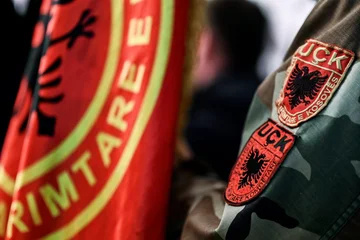
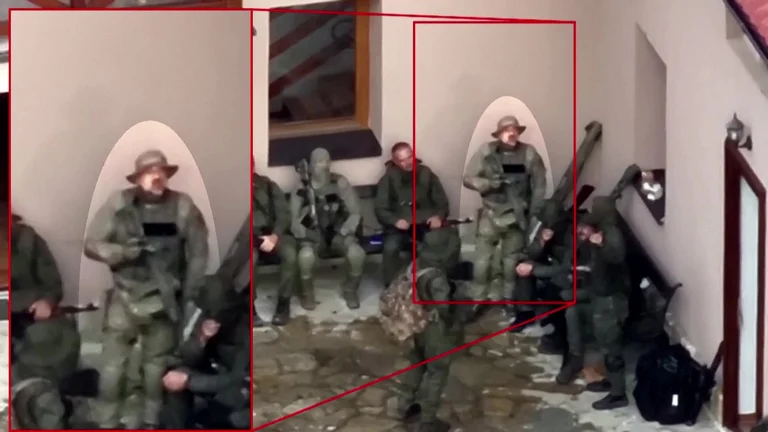
“Frika for regional instability again peaked at the end of September, when a heavily armed group led by Milan Radojic, a controvers businessman and Vucitic's hidden hand among Kosovo Serbs, organised an attack on the village of Banjsk in northern Kosovo, killing an ethnic Albanian policeman<1>, writes “Politco<3>.
The navigation of Serbia's relations with Kosovo, declared independent in 2008 but still unknown to Serbia, remains a thorn in the way of any Belgrade politician since Kosovo, once a Serbian province, broke down following NATO's 1999 bombings on Serbia and Montenegro.
While figures such as Veselinovic and other opposition candidates are more and more known names, they remain largely unexposed internationally. During the past decade, Vuciqi has been not only Serbia's only face abroad, but also is constantly involved in negotiations with the majority Albanian government in Kosovo.
“Vukiqi successfully imposed an alternative that there is no alternative to it on the Serbian political scene when it comes to co-operation with the West ) and foreign partners bought it”, explained Srdjan Majstorovic, chairman of the board for the European Policy Centre, a non-governmental organisation, broadcasts Klanos.tv.
The West holds part of the blame for that, Majstorovic said. “During regular visits by high-level international representatives and political figures, there was rarely a desire or interest to get acquainted with the opposition { maybe so they wouldn't upset Vuciqi like the alpha and the omega of political life in Serbia”.
Vuciqi's SNS won the 2012 elections and has since maintained an ever stronger control over power. Vucic was also placed at the head of the EU-brokered dialogue between Kosovo and Serbia, a platform for high-level political representatives from both sides to meet and to resolve disputes.
Majstorovic recalled that in 2008 and 2009, “representatives from the SNS who later became ministers, ambassadors and presidential advisers were welcome guests at foreign embassies in Belgrade and were deliberately socialising as an alternative to the current government”.
EU aspirations
Walking on Serbia's rope is, if not, now harder than ever: Vuciqi wants to give Serbs a perspective towards deeper integration with the EU, simultaneously showing brotherhood with Russia and not joining Western sanctions against Moscow.
Unlike neighbouring Balkan countries like Bosnia, Albania and Northern Macedonia, whose governments zealously advocate EU integration, Serbia's leadership candidate since 2012 remains careful not to appear too eager to co-operate with Brussels.
Playing with this is a perception that the EU is pressuring Serbia to recognise Kosovo as well as the slow pace of EU integration.
However, Vuciqi's party is clear in its final goal regarding EU accession.
Serbia's Progressive Party policy has not changed since its establishment. Serbia should become a full-fledged member of the European Union”, current SNS head Milos Vuchevic told POLITICO. “We want membership for the sake of our citizens and because we believe it is in the country's best interest”, he said.
Independent polls over the years have shown that general public support for joining the 27-nation group usually moves around 40 percent, sometimes up to 60 percent.
“Public opinion polls on feelings towards the EU are important, but the election results are a much better” indicator, Vuchev said. The “The political options supporting Serbia's EU membership won over 80 per cent of the vote” last year, he added.
Could this mean that over 80 percent of Serbs are for membership? Of course not. But that means only the Serbian Progressive Party can bring Serbia to the EU”, Vuchev concluded.
The Danger of Oversight
In a recent television debate on the independent N1 channel that included the participation of all representatives of opposition parties, even though not the SNS and the Serbian Socialist Party, its coalition partner, all opposition candidates, expressed scepticism at recent agreements reached in the EU-led dialogue with Kosovo. Candidates focused mainly on the same point of discussion: that Serbia is forced to act against its interests when it comes to Kosovo, Klankosova broadcasts.tv.
This may prove a disturbing trend for Western officials, who have already invested a decade in trying to resolve one of the region's most difficult conflicts.
With a challenging year ahead, including EU and national elections in Europe, not to mention the presidential election of the United States, another term for the SNS would save the West from trouble to start over in building relations with a new government in Serbia.
But this would translate into ignoring the decline of democratic standards in the country. While the situation was far from ideal before 2012, supervisory groups ranging from “Reporters without Border “to “Redom House” have noted a significant decline in press freedom, institutional independence and general transparency.
“Freedom House” classified Serbia as a state “partially free”, with low rankings for civil liberties and political rights. He underlined the difficulty of independent actors entering the government and the public sphere.
For Majstorovqi, the opposition faces a plight similar to that seen right after the Yugoslav wars, when the collapse of the powerful Slobodan Milosevic left the country in confusion and the West very eager for immediate results.
If the opposition wins, a new government could face “déjà v”, Majstorovic warned.
“Western expectations would be very difficult to handle overnight”. /Klankosova. tv