a few seconds ago
Osmani: Stirring to accept Kosovo into NATO, EU enables region to destabilise
Periskopi(2 years ago)
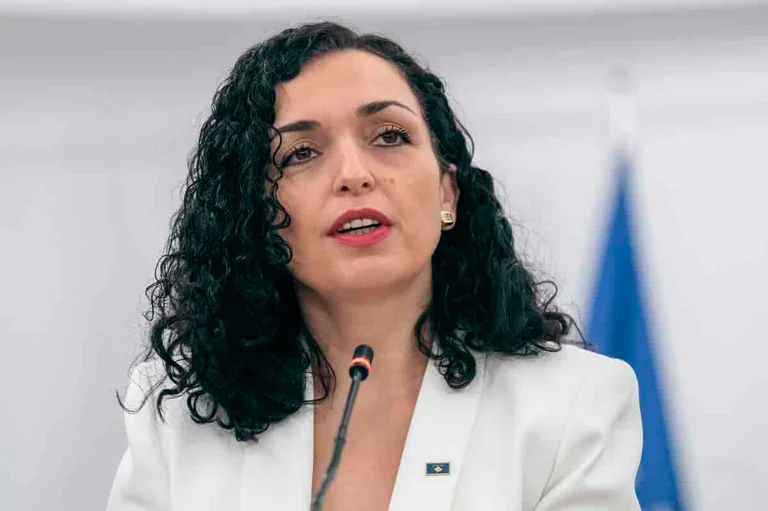
(2 years ago)Kosovo President Vjosa Osmani has said on Friday that the reluctance to accept her country into the NATO military coalition and the European Union (BE) leaves open the possibility of destabilising Kosovo's “only, but the region's -- and more broad,”. Speaking at a joint media conference with Bulgaria's president, [...]
Kosovo President Vjosa Osmani has said on Friday that the reluctance to accept her country into the NATO military coalition and the European Union (BE) leaves open the possibility of destabilising Kosovo's “only, but the region's -- and more broad,”.
Speaking at a joint media conference with Bulgaria's President Rumen Radev in Pristina, Osmani said Kosovo counts on Bulgarian support for bloc membership.
“The bold leadership and decisive actions of our allies in the Euro-Atlantic family to accelerate the accession based on the merit of the region's democratic countries in the EU and NATO, because each hesitation would create a vacuum for malicious actors to destabilise not only Kosovo, but also the region beyond”, Osmani said.
Kosovo applied for EU membership last year, but was reproved by the European Commission in its annual report in November for “limited progress” and for failing to implement agreements reached in dialogue with Serbia.
The Bulgarian president said that, until his country supports Kosovo and the entire Western Balkan region for membership in the bloc, it requires Kosovo and Serbia to agree to normalising relations.
“Bulgaria will continue to support Kosovo for its membership as soon as possible in the Council of Europe. Bulgaria is one of the engines for the integration of all Western Balkan countries into the EU. We cannot allow ourselves to leave Kosovo in second place, much less in the security field”, Radev said.
He added that reaching the agreement on normalising relations between Belgrade and Pristina “is important for the security, stability and welfare of our region”.
The situation in Kosovo's north, the Serb-run populated country, continues to be tense since the beginning of this year, when local Serbs opposed Albanian mayors in the four Serb majority municipalities that emerged from Serb boycotted elections in April. / REL