8 minutes ago
Diagnosing equipment at QKUK or not working or using
Periskopi(2 years ago)
(2 years ago)In some clinics, patients have to wander because of machine failure; in others, equipment is modern and functional, but there is no one to operate. This situation is noted at the University Clinical Centre in Kosovo in Pristina every day overloaded with patients waiting to receive services. Avdyl [...]
In some clinics, patients have to wander because of machine failure; in others, equipment is modern and functional, but there is no one to operate.
This situation is noted at the University Clinical Centre in Kosovo in Pristina every day overloaded with patients waiting to receive services.
Avdyl Berisha was instructed by the ambulance of his village, Slatina ão Kosovo's Fushe municipality, to do a giggle at QKUKU, as he had doubts about bone spraining.
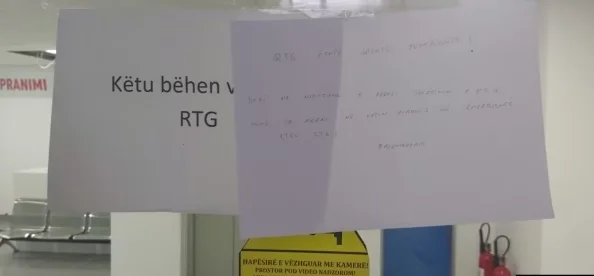
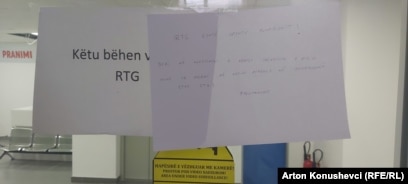
At first, he headed to Orthopeda's medical ambulance, where he was told that the X-ray is not working. Then he wandered through several other ambulances until he ended up at the Emergency Clinic.
I did it in Emergency, but it's not looking good. Three times I've come here... not enter the basement, not get out there...”, Berisha said.
QKUK has 22 expert ambulances with just one gypsies.
This device, which serves doctors to see and assess broken bones but also to diagnose other problems in the human body, has not worked there for more than two months.
When it gets back to work, it's not clear.
After verifying the deterioration, the Kosovo Clinical and University Hospital Service Directorate “has taken all the measures and opened the tender procedures for the equipment to be adjusted”, Radiology Clinic Director Shkeljje Nuza tells Radio Free Europe without providing any concrete information.
The clinic she runs is responsible for devices operating within the QKUK.
Well, an ambulance wound isn't the only one that doesn't work. In Neurology Clinic, for more than three months, it's not working either CT or body scan equipment.
The CT serves to identify various diseases within the human body, including tumors.
Neurology Director Edmond Komoni says its malfunction is causing difficulties for both patients and employees.
Because the cases are severe at Neurology Clinic, patients move with difficulty... We try to compensate... we use computerized tompography, which is found in Emergency or Oncology object, but because patients need to be carried... this takes a lot of time and makes it difficult for us to work”, says the Commission.
Neither for this device, neither of the doctors nor other staff offers accurate information about when it will be returned to function, until a few feet away, at the Clinic of Pediatrics, lies the MIRI, which is functional only until 1: 00 p.m. after which time there are no doctors to operate with it.
The device for magnetic resonance imaging, known as MRI, is more expensive than the CT and is used for the discovery of diseases, diagnosis and monitoring of treatment.
With it radiologists operate, 28 of them at QKUK, but for now there is no time for second shift.
QKUK leaders confirm for The REL has been looking to Radiology Clinic to examine the length of the mRI work schedule, but the decision is still under consideration.
For other reasons, the Urology Clinic does not use nearly the láparascope, which helps to diagnose a wide range of diseases, especially in abdomin, but also to perform surgical procedures.
There have been several cases of kidney chips, while other operations have not been done with lparascope... To continue with other Laparoscopic operations requires ongoing training. I hope, next year, in co-operation with USKKUK and the Ministry of Health, we send our colleagues to Laparoscope training [outstate]”, says Urology Director Petrit Nuraj.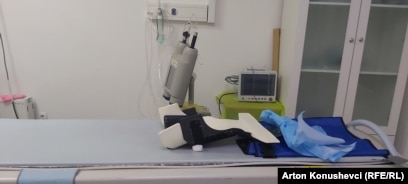
In the Plastic Surgery of KKUK, meanwhile, the microscope is minimally used for fingerprint implantation.
The director of this clinic, Violet Zatriqi, says there are not enough staff that specializes in the use of this device.
There is another problem, that the microscope is located in the Plastic Surgery Clinic, as emergency cases are carried out in Emergency and the microscope is not a moving device... This is one of the reasons why it's not used in emergency cases”, she says.
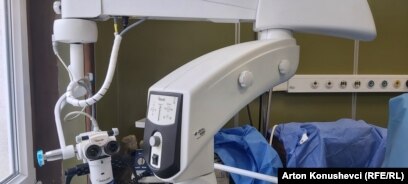
All these devices that are not fully exploited are only 1-2 years old and costing hundreds of thousands of euros.
At SHSKUK QKUK and all regional Kosovo hospitals say they are looking into opportunities for additional staff training, but that, originally, they are getting information from all clinics, to understand which devices are not exploited and why.
REL, even in March of this year, has reported on at least two devices at the QKUK Clinic, which for years have not been used for material, or staff shortages.
From the Kosovo Health Ministry, they have said earlier that they co-operate with USKKUK for the purchase of equipment, which “health professionals consider necessary”.
But, a problem that has long followed Kosovo's health system is also the growing lack of Admission staffOr leaving him.
Kosovo Medical Oda's data shows that, until now this year, 160 doctors have received the so-called certificate of Ethiopian-professional purity, which means they have already left Kosovo, or are in the process of leaving. / REL