27 minutes ago
Biserko: Vuciq hopes in Kosovo partition option
Periskopi(2 years ago)
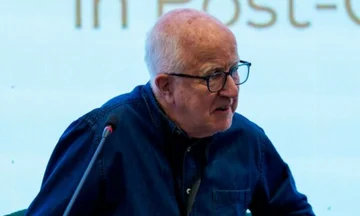
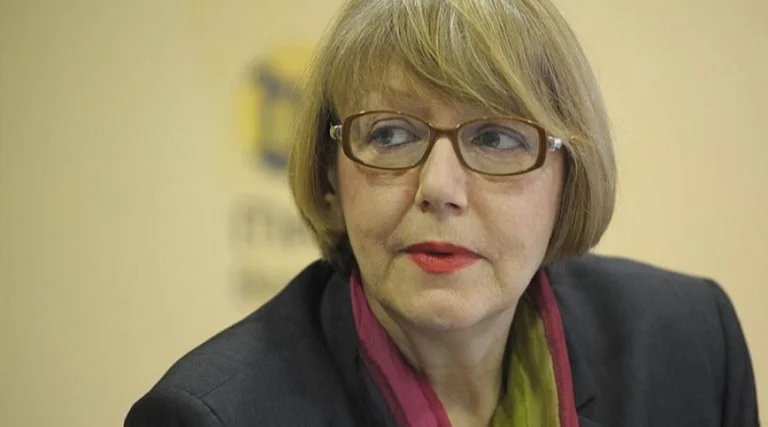
(2 years ago)Helsinki Committee for Human Rights in Serbia Director Sonja Biserko in an interview given to RTV21 has talked about various topics starting with the explanation of elections held Sunday 17 December in Serbia, as she added that to change society, what is necessary is [...]
Biserko, among other things, stressed that a new escalation in the Balkans, and particularly in Kosovo, or normalising Kosovo-Serbia reports with Vuciqi's victory, will depend heavily on Western efficiency to operate in the region.
Speaking of the September attack on Zvecan Baysk, Biserko said Serbia has a potential to raise tensions in the first place, but according to her, the West is prepared to prevent any kind of escalation because it is quite clear that the Balkans have become a security priority for the West and will not easily give up on the Western Balkans.
Full interview with Sonja Biserko
Sonja Biserko how do we read the order of these early elections in Belgrade, held on Sunday?
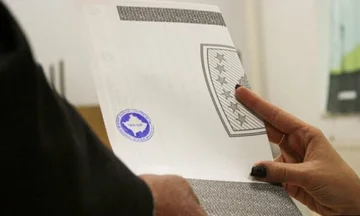
RTV21: Unfortunately, these elections are not good news for Serbia, nor for the region, because it seems that Aleksandar Vuciq is the absolute winner of these elections. Not his party, but he himself was the focus of the election campaign and dominated all the media, in all other possible ways in the campaign he held. And apparently he won these elections, even though it was the opposition who called for these elections after the May massacres in Belgrade, which occurred. So we can say these elections were free, but not fair because the ruling party or Vuciq dominated or monopolise the media, most of the media, especially electronic media, monopolized institutions, the sources it paid for votes. He paid a certain amount of money for pensioners, for young people, students and many other groups, for example, for Roma flows in Kragujevac, as I have heard. And he won very easily despite all opposition efforts and at least in Belgrade. But Belgrade is quite problematic because the opposition coalition Against Violence in Serbia is claiming to have many frauds. They have submitted reports, and most foreign observers have also published statements showing fraud, especially in Belgrade. So the opposition is demanding the repetition of these elections. There are protests in front of the Republican Electoral Commission, and they delivered all kinds of reports that document fraud and irregularities. Let's see what happens because they're probably repeated, but I'm not sure about that. But what's really bad about this election is that Aleksandar Vuciq became an absolute leader in the country. He seems to be leading the country into autocratia, which already existed, but now he has all the means to continue without obstacles. And he clearly witnessed during this campaign and through the media, especially, that Serbia was anti-Western orientation. His latest interview before the election silence Thursday was given to Russian media, which is also a kind of signal to the Western community. He also imposed issues that dominated the campaign. Which is Koosva, which was apparently not the issue of these elections for most people in Serbia, but somehow it dominated and Vuciq was exploiting this popular thesis for the discrimination of Serbs throughout the region. And the opposition somehow fell into this trap. The bottom line, as you know, is that the people are widely disappointed, but unfortunately, there was no changing progress of this kind of regime. First of all, because nationalism is still very strong. And also...
I want to ask you exactly on this matter. Besides, what are you talking about, irregularities on Election Day? Isn't Vuciki's election victory an indication that Serbs are not yet ready for changes in their society? And beyond that?
Biserko: But to change society, what is necessary is the distance from Milosevic's policy, to close Serbia's national issue -- that is, to resolve it by focusing on issues in Serbia, which are too many. Therefore, this Vuciqi victory symbolizes the continuation of the exploitation of several national issues in Kosovo, especially, which is an emotional issue. They know it is abroad because no one can suggest how they reintegration it into Serbia, but they use it emotionally and most people are exposing all these feelings to Kosovo as an integral part of Serbia and so on. On the other hand, at the same time, when the elections have ended in Vuciqi's office we had all Serbs from the region, Mandicin, from Montenegro, so the prime speaker, the president of Republika Srpska, Dodik. It was also a kind of exposure of the Serbian world to how it works and doesn't work. And the problem is that many Serbs from Republika Srpska came to Serbia to vote, especially in Belgrade, because this victory of the Vuciki Party in Belgrade is very narrow and there are obviously many manipulations, irregularities, and we will see how it ends. So I fear Serbia is still not ready for such changes. to give up all these nationalist, populist, and specifically nationalist ideology for Serb domination in the region. And I think the West will be forced to change its approach to Serbia. So far they have tolerated Vuciki's behavior for nearly ten years. I think it was the wrong approach, because it hasn't produced any results so far. We will see whether Vuciq will give up the offer or withdraw from the offer he has been given to the region in Tirana during the Berlin summit and last in Brussels, at the Western Balkans summit in Brussels because for the first time, the EU, following Banjsca in fact, two months ago, was really aware that the stability of the region is endangered and has great potential still in Belgrade to increase potential tensions or potential conflicts. I don't know. However, this is something that the Western community has become quite conscious. And also, of course, we should keep in mind the Russian attitude towards Kosovo and the insistence on keeping the conflict constantly frozen, because this is something they can argue about their situation in Ukraine and other neighboring countries. So it's pretty uncertain how things will develop over the next year because there's really a lack of time. Belgrade will try to postpone dialogue as much as possible because Belgrade expects a change in the White House, they expect Trump to return. There are many elections to be held in the European Union, for the European Parliament and so on. So they still hope that the environment, the international environment will change and that this plays on Serbia's charter.
Clear. But I want to ask you because you also mentioned Serbs in Bosnia and Serbs in Montenegro. But even the opposition in Belgrade has taken the same position as Vuciqi has on the Kosovo issue. I'd like to ask: Is the Serbian World, as it is called, becoming a bigger issue within Serbian society or politicians today?
Biserko: It has been on the agenda of the last 30 years since the beginning of the war in the 1990s and has not changed. It has only changed the name, as you know, Project of Great Serbia, uniting Serbian lands, the Serbian world, similar to the Russian world. It is the same technology that is always being used to claim Serbs or Russians are at risk or to be continued so far. I think that most elites, not just political, academic, religious, military, security elites, are in favour of reviewing the fields of the 1990s, and that's, I think, one of the main incentives to say, all elites here in Serbia and is being supported by Russia. Because one of the Russian institutions in the analysis of Russian Serbian relations in the Ukrainian war says the implementation of the Serbian world will take place after the outcome of the war in Ukraine. Which means they expect a kind of Dayton agreement, the frozen conflict, which could, later, be used for union in both Russia and Serbia. So, this is still pending, it's something the West should consider, because there are two rational expectations: Vuciq still awaits bids from Brussels, which is very important for Serbia. Even for the rest of the Western Balkans. But on the other hand, the perception of elites here is that the West is declining, and for that reason they just have to wait for the realisation of their project. So this is a kind of psychological state or the thinking of most of our elites, and this should be taken into account. Otherwise, they may lose meaning or misunderstand certain movements by Vucinqi. These manipulation spaces that Vucin has been exploiting for so long now are narrowing. That's a fact. And now we have very little time or maybe the next few months because there will be many changes, as I mentioned in America and Europe. So there is a narrow time space for the West to implement strategy in the Balkans.
Clear. It will now enter the situation in Kosovo. Talk about a possibility, a new escalation promoted by Serbia. This, after all the developments during the year, and especially in Banjska, in Zvecan, a few months ago, in September. Is there so much fighting potential in Serbia to trigger a new war, despite that Kosovo is under NATO military protection?
Biserko: I think this is also challenging NATO, especially on the part of Russia. Because Russia was probably behind Banjsca either encouraging or fighting there or whatever. We don't have a clear report on this. But it is quite clear who was the factor, as it were, in this matter. So this may be a reason for Russia to push it to the European side Serbia certainly has a potential to raise tensions in the first place, but on the other hand, I think the West is prepared to prevent any kind of escalation because it is quite clear that the Balkans have become a security priority for the West and will not easily give up on the Western Balkans. So this is apparently the context in which we can expect this outcome and I hope this rational approach will be the beginning. I hope, perhaps, that the Western Balkans will finally realise that only common efforts are the only way to open a genuine European perspective.
That's what you say. But I would like to ask you: with Vuciki's victory in this election, I'm calling Vuciki's victory in the election, will we have a new escalation in the Balkans and especially in Kosovo, or are we heading towards normalising relations with Kosovo?
Biserko: This will depend heavily on Western efficiency to operate in the region. I understand there's a lot of moves especially in Bosnia, and then KFOR grew up after Banjska, and I think they also have an advantage in Montenegro, especially over Prime Minister Spajic. Because you can already see all these differences and NATO they are NATO members, and all the statements coming from the State Department are really encouraging because they are not giving up on Montenegro despite this powerful pro-Serbian orientation of the current government and president. So we really have these two options that crash all the time. and it is more important how these two factors will act to increase efficiency and what the real result will be for the Balkans.
Of course. An official Belgrade statement that will not apply the agreements reached in Brussels and Ohrid, which speak of Kosovo's membership on the international stage and de facto recognition, has certainly prompted reactions. Do you believe that Vuciq will do something, will somehow show his willingness to somehow complete the process with Kosovo, in a near future?
Biserko: He will use Kosovo as long as he can, increasing emotions among Kosovo Serbs. Since Kosovo Serbs vote in several cities in southern Serbia, buses have carried them to different polling stations. So he'll use this as long as he's allowed. But eventually he can stop. Because he knows that Kosovo is independent and that it is not possible to reintegration to Serbia. The only hope there is is the possible separation. This is the option that has been on the table all the time, when we talk about Serbia's preferences dealing with Kosovo. So this attempt to solve it to play with it as long as they can, but it all depends on the West if you want to stand by its values that have been what we thought here in the Balkans. After all, Balkan architecture is indeed liberal architecture, but it is a fact that we are not applying these EU standards either, and we have NATO's scope in most of the region, only three countries are not full members, but they have very strong co-operation with NATO, including Serbia. a very high level of co-operation. And then we have the Council of Europe. As you know, all countries in the region are members of the Council of Europe. and Kosovo must become as soon as possible because it will benefit Serbia, since they always claim that Serbia's cultural heritage and Serbs are generally discriminated against. And so this would be a guarantee for any kind of claims they have. So again, I'm saying, it's really depending on the efficiency of the EU and the US and NATO. So, like I said...
But we have seen the EU and the international community's poor response to Vuciqi especially when it comes to dialogue with Kosovo and especially when it comes to the cycle of violence that spread to the northern part of Kosovo. Is this the EU's soft approach somewhat a double message to the Serbian voter about development in dialogue with Kosovo?
Biserko: I mean, my view is that this approach was very tolerant from the West all this year. Clearly, they have no other answer to what kind of policy width is needed and we know what to apply here in the region if they are able to change that approach, it is also questionable. And, as you know, Hungary and perhaps Slovakia can also be two EU members that will influence or prevent any kind of harsher approach. And, you know, there is always difficulty for almost all kinds of resolutions and policies that the EU is able to implement. And that would probably continue unless there are some fundamental changes within the EU. As we know, the EU is also walking through a kind of tradition, and their voting system by consensus is also a problem because there is always one or two states that can block any kind of decision. We have the case of Macedonia, which has really suffered more than 20 years, first by Greek obstruction then and Bulgaria now. So it could happen in the case of Kosovo or any other country in the region, Bosnia. So this is something that is still open and I think very much depends on how quickly the EU will be able to reach certain conclusions that will reflect new reality and a new approach to Serbia.
And let me ask you, are you optimistic that Mr. Mr. Wuch and Mr. Kurti, Prime Minister Kurti, will somehow conclude the issue between Kosovo and Serbia? Both of them?
Biserko: In this process of dialogue, it was always Kosovo, which worked, not Serbia, despite all the conflict it created several months ago in Banjska. There is always this harsh approach to a weaker actor I would specifically say in Kosovo's dialogue with Serbia. That could change. I have to say with all these negative trends and trends I'm still optimistic because otherwise all the work we do would be kind of in vain. So I still hope that there will be a positive solution for Kosovo and the entire region.