5 minutes ago
105 years from the Durres Congress
Periskopi(2 years ago)
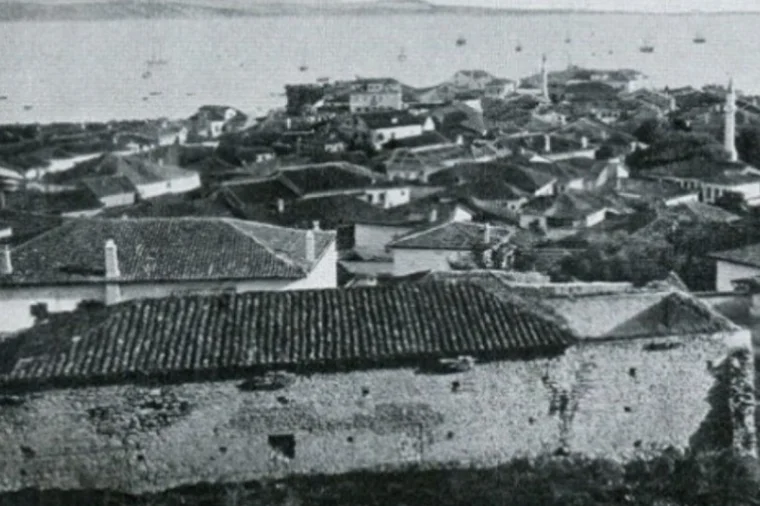
(2 years ago)The Durres Congress (25-27 December 1918) was the meeting of representatives of Albania in Durres to ensure after the end of World War I independence, territorial integrity and the continuation of the Albanian state. Over 50 delegates attended. A provisional government with 14 members was elected. The convention also decided to form a Plebe (sens) as an organ [...]
The Durres Congress (25-27 December 1918) was the meeting of representatives of Albania in Durres to ensure after the end of World War I independence, territorial integrity and the continuation of the Albanian state.
Over 50 delegates attended. A provisional government with 14 members was elected. The convention also decided to form a Pleass (sensis) as a government advisory body.
Delegates gathered at the Durres Congress expressed the preservation of the Albanian state's independence and territorial integrity, for revising 1913's borders in its favour, and for the application to the Peace Conference.
Movements for gathering Albanian leaders had emerged since early October. But in the organisation of Albanians in Italy, they were preparing as Mehdi Frasher, Mustafa Kruja, who were oriented by Italian politics.
These were asked on October 6, 1918 “Vara” to send their representatives to Italy to determine the common political platform, with which they would appear before the Peace Conference. As Mehmet Konica arrived in Rome on November 19th, warmly welcomed by the Italians. Meanwhile, the Italian government had given up its initial view of allowing the formation of an Albanian government. Meanwhile, Albanians who came from Rome to Albania were advised to form, not a government, but a national council or committee.
This committee was not to make an independent policy within the country or abroad, but it had to find a tool in the hands of Italian politics.
In late November 1918 the formation of the national council conceived by Gaetano Manconi was approved, ordering that the council be formed as soon as possible in Durres with Albanian persons to be our people and authority in all of Albania occupied by us except Vlora and its hinterland.
In both cases, however, both a government and a council had to meet the national convention to form these organs.
Mehmet Konica, Myfit Libohova, Mehdi Frasher left for Albania in late December 1918, accompanied by Colonel Etore Lodi, who would perform political duties both during the congress and later.
The domestic preparation phase for the Durres Congress was accompanied by the initiative to gather a convention in Shkodra, but it was French B. Supplies that didn't allow him to keep.
This meeting was arranged in Lezha on December 9, 1918, which was organized by Catholic clergymen and by the chairman of the Mirdiday dungsmiths Prenk Bibe Doda. But as a move that included only Northern Albania had not found support for the rest.
Another effort was that of Tirana, which was held on 19 December 20th, in which only representatives from several provinces of Middle Albania participated. But this political movement was merged at the Durres Congress, whose organizers had previously received Italy's approval.
This convention opened on the afternoon of December 25, 1918, with 53 delegates attending. They came from most of the country under the conquest of Italy. But the convention did not take part in the city of Vlora because Italian authorities had received instruction from Rome not to recognize the delegates in this city. Also missing were representatives of the province under Serbian occupation, the River Bishop, and those under French occupation, such as the city of Korca.
These were factors that enabled the electrification of developments at the Durres Congress. But not only had delegates come to Durres but many other political figures as well.
Here's how the paper “Agimi” reflects:
“At the congress managed to make proposals and also take words from people who did not appear on the list of people who had the mandate of envoy”. But Durres representatives, without passing on the agenda, also expressed concern over the lack of participation of delegates and all Albanian provinces. The delegates, who at the beginning of the work displayed confidence in the winners of the war, accompanied by a greeting, particularly Wilson, “who had proclaimed the principles of the self - determination of the people”.
But at the convention, there was also the possibility of a hope in Italy, which during peace efforts could have an interest in supporting Albania's territorial demands. Through Myfi Libohova's memoirs reveals that Mehmet Konica at the Durres Congress had presented the Italian proposal for the formation of a accounting committee, which would try to send an Albanian delegation to the Peace Conference and operate within the country “the security of the Albanian people's national and political life”. But, on the other hand, Mehmet Konica supported the proposal of Namik Delvina and Riza Dani for the creation of a provisional government.
He at the convention said that the formation of the government should also accept Rome, “hoping that it would finally accept its formation”. While several other delegates claimed the government was the desire of the Albanian people and it did not matter whether it would be accepted by Italy”.
Then they went to the agenda. The congress rejected the first point, which envisioned the formation of a committee that under the record had two duties. The first one, to send an Albanian delegation to the Peace Conference and the second, to ensure the national political life of the Albanian people. But delegates decided to form a temporary government, which was an independent and challenging decision against Rome's diplomacy.
It was a successful decision, even in terms of the situation within the country, as it was not very difficult for either Italy or Esad Toptan to enable the promotion of certain Albanian layers, which were without a clear vision. On the morning of December 26, Konica presented the memo to Lieutenant Colonel E. Lody, arguing the formation of the government, primarily with the importance it had to devalue any possible attempts by France and the Balkan states to call Esad Toptan delegates to the Peace Conference.
The second argument concerned the fact that the power of a government, rather than a committee, was more effective for the Albanian people, which would be a “only a powerless and ridiculous institution”. Convention representatives had no difficulty defending their decision even before Italian lieutenant colonel E. Lod, who in the telegram sent to Rome, considered them to be a strong “ry”.
Despite his efforts to appoint only an executive committee with the character of a delegation, to express the Albanian nation's desire, it was to predict according to him “that the current above would dominate”. So even the viewpoint of the delegate V. Dilos, so that the congress would not act independently, because this political movement could lead to collapse with Albania's only friend with Italy, but stay on his agenda.
He argued that view with the idea that he doubted whether the Albanian people, on whom this government would rely, had come to that degree of development to spill blood for their homeland”. But many of the representatives of the Albanian nation who were at the congress, although for the protection of a power like Italy, they needed to strengthen a political power, to ensure this power both towards domestic forces and to any external threat. As a result, even the establishment of a committee was not of interest.
Thus, the proposal to change the government's decision to the committee found no ground to support. It should be noted that between them was Myfit Libohova with visible pro- Italian orientation. The same political position took place, and Mehmet Konica as chairman of the congress, which from the beginning of the opening of the second session made the declaration of the decision on forming the interim government.
Rome had also been announced through the Italian command and was expected to answer it.
While the demand of many delegates was that they had not come to the convention to introduce themselves as “the <x0 mic kukulla”, which meant judging and acting according to other people's orders, but to think of the “the will of the people, who are seeking with a self-government and eagerly, wants freedom”. Government composition was proposed at the first session, while its formation was requested.
The government was formed by 14 members, while the congress also designated delegates to the Peace Conference, whose members would be made up of the entire government.
While the chairman of the government was elected Turhan Pasha, which also appears from the content of E telegram. Lod, who sent to Rome, announcing that the gathering of Durres had decided.
Eventually, for forming the interim government with Turhan Pasha at the helm, and delegates would be Luigj Bumci, Mehmet Konica, Mihal Turtul, Midhit Frasher. Political war inside and outside the congress brought at the same time the appearance of respective views, the majority were Italian-oriented, such as Myfit Libohova, Turhan Pasha, Prênk Biba Doda, Sami Vroon, Luiga Bumchi. While the opponents were Mehmet Konica, Mihal Turtul, Mithat Frasher, who were fewer in number but who leaned from the United States of America or from some other “uninterested” directly for Albania. These attitudes and views did not appear during the convention's work, because these prominent figures of Albanian politics had fallen into a silent compromise because their main goal was to form the government. A special role in the programme's processing was Mehmet Konica.
Congress drafted an overall political programme. It expressed the preservation of independence, the earthly entirety of the Albanian state, and the revision of the 1913 border. On the issue related to the legal status of this state and political animation of one or another the winning power, which was at odds, they acted quietly and in compromise with each other.
This programme was essentially protecting rights at the Peace Conference by the Durres government, seeking Albania's ethnic borders, maintaining calm within the country.
The programme represented a step forward in the Albanian national movement, but must be praised in conditions where Albania was occupied by foreign armies and under pressure from its neighbours. In this view, researchers of this period, while positively praising the Durres Congress, had made no comment or assessment regarding the government's programme. The thought of post-war Albanian history has taken a critical stance against the support it gave “Vatra” compromise with Italy over forming the Durres government.
By a careful study of the period in which this agreement was reached, however, it seems that such an attitude is correct. That conclusion stems from changing Albania's conditions at the end of the war, seen through several factors. Like political imbalances in the Balkans, as a result of the breakup of the Austro-Hungarian Empire and the loss of war.
On the other hand, neighboring monarchs had come out victorious of war, and by the time Great Powers like England, France was supporting their ambitions to expand under conditions when the secret treaty in London in April 1915 was in force. But it should not be forgotten that Albania was still occupied by the winning states and their armies did not depart from Albanian lands and after the war ended. This period posed serious difficulties and risks for the Albanian national movement, which was on the verge of representing Albania at the Paris Peace Conference.